
Tesla Brand Value Hit As Sustainability Influence Declines Across Global Sectors In 2026
Written by: BizCommunity Editor Save to Instapaper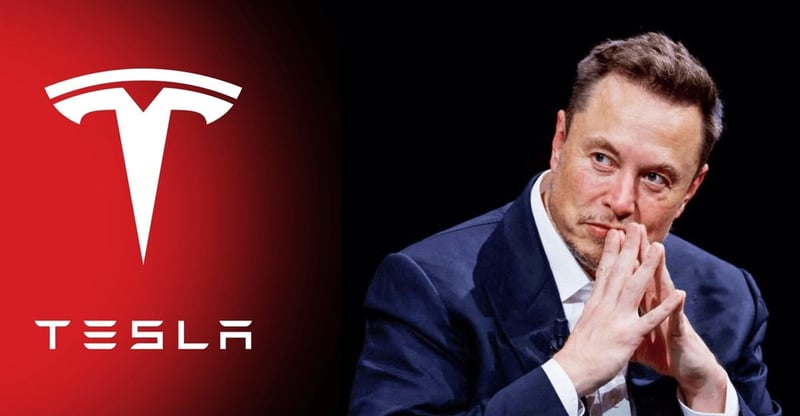
The damage to Tesla’s brand value by Elon Musk's actions exceeded Brand Finance’s initial predictions (Image source: @ Equilar https://www.equilar.com/ Equilar]])
The research found that sustainability continues to be a contentious theme for brands to manage in 2026. Perceptions are increasingly affected by divergent views in the political climate, which have rippled into investment and business communities.
Of 48 industry sectors, 24 saw the influence of sustainability decline from 2025 to 2026. In the prior cycle, 38 saw a year-on-year decline.
It remains to be seen if this is part of a wider recovery in the importance of sustainability in driving consumer choice.
Originally, Brand Finance attributed the decline in sustainability’s importance to factors such as political ESG backlash and cost-of-living concerns.
Since then, ESG backlash in the US has been met with quieter communications from corporations around the world. However, even if at a slower rate than ideal, progress continues.
2026 drivers of consideration are calculated based on the importance of two attribute statements: ‘This brand acts sustainably and ethically’ and ‘This brand supports causes I care about’.
Apple has the highest ‘Gap Value’
Sustainability perceptions and actual sustainability performance are frequently not aligned.
Indeed, across the full set of our research there is not a statistically significant correlation between the two. This means that brands that commit to sustainability cannot necessarily expect customers to automatically acknowledge and reward them for their efforts.
Yet, Apple has the highest ‘Gap Value’ of any brand in the Sustainability Perceptions Index. The Gap Value represents the difference between perceived sustainability and actual sustainability performance.
A positive value indicates that a brand’s sustainability performance is better than its perceptions would suggest.
This implies that Apple could potentially generate even more value from communication about its sustainability initiatives.
In Apple’s case, this value exceeds $2.59bn. This gap value - along with many other brands, especially those headquartered in the US - has grown since last year, suggesting that rather than capturing value, Apple is taking a more tentative and possibly even hesitant approach to sustainability communication.
The unsupportive political climate in the US, increasingly tight advertising regulation around greenwashing, and continued scrutiny from stakeholders can make it tempting for brands to mute discussion of sustainability.
Conversely, where perception exceeds performance, value is at imminent risk, as brands leave themselves open to public backlash, reputational damage, and a downward ‘correction’ of their sustainability perceptions value.
Tesla a good example
Tesla is a good example not just of where risk exists, but where real value continues to follow a downward trajectory forecasted by the identified risk.
Tesla is well known for being a first mover in the development of electric vehicles and battery technology, often seen as the catalyst for the wider industry transition to EV portfolio offerings.
In 2023 and 2024, we reported Tesla’s positive sustainability perceptions held by global consumers. Tesla was regarded as the auto brand with the strongest commitment to sustainability in several markets researched by Brand Finance.
Tesla was also the brand with the highest proportion of brand value driven by sustainability (23.4%), resulting in a Sustainability Perceptions Value of $13.7bn.
Tesla has undoubtedly driven progress in EV adoption, which contributes to society’s broader advancement of sustainability.
However, its sustainability performance scores are lower than the sector average, due to issues with governance, labour relations, supply chain oversight, and the environmental performance of its own operations.
The distaste for Musk
In the past, Elon Musk was still widely seen as an eccentric visionary, with fiercely held but generally well-intentioned political views.
However, Musk’s later stint serving in the Trump administration to promote government efficiency through layoffs drew extreme controversy.
Continued governance lapses at his company X over abusive AI applications on its Grok platform only further alienate Tesla’s supporters.
The distaste seems to have extended beyond the affluent, socially liberal core customers in Europe and the US.
From 2024 to 2026, perceptions of Tesla’s environmental commitment fell in almost all of the markets Brand Finance researches. In this 3-year period, double digit percentage drops for sustainability perceptions have occurred in most of Tesla’s research markets.
The largest declines occur in Western, higher-income markets like the UK, Denmark, US, Norway, France, Canada, Netherlands, and Germany.
At this point, we observe perceptions declining beyond just the environmental dimension, where EV enthusiasm more broadly has waned.
Social and governance scores for Tesla fell as much as and often more than environmental perceptions in its most dramatically declining markets.
In essence, EV leadership and associated sustainability benefits no longer protect the Tesla brand, despite today’s awareness of climate change and maturity of the EV market being higher than ever.
Our identification of value at risk proved to be prescient.
The damage to Tesla’s brand value exceeded Brand Finance’s initial predictions. In 2023, brand value stood at $66bn, $17.8bn of which was underpinned by sustainability.
By early 2026, this has fallen to $27.6bn, with sustainability value down to $2.7bn . These latest numbers mark a 35.8% decline in brand value and 74.0% decline in Sustainability Perceptions Value since 2025.
Google: The world's most valuable brand
This year, Google overtakes Apple, the world’s most valuable brand, with the highest sustainability perceptions value at $41.9bn. This comes as AI innovation and investment continue to surge across the tech and wider business communities.
Google’s DeepMind arm and Gemini platform are among the most used in the AI space.
The sustainability implications of AI use - from energy use and water consumption, to community displacement and workforce shifts and upskilling - are also beginning to be recognised in the public consciousness.
Google, however, has taken recent steps to pivot its sustainability stances and communications.
Its 2030 net-zero goal is no longer publicly declared, though it supposedly remains an internal objective. Before that, Google boldly put out its intent to become carbon negative, or replenishing carbon-absorbing sources and removing carbon more than the company actually emits.
The rise of AI has given way to a redaction of these bold stances. Nonetheless, the waves made by these statements can leave a lasting impression or inference about Google’s current sustainability.
The preponderance of consumers
It is important to reiterate that Google’s position at the top of the table is not an assessment of its sustainability performance, nor does it imply that Google is perceived to have an exceptional commitment to sustainability.
Rather, it reflects the fact that the preponderance of consumers around the world believe that Google is taking suitable action to minimise its negative impacts and invest in positive planet and community initiatives.
The general public feels that Google is committed enough to sustainability for them to continue to use its services. This, combined with financial scale of Google’s operations and brand, results its top position.
Strong role in lux market
What the research did observe was a significantly stronger role for sustainability in driving choice in the luxury and premium market segment.
This is tested in luxury auto, cosmetics, apparel, champagne, and spirits. Twenty-two percent (22%) of the variation in choice in luxury auto is explained by sustainability, more than twice the share for the broader auto sector (10%).
We see a similar pattern in cosmetics – sustainability is 50% more important as a demand driver in luxury cosmetics than in the wider cosmetics market.
Why such a strong role for sustainability at the premium end of markets?
A brand’s sustainability commitments may imply a slight cost increase that necessitates more premium positioning.
Premium-segment consumers also have less price sensitivity, allowing them to seek improvements on other attributes, including sustainability.
Lastly, at the premium end of many markets, brands become more than just a guarantee of attributes to the consumer—their products are also a signal of the purchaser’s status, taste, identity, or ethics.
A powerful role in B2B
Sustainability is often seen to be most salient in consumer decision-making; however, our research indicates an equally powerful role in a B2B context.
In addition to our global consumer brand equity research, Brand Finance conducts research with specialist B2B audiences, including buyers of IT services solutions.
This reveals that sustainability accounts for 20.6% of choice variation in IT services, up 6.5 percentage points or 46% from 2024.
Digital transformation and its intersection with sustainability, particularly around energy efficiency for these brands and their clients, are key priorities.
Get new press articles by email
We submit and automate press releases distribution for a range of clients. Our platform brings in automation to 5 social media platforms with engaging hashtags. Our new platform The Pulse, allows premium PR Agencies to have access to our newsletter subscribers.
Latest from
- Google Maps AI Update Transforms Search Into Conversational Discovery For Brands And Consumers
- Education Built For The Industrial Age Struggles To Prepare Students For An AI Future
- CCP Positions Precast Concrete Solutions To Support South Africa’s Water Infrastructure Renewal
- The Bar Code By Makro Brings Interactive Liquor Tastings And Social Retail To South Africa
- SABC Confirms Dee Uren As News Head Following Proven Leadership In Acting Role
- Why Experiential Marketing Must Evolve As Consumers Recalibrate Spending In Cost Pressured Markets
- Breakthrough Trial Uses Beneficial Bacteria To Tackle Bacterial Vaginosis Beyond Antibiotics
- Africa’s Top Entrepreneurs Shine As Business Heroes Summit Awards $300000 Grand Prize
- Why Modern CMOs Must Reclaim Marketing Leadership From Procurement Driven Cost Cutting
- President Ramaphosa To Deliver Keynote At 2026 Human Rights Day Commemoration In Kimberley
- 278 Finalists From 78 Countries Shortlisted For Global Digital Media Awards Ahead Of June Announcement
- Saftas 2026 Celebrates 50 Years Of South African Television As Afda Alumni Shine Across Awards
- Ellie Bamford Heads Global Jury As NYF Spotlights Power Of Strategy In Creative Effectiveness
- Why Africa’s Mining Sector Must Rethink Digital Transformation To Unlock Sustainable Growth
- South Africa Mourns Passing Of Nicholas Fink Haysom, Esteemed Diplomat And Legal Pioneer Aged 73
The Pulse Latest Articles
- The Truck Driver Who Turns Overnight Stops Into A Living Archive Of Namibia (March 18, 2026)
- “hisense Celebrates 30 Years In Sa, Highlighting Local Manufacturing At Buy Local Summit & Expo (March 18, 2026)
- Steinmüller Africa Opens Registration For 2026 Boiler Technology Course (March 17, 2026)
- Smart Mobility, Smarter Growth: Reimagining African Supply Chains For A Digital Decade (March 17, 2026)
- Press Release: Introducing Glow Mists By Gloot (March 16, 2026)