
L’Oréal-Unesco For Women In Science Awards recognise eight South African scientists
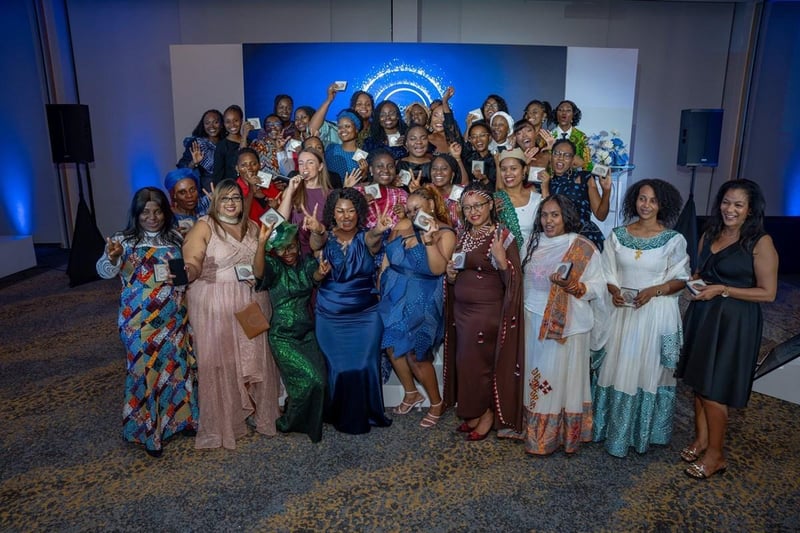
The eight South African women scientists were among 38 women scientists selected from more than 1,000 applications across sub-Saharan Africa — including Nigeria, Botswana, Tanzania, Guinea, and Cameroon — working in health, energy, water, agriculture, and technology.
Gender inequality in science
The recognition comes against a wider backdrop of gender inequality in science.
Across sub-Saharan Africa, several countries are making meaningful progress toward a more inclusive scientific ecosystem. According to Unesco’s 2025 publication, Status and Trends of Women in Science: New Insights and Sectoral Perspectives, women account for approximately one in three researchers globally and 35% of Stem graduates.
In sub-Saharan Africa, women make up 33.6% of researchers, based on 2022 data.
The figures differ across countries: 47.6% in South Africa (2022), 30.6% in Nigeria (2019), 26.1% in Ghana (2015), and 9.8% in Guinea (2013).
These challenges also extend into the workplace.
An Ipsos study conducted for Fondation L’Oréal, involving researchers across 117 countries, found that 81% of women scientists had personally experienced sexism during their careers, while 49% had experienced sexual harassment.
Michelle Gololo, corporate affairs and engagement lead at L’Oréal sub-Saharan Africa, said: “Visibility is part of the answer. When African women’s research is seen, funded and cited, it changes who gets to lead and who believes they can.
“Our responsibility is to sustain that visibility beyond this ceremony, so these 38 women and the young women who follow them can shape the future of science.”
Building South Africa's next generation of scientists starts with girls - UP launches inaugural Girls in Stem programme
University of Pretoria 11 Aug 2026Science for good
Award recipients receive a grant of €10,000 if they are PhD candidates or €15,000 if they are postdoctoral researchers, along with training in leadership, science communication, and career development.
Their research addresses a range of scientific questions with practical implications for the regions.
Projects recognised this year include low-cost water filters made from clay and cassava peel, batteries and supercapacitors developed from agricultural waste, and artificial intelligence tools to support disease diagnosis in humans and crops.
Other researchers are investigating medicinal plants for potential use against drug-resistant bacteria, monitoring tuberculosis through wastewater and studying genetic variants associated with type 2 diabetes in African populations.
Meet the South African winners
- Nonjabulo Mbhele
In water management and environmental sustainability, Nonjabulo Mbhele from the University of Cape Town (UCT) is investigating how municipalities manage water and sanitation infrastructure across its full life cycle, from planning and construction to operation, maintenance, and renewal.
She is developing performance measures to help identify weaknesses in infrastructure management and support decisions that could make services more reliable.
- Nikita Singh
Nikita Singh is exploring a different application of wastewater research: how treatment can go beyond cleaning water to recover valuable resources from the process.
She is investigating a 240-litre airlift raceway system combining duckweed and microalgae, examining how the organisms interact within the reactor and their potential to support wastewater treatment and resource recovery for future biofuel production.
This research could offer opportunities to use wastewater and biological materials more effectively while supporting more sustainable production systems.
- Shandry Tebele
In crop and agricultural resilience, Shandry Tebele from UCT is investigating how some plants survive severe drought, focusing on the relationship between their roots and the microorganisms living around them.
Her research compares these drought-tolerant plants with crops, aiming to generate insights that could help researchers develop crops that can better withstand water scarcity in a changing climate.
- Johncy Mahapane
In healthcare and medical research, Johncy Mahapane from the Nuclear Medicine Research Infrastructure at the University of Pretoria (UP) is investigating whether the shelf life of Actinium-225 Substance P, an investigational radiopharmaceutical for glioblastoma, can be extended to at least five days.
If successful, this could make it easier to distribute the radiopharmaceutical from central production facilities to more distant treatment centres.
- Roxanne Malan
Roxanne Malan, from the UP, is developing an artificial intelligence-supported system that uses a smartphone-connected camera to help identify and monitor voice disorders, aiming to make assessments more accessible, particularly in underserved communities.
- Caitlin Wheeler
Caitlin Wheeler, from the Wits Donald Gordon Medical Institute at the University of the Witwatersrand, is investigating genetic patterns associated with autoimmune liver disease.
Her research aims to improve understanding of these conditions and contribute to evidence that can inform more locally relevant patient care.
- Hlengiwe Nombuso Mtetwa
Hlengiwe Nombuso Mtetwa from Durban University of Technology is investigating how wastewater can provide early warning signals of tuberculosis, drug resistance and other infectious disease threats, potentially helping public-health teams respond more effectively.
- Lebogang Motsomone
In clean energy and materials science, Lebogang Motsomone from the University of Limpopo is using computer-based modelling to investigate high-entropy alloys as potential materials for hydrogen storage.
Her research examines how the composition and structure of these materials influence their ability to absorb hydrogen, contributing to the search for safer and more efficient energy storage technologies.