
How Functional Strength Pilates And Recovery Are Redefining Fitness And Sports Marketing
Written by: BizCommunity Editor Save to Instapaper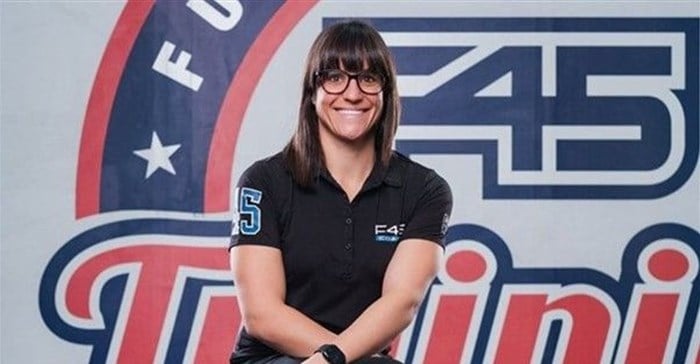
F45's Karen Loader explains how functional fitness, strength, pilates and recovery are reshaping sports marketing (Image source: Bizcommunity © Bizcommunity)
At the centre of this shift are three interconnected pillars: functional strength training, pilates-style low-impact movement, and recovery.
- Strength training moves from performance to longevity
Strength training is no longer positioned purely as performance or physique-driven. It has become a cornerstone of long-term health.
Dr Peter Attia, a leading voice in longevity medicine, consistently highlights strength as one of the most important predictors of healthy ageing.
In his work, Attia refers to strength and stability as essential components of what he calls “the centenarian decathlon”, the physical capabilities required to live independently and well later in life.
Similarly, neuroscientist Andrew Huberman has spoken extensively about resistance training’s role in improving insulin sensitivity, hormonal health and cognitive function, noting that even two to three sessions per week can have outsized benefits.
From a sports marketing perspective, this has changed the narrative:
- Strength is now marketed as insurance for the future.
- Messaging focuses on capability, resilience and independence.
- Education-led content builds trust faster than transformation-based imagery.
Brands that successfully translate this science into accessible, coach-led experiences are winning the credibility and trust of the consumer, which builds into long-term loyalty.
- Strength training moves from performance to longevity
- Pilates and low-impact training gain strategic importance
The rise of Pilates and low-impact functional training is not driven by softness. It is driven by intelligence and longevity.
Dr Stacy Sims, an exercise physiologist known for her work on female performance and physiology, has been vocal about the importance of strength, stability and neuromuscular control for women across all life stages.
She has consistently challenged the idea that women should default to excessive cardio, emphasising resistance training and controlled movement to support hormonal health, bone density and long-term performance.
What is equally notable, however, is the growing adoption of Pilates-style training by men. Strength athletes, runners and high-performing professionals are increasingly incorporating low-impact training to improve mobility, address imbalances and reduce injury risk.
Pilates is no longer viewed as a female-only modality. It is being reframed as a performance and longevity tool that complements strength training rather than replaces it.
This has had a clear knock-on effect in the market:
- Pilates and tone-based training are no longer niche.
- Adoption is growing across both men and women.
- Branding lens is premium, precise and intentional.
From a marketing lens, Pilates-style training offers something powerful. It speaks to consumers who want results without burnout. The most successful brands position low-impact training not as easier, but as smarter.
- Pilates and low-impact training gain strategic importance
- Recovery becomes a front-facing brand proposition
Perhaps the most significant shift in sports marketing is the rise of recovery as a primary value proposition.
Andrew Huberman has popularised the science behind cold exposure, heat therapy and nervous system regulation, highlighting their impact on stress resilience, mood and performance. Recovery is no longer framed as indulgence; it’s framed as optimisation.
This aligns with broader consumer behaviour. As workloads increase and stress becomes chronic, people are seeking fitness brands that support the entire system, not just the workout.
From a brand and marketing standpoint:
- Recovery broadens the audience beyond “hardcore” fitness goers.
- It increases engagement frequency outside of class times.
- It positions fitness brands within the wider wellness economy.
Long-term engagement
Across functional fitness, pilates and recovery, one insight remains consistent.
Movement alone is not enough. People stay where they feel connected. Simon Sinek has spoken about two key contributors to longevity: the heart and the quads.
The heart for cardiovascular health, and the quads, because strong legs support walking, independence and everyday movement well into later life.
Walking, in particular, plays a powerful dual role. It supports physical health while also creating space for conversation, connection and friendship.
This aligns with broader research on happiness and wellbeing, which consistently points to two foundational drivers. People are more likely to sustain healthy behaviours when they engage in movement they genuinely enjoy, and when that movement happens in a social environment with people they like and trust.
Community: Part of the training
From a sports marketing perspective, this has important implications.
Fitness brands that prioritise enjoyment, shared experience and human connection outperform those that rely purely on intensity or outcomes. Community is not a marketing layer added on top of training.
It is part of the training itself.
In practical terms, this has shifted how the most successful brands show up:
- Experiences are designed to encourage interaction, not just exertion.
- Coaches are trained to lead people, not just workouts.
- Social rituals before and after sessions are treated as part of the value proposition.
When people enjoy the movement and enjoy the people they are doing it with, consistency follows. And consistency, not intensity, is what ultimately drives long-term health, loyalty and business growth.
In a world where workouts can be replicated, connection cannot.
Together, they reflect a broader consumer mindset shift. People are no longer training for a moment or a milestone; they’re training for life.
For brands, the opportunity lies in aligning marketing with this reality. Not louder messaging, but smarter positioning. Not aspiration alone, but accessibility and purpose.
Those who understand this shift won’t just attract attention, they’ll build meaningful brands that last and create impact.
Get new press articles by email
We submit and automate press releases distribution for a range of clients. Our platform brings in automation to 5 social media platforms with engaging hashtags. Our new platform The Pulse, allows premium PR Agencies to have access to our newsletter subscribers.
Latest from
- R24m Bridge And Access Road Project Set To Transform Rural Connectivity And Safety
- Vuma Fibre Reaches One Million Homes As Demand Accelerates Beyond South Africa’s Core Metros
- African SMEs Risk Growth As Visibility And Communications Lag Behind Economic Importance
- Desmond Tutu Health Foundation Urges Systemic Change In Gender Affirming Health Services
- Pick n Pay And Siya Kolisi Launch Values Driven Collaboration Rooted In Community And Heritage
- Wine Industry Urged To Rethink Language And Lifestyle Appeal To Win Over Younger Drinkers
- Winter Games Omitted From DStv Line Up Amid Changes To Global Sports Content Decisions
- From Skills To Connection How HumanPower Is Reshaping Leadership And Growth At Work
- Livo Opens Rosebank Mall Store Bringing A Curated Lifestyle And Homeware Experience To Johannesburg
- FNB Urges Landlords To Leverage Equity And Move Beyond Passive Asset Ownership
- Levi’s Debuts Super Bowl Campaign Celebrating Icons And Originals Through An Unexpected Point Of View
- Water Wise Expands Drop By Drop Campaign To Empower Sebokeng Communities In Wetland Conservation
- VUKA Group Partners With Government To Launch Zimbabwe Mining Week In Harare In 2026
- South Africa’s Consumer Slowdown Signals Deeper Shifts Beyond Interest Rates And Monetary Policy
- Expanded 2026 Art Fair Creates Space For Deeper Dialogue And Global Creative Exchange
The Pulse Latest Articles
- Tchagra Trail Wilderness Consulting Launches A New Safari Experience In Photography And Tracking (February 9, 2026)
- Magic: The Gathering Releases Lorwyn Eclipsed (February 6, 2026)
- Back To Work, Back To Balance: Rethinking The 3pm Slump (February 5, 2026)
- Back-to-school Lunchboxes That Just Make Sense (February 5, 2026)
- Applying Inclusive Development Finance Strategies Within The World Order Messy Middle By Zeph Nhleko (February 4, 2026)