
Bridge Power Nuclear Launches Fuel Flexible Thermal To SMR Pathway With USP&E And BAM Energy
Written by: BizCommunity Editor Save to Instapaper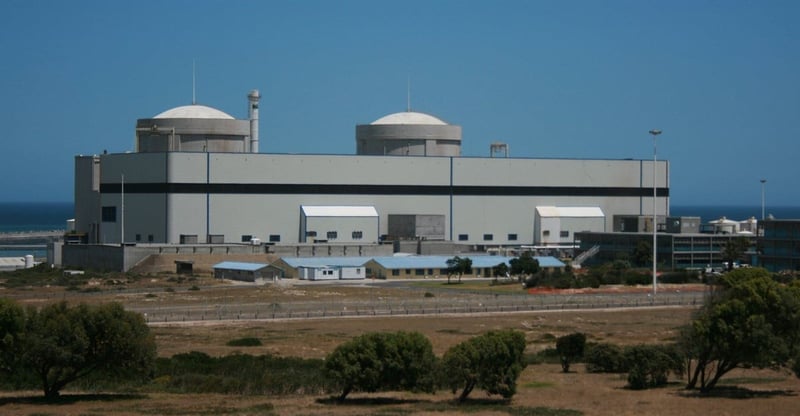
Eskom, which runs Africa's only operational nuclear power station near Cape Town, is preparing a request for information covering up to 5,200 megawatts of new capacity. Image credit: Pipodesign Philipp P Egli, CC BY 3.0, via Wikimedia Commons

Bridge Power Nuclear
Against the backdrop of the 2026 Africa Energy Forum in Cape Town, USP&E and BAM Energy launched Bridge Power Nuclear.
According to BridgePower Nuclear, the company’s model combines a near-term fuel-flexible thermal power block with a future small modular reactor (SMR) pathway on the same site.
The thermal phase is designed to be deployed within 12 to 24 months, using gas, diesel, HFO or dual-fuel generation depending on site requirements.
From 2029, BridgePower Nuclear plans to phase in Pearl SMR modules, subject to customer agreements, site selection, regulatory approvals and project financing.
The company says this would allow customers to transition from thermal generation to modular nuclear power without replacing the entire site, renegotiating the commercial structure or leaving critical operations exposed to power interruptions.
African needs
Will Gruver, chairperson and founder of USP&E, says the venture is designed around the practical realities facing African industry.
“African mines, industrials and data centre operators do not have the luxury of waiting for perfect grid conditions.
“They need firm power now, but they also need a credible pathway to lower-carbon baseload power before regulation, customers and capital markets force that transition for them.”
BridgePower Nuclear’s proposed technology platform is the Pearl reactor, developed by BAM Energy.
According to BAM Energy, Pearl has been designed to address three of the major barriers that have delayed many SMR programmes: dependence on enriched or HALEU fuel, reliance on heavy forgings, and complex on-site construction.
The company says the Pearl reactor is designed to be factory-built and transported by road, and uses a closed Brayton-cycle air turbine with zero water consumption for the power conversion cycle.
Dr Leon Malan, ThermoFluids and numerics engineer at BridgePower Nuclear, says this water profile is central to the African use case.
“Many of Africa’s most power-constrained industrial and mining regions are also water-constrained.
“A reactor architecture that removes water consumption from the power conversion cycle changes the siting conversation.
“It means modular nuclear power can be considered in regions where conventional water-cooled generation would be far harder to justify.”
SA expertise
The technology also draws on South Africa’s historic leadership in pebble-bed modular reactor development.
South Africa’s Pebble Bed Modular Reactor programme, developed by Eskom, positioned the country as an early participant in global modular nuclear design before the programme was discontinued following the 2008 financial crisis.
BridgePower Nuclear says BAM Energy’s Pearl reactor builds on that pebble-bed lineage through two decades of development work linked to the High Temperature Test Unit programme.
“South Africa helped shape the original thinking around modular nuclear,” says Malan.
“BridgePower Nuclear is about bringing that engineering lineage back to the African continent, but in a commercially practical model that starts with the power needs customers have today.”
Necsa and Siemen’s MOU
Similarly, the South African Nuclear Energy Corporation SOC Ltd (Necsa) and Siemens Energy signed a memorandum of understanding (MOU) for nuclear power in the country.
The agreement will support power generation, including new SMR technologies, skills development to serve the energy industry, advanced manufacturing for nuclear and general industry, as well as implementation of National Industrial Participation Programmes (NIPP).
“This MOU presents Necsa with a lever to strengthen partnerships that drive successful implementation of energy projects and innovation whilst also building local capability,” says Loyiso Tyabashe, the group CEO of Necsa.
“Delivery against the MOU will be closely monitored through joint working teams from identification of projects to implementation to ensure timely and effective coordination between the two organisations.”
The partnership aims to support South Africa’s broader energy security objectives while contributing to sustainable economic growth.
Necsa brings extensive capabilities in nuclear research and development, while Siemens Energy contributes global leadership in engineering, digitalisation, and energy technologies.
While the agreement is non-binding, it lays the groundwork for future, more detailed partnerships and commercial agreements.
Get new press articles by email
We submit and automate press releases distribution for a range of clients. Our platform brings in automation to 5 social media platforms with engaging hashtags. Our new platform The Pulse, allows premium PR Agencies to have access to our newsletter subscribers.
Latest from
- City Lodge Hotels Guests Receive 15% Off Avis And 10% Off Budget Car Rentals
- KoBold Metals Africa CEO Mfikeyi Makayi To Speak On AI In Mining At AMW 2026
- How Avocados Became A Cultural Symbol And What It Reveals About Consumer Trends
- Make Rentals Feel Homely With Removable Wallpaper and Dulux Colour Inspiration
- Norman Cook Fatboy Slim To Headline Two Anticipated South Africa Electronic Shows In 2026
- Transport Costs Drive CPI Surge As Fuel Inflation Hits 28.7 Percent
- TAT Dubai Director Highlights Youth Travel Trends Shaping Demand For Authentic Cultural Connections
- Retailers Face Rising Pressure As Consumer Confidence Stays Negative Amid Widespread Money Stress
- Retail Media Growth Outpaces Measurement Standards Across RMNs
- Comrades Marathon 2026 YouTube Broadcast Signals Shift Between Streaming And Television
- Tertiary Providers Reassess AI Strategies as Early Tools and Detection Software Fall Away
- Lappset Launches Prime Collection With New Modular Roofs Walls Balconies And Play Elements
- Summit Adds Experts on Quantum Computing, Sovereign AI and Future of Built Environments
- Frogfoot Rise Executive Highlights How Fibre Turns Township Homes into Hubs for Gamers and Creators
- CA&S Invests in TDMC to Strengthen Digital Commerce and Omnichannel Capabilities
The Pulse Latest Articles
- Pura And Soweto Cyclists Celebrate Youth Day 50 Years After The 1976 Uprising (15) (June 18, 2026)
- Magic: The Gathering Assembles The Marvel Super Heroes (June 17, 2026)
- Rethinking Performance: Part 4 Of 5 Why Judgement Matters In Performance Evaluation (June 15, 2026)
- How Should Water Feel? Inside The Innovation Shaping Modern Showering (June 15, 2026)
- Hisense Launches Soweto Football Pitch Project (June 12, 2026)