
Tiger Brands diverts 60 tonnes of waste from landfill across three sites for three consecutive months
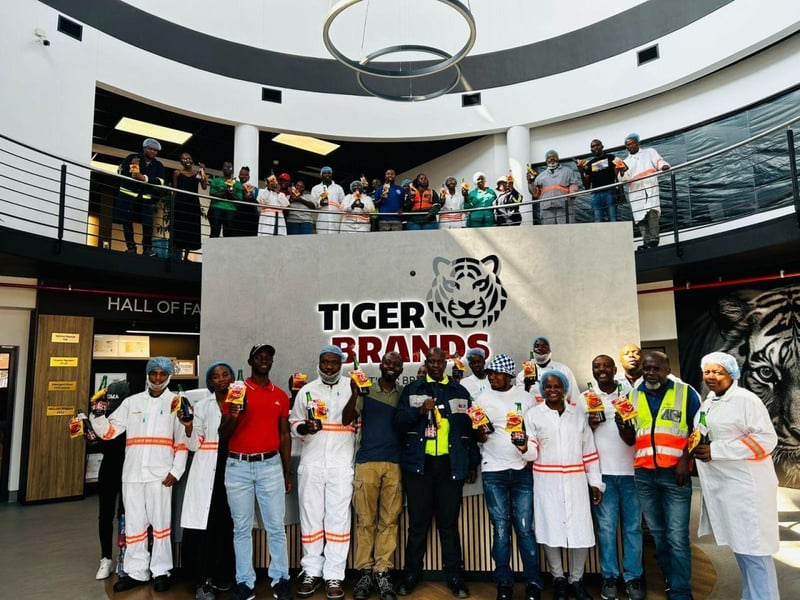
The company's Beverages and Home and Personal Care (HPC) plants in Gauteng, together with its Jungle cereals plant in Cape Town, have each achieved zero waste to landfill for three consecutive months.
The milestone forms part of Tiger Brands' goal to achieve zero waste to landfill across all its manufacturing plants by 2030.
Since 2022, the proportion of the group's total waste sent to landfill has fallen from 20% to 9.8% in 2025. Tiger Brands says it is also currently tracking ahead of its annual waste-reduction target for the 2026 financial year.
Different sites, different solutions
The three facilities have implemented different measures based on the waste generated through their operations.
At the Beverages plant, the focus has included employee training to improve waste segregation at source, working with suppliers to increase the use of recyclable materials and assessing individual waste streams to identify alternatives to landfill.
The HPC plant has introduced specialised treatment for certain waste streams, including thermal desorption for pesticide cans and cement kiln co-processing for cream sludge. Paper, cardboard and plastics are sorted and recycled on site, while a contractor waste management system has been introduced to improve monitoring and compliance.
At the Jungle plant, waste is diverted through refuse-derived fuel production, composting and conversion to animal feed. Improved segregation helps maintain the quality of materials for recovery, while waste service providers direct different streams towards reuse or recovery.
Working towards a circular approach
Praveen Balgobind, chief manufacturing officer at Tiger Brands, says reaching zero waste to landfill requires changes to established processes within manufacturing facilities.
“Achieving zero waste to landfill requires sustained changes in how waste is managed within our factories,” says Balgobind. “It means improving segregation at source, finding the right technical solutions and partners, and rethinking established processes.”
The company says the approach is intended to reduce its environmental impact while keeping materials in productive use through recycling, recovery, reuse and alternative treatment.
Tiger Brands brings Mrs Ball’s production in-house at R200m Paarl mega-site
Evan-Lee Courie 28 Jul 2026Food waste also in focus
The waste target forms part of Tiger Brands' wider environmental stewardship strategy, which also includes reducing food waste generated through production.
As a signatory to the South African Food Loss and Waste Initiative, the company committed to reducing production food waste by 50% by 2030.
Tiger Brands says it has recently achieved that reduction against its 2021 baseline and is now working on a new target aimed at further reducing food waste across its operations.