
WBWE Amsterdam 30 Nov–1 Dec - Bulk Wine Market Trends, Sustainability, and Global Trade Strategies
If you want to understand where the global wine industry is heading, don’t look only at retail shelves or export statistics. Look at what is happening in the bulk wine market.
For decades, bulk wine quietly underpinned international trade. It was often viewed as the industry’s practical solution for surplus production or private label programmes. Today, that perception has fundamentally changed. Bulk wine has become one of the most agile and strategically important segments of the global wine business, reflecting changing consumer behaviour, new business models and evolving sustainability priorities.
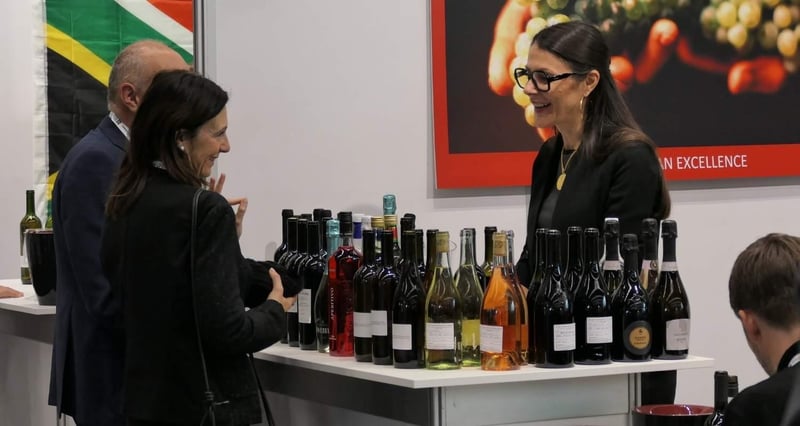
There is perhaps no better place to observe these changes than the World Bulk Wine Exhibition (WBWE), taking place in Amsterdam from 30 November to 1 December. A trade fair by history, yes, but today also an annual meeting point where producers, buyers, bottlers, retailers and brand owners take the pulse of the international market and position themselves for the year ahead.
Bulk has become a business strategy
The biggest misconception about bulk wine is that it is simply about moving excess stock.
That may once have been true, but today’s market tells a different story.
Bulk wine now supports some of the industry’s fastest-growing commercial models. Supermarket private labels, restaurant wine programmes, contract bottling, retailer-exclusive brands, and even celebrity labels all depend on reliable, flexible bulk supply. Producers are no longer selling only wine. They are offering consistency, flexibility and the ability to respond quickly to changing consumer demand.
In an industry where consumption patterns continue to evolve and traditional markets remain under pressure, flexibility has become a competitive advantage.
Buyers are looking for partners, not only suppliers
The conversations taking place at WBWE have also changed. Price remains important, but buyers increasingly want long-term supply partners who can demonstrate consistency, sustainability, traceability and technical expertise. Reliability has become just as valuable as volume.
The exhibition provides a rare opportunity for producers and buyers to have those conversations face-to-face. It is where relationships are built, new sourcing strategies are developed, and commercial partnerships often begin long before contracts are signed.
For many companies, the greatest value of attending is not the wine they sell during the exhibition, but the business they secure over the months that follow.
Sustainability is changing the economics of wine
One of the strongest themes influencing the global wine trade is sustainability. Retailers and importers are placing increasing emphasis on environmental performance, carbon reporting and responsible supply chains. And these requirements are fast becoming purchasing criteria.
Bulk wine plays an important role. Shipping wine in bulk for bottling closer to the point of sale reduces transport emissions, improves logistics efficiency and lowers packaging costs. As companies look for practical ways to reduce their environmental footprint without compromising quality, bulk wine offers an increasingly attractive solution.
This makes sustainability not only an environmental discussion but also a commercial opportunity.
New categories are driving new demand
The wine industry is no longer competing only with traditional bottled wine, but also with low- and no-alcohol products, ready-to-drink beverages, and premium blends, as alternative packaging formats continue to gain momentum across international markets. These categories demand flexible production systems and adaptable supply chains, both of which begin with bulk wine.
The ability to source quality wine efficiently allows brands to innovate faster, respond to emerging trends and launch new products with less risk. As a result, the bulk sector is becoming one of the industry’s most dynamic innovation platforms.
Why this matters for South Africa
South Africa has built an international reputation for quality, consistency and value. Those strengths position the country well in an increasingly competitive bulk market.
For South African producers, WBWE offers far more than an opportunity to secure orders. It provides direct access to global buyers, insight into emerging market trends and the ability to benchmark against competitors from every major wine-producing region.
It is also one of the few places where the industry can assess where demand is changing, which categories are gaining momentum and how international buyers are redefining value. At a time when export markets remain competitive and production costs continue to rise, those insights are just as valuable as the deals themselves.
A window into the future
Every year, the global wine industry gathers somewhere to discuss where the market is heading. Increasingly, that conversation is taking place in Amsterdam.
With more than 2 150 trade visitors from 60 countries, 240 exhibitors and over 1 000 scheduled business meetings at the previous edition, WBWE, organised by Vinexposium, has established itself as one of the world’s most influential business platforms for bulk wine and spirits. It brings together producers, buyers, bottlers, retailers and innovators who are collectively redefining how wine is traded, marketed and consumed.
The exhibition is all about understanding where consumer demand is moving, how sustainability is changing supply chains, which business models are gaining momentum and where the next commercial opportunities will emerge. And for South African producers, those conversations have never been more important.
In today’s global wine market, success belongs not only to those who produce exceptional wine but also to those who anticipate change, build the right partnerships, and position themselves where the future of the industry is being written.
Right now, that place is Amsterdam.