
Researchers Warn Of Rising Climate Risks To Nigeria’s Food Security And Crop Production
Written by: BizCommunity Editor Save to Instapaper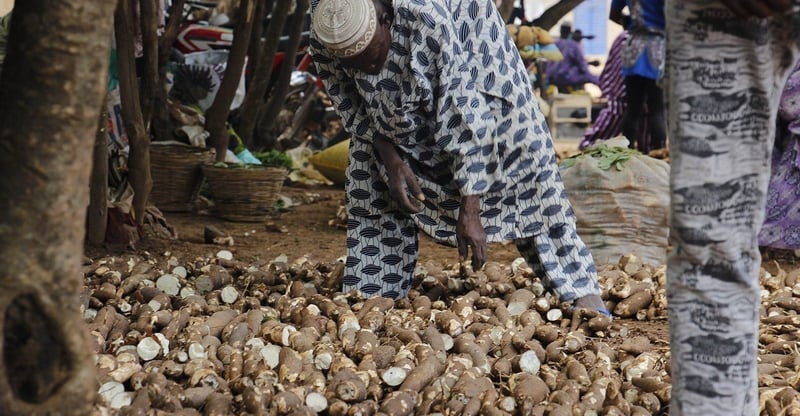
Source: Tenisnaps via Wikimedia Commons
Climate change remains one of the most critical challenges confronting Nigeria’s farming sector. The country’s agriculture is mainly rain-fed (not irrigated). This makes it highly vulnerable to changes in climate and extreme weather events such as prolonged droughts, erratic rainfall, flooding, and rising temperatures.
These climate-induced shocks reduce agricultural productivity, threaten food security through crop losses, damage rural livelihoods, and create economic stability. The increasing unpredictability of weather patterns disrupts planting and harvesting calendars, shortens growing seasons, and intensifies pest and disease outbreaks. Yet there hasn’t been much research into the problems that global warming causes for specific crops.
This creates a gap in understanding how individual crops and households are affected by specific climatic extremes. These insights are needed, though, in order for Nigeria to plan how to adapt to climate change.
We are agriculture, climate change and food security researchers who study how crops can be adapted to global warming. We interviewed 480 smallholder farmers from across Nigeria, to find out how their key food crops – maize, cassava, sorghum, rice, millet, soybean and yam – were affected by extreme weather.
These crops are extremely important to Nigeria’s food security and rural livelihoods. They’re the staple sources of nutrition and income for millions of smallholder farmers.
Our research found that drought is the biggest climate-related threat to food crops. Maize and cassava are most at risk of dying in times of drought. Flooding is also a serious concern, especially for maize. Changes in temperature have a smaller, more short-term effect.
Millet and yam can withstand some flooding but are still susceptible to drought. This means they are also vulnerable to climate change.
We found that rice is very sensitive to floods, which can greatly reduce its yield. Soybean is moderately affected by occasional waterlogging and heat. Sorghum, though usually drought-tolerant, suffers when droughts are long or severe. However, it handles short-term flooding better than other crops.
These results show that each crop reacts differently to climate stresses, so adaptation strategies should be tailored to each staple crop’s specific needs.
This is vital because if Nigeria’s staple crops are almost wiped out by extreme weather, the country will have less food, and these crops will cost more, meaning they may become unaffordable for millions of people.
Nigerian farmers are battling extreme weather
Nigerian farming is marked by two distinct seasons: the wet season, from the middle of April to October, and the dry season, from November to March. We looked at the five major agro-ecological zones in Nigeria – south-east, south-west, north-west, north-east, and north-central regions – and how the farmers cope in the two seasons.
We then asked the farmers how many crops they grew, how big their families were, and how much they sold their crops for in the 2024 agricultural season.
We also asked the farmers what they knew about climate change, how much at risk they thought they were, and what they were doing to adapt. A crop vulnerability scale was developed to assess the sensitivity of major crops to extreme climate events such as droughts, floods, excessive heat, wildfires and dry spells.
Most (62.9%) of the farmers were men. Previous research has found that male smallholder farmers have better access to resources such as land, credit and agricultural extension services compared to women farmers. A large number (72.6%) had developed other ways of earning money to cope with climate shocks.
Membership of cooperative societies was high, with 77.2% of farmers participating, which told us that the support farmers got from each other was very important. Over 80% of the farmers also had contact with government officials from the agricultural department, whose job it was to offer support and advice to farmers (extension officers).
However, only 42.3% received information about climate change. This limited farmers’ ability to make informed adaptation decisions.
Cassava and maize hit hard by climate change
The study found that climate change is a serious threat to food crop production in Nigeria.
Drought was the most severe risk, particularly affecting maize and cassava. Flooding was the second major threat. It drowned maize and cassava and caused their roots to rot. Millet and yam were able to adapt to different amounts of rain.
High temperatures had a smaller direct effect on the plants. However, prolonged heat increased pest infestations, which damaged the crops.
This is worrying because droughts in Nigeria have become more frequent and prolonged over the past two decades. The number of extreme dry spells has increased by an estimated 28% compared to the 1990s. The number of places in Nigeria that are affected by flooding has increased due to more erratic rainfall and poor drainage.
What needs to happen next
We recommend that proactive adaptation measures are needed urgently. These include:
- Drought-resistant crop varieties, such as improved maize or millet varieties that tolerate prolonged dry spells.
- Efficient water management, like constructing small-scale rainwater harvesting or drip irrigation systems.
- Improving drainage systems by clearing blocked channels and creating raised beds to reduce waterlogging.
- Bringing smallholder farmers into cooperatives. These are collectives that can arrange shared resources, collective marketing, and access to inputs (fertiliser, equipment) at lower costs.
- Since the farmers have good access to extension services, these officials should be used to provide new technology and training about climate-smart agriculture to the farmers.
Also, early warning systems are essential for reducing climate risks. But in the absence of these, farmers can still adopt practices like crop diversification, staggered planting, and community-based monitoring to anticipate and reduce losses.
Governments, agricultural extension agencies, farmer cooperatives and development partners must collaborate to provide resources, knowledge and support to help smallholder farmers adapt.
This article is republished from The Conversation under a Creative Commons license. Read the original article.
Get new press articles by email
We submit and automate press releases distribution for a range of clients. Our platform brings in automation to 5 social media platforms with engaging hashtags. Our new platform The Pulse, allows premium PR Agencies to have access to our newsletter subscribers.
Latest from
- How AI Tools Are Reshaping Student Learning And Challenging Academic Integrity
- Economic Growth At Risk As SME AI Adoption Lags Without Targeted Development Support
- Equipment Donations Enable Arts Education And Dementia Care Organisations To Expand Their Impact
- Cassava Technologies Partners With Axon To Enable AI-Managed Networks Across The Continent
- AWIEF Establishes Influential Advisory Board To Scale Women-Led Innovation Across Africa
- Research Highlights Climate And Environmental Factors Behind Limpopo Flooding Severity
- Mining Indaba 2026 Sees Access Bank Champion Collaboration In African Mining Finance
- Kaspersky Research Highlights The Need For Stronger Cybersecurity In Digitally Connected Families
- Refurbished Nieuwmeester Dome Set To Support Parliamentary Sittings In Cape Town
- Portfolio Committee On Communications To Scrutinise Broadband Infraco Operations And Capacity
- Pnet’s Get A Better Boss Campaign Takes On Burnout And Bad Management With Sharp Local Insight
- Inospace Expands Cape Town Portfolio With Adaptive Reuse Of High-Visibility Logistics Site
- Pharmacy Education Set For Improved Quality Assurance Under CHE And SAPC Agreement
- VML’s Tomorrow’s Commerce Report Highlights Tension Between AI Progress And Human Preference
- Actorvate Marks Over A Decade Of Driving Results With Strategic Influencer And UGC Marketing
The Pulse Latest Articles
- Bite Sized Wellness, Big Time Benefits (January 28, 2026)
- Opinion Piece: The Power Of Engagement Surveys (January 26, 2026)
- Meet Gloot Energy: Power Made For Women (January 22, 2026)
- The Silent Threat: Why The Passively Complacent Workforce Undermines Business (January 20, 2026)
- Amarantine Travels Announces A Refined Approach To Women-only Travel, Grounded In Intention And Support (January 19, 2026)