
Vulpes Wines Founder Nuschka De Vos Shares Story Of Passion Purpose And Sustainable Winemaking
Written by: WineLand Media Editor Save to Instapaper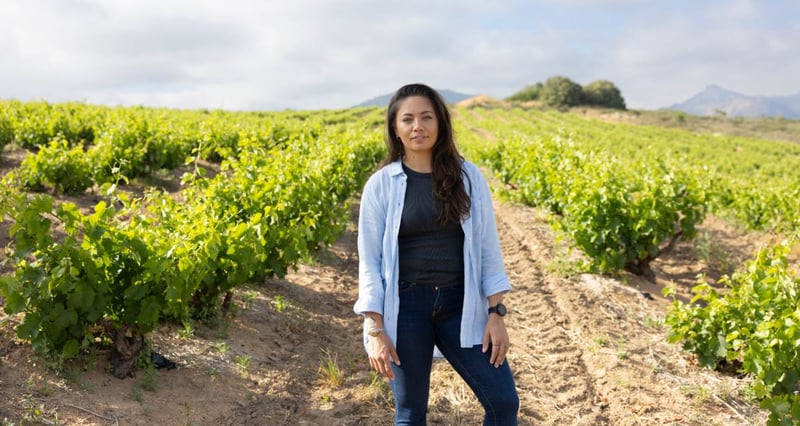
Nuschka de Vos never pictured herself doing a routine desk job for a big corporate. Even as a child, she was always drawn to the outdoors. Now, as the founder of Vulpes Wines, her curiosity has led her on a path defined by vineyards, people and a sense of place.
Nuschka de Vos grew up in Pretoria, but everything shifted in 2003 when her family moved to a small farm between Plettenberg Bay and Knysna. She went to a farm high school in Plettenberg Bay, where classes were practical and closely tied to nature. At the same time, her parents started growing organic vegetables. “It was a big change from our corporate life in Pretoria to a more laid-back, rural lifestyle,” she says. That contrast planted a seed for how she would later view farming and sustainability.
After school, she resisted the pressure to immediately commit to a degree. Instead, she tested her interest in wine by first working in the industry. In 2008, she secured an internship with viticulturist Rosa Kruger at L’Ormarins. Five months in the vineyards confirmed she was on the right track.
The work experience gave her purpose and allowed her to be creative. Food and wine were always a big part of her family, and they often visited wineries during trips to the Cape, so wine was familiar to her. Even as a child, she paid close attention, tasting and smelling wine, and asking questions about it.
Rosa’s influence was foundational. She taught Nuschka that vineyards always come first. “The quality of work and the effort you put into understanding your vineyards really matter,” Nuschka says. Relationships are just as important – you need to work with growers, vineyard teams and those who truly understand the land.
After a short stint in London, she returned to South Africa in 2009 and enrolled for a BSc in viticulture and oenology at Stellenbosch University. During her university vacations she often returned to Rosa to gain more experience in the vineyards. Her final year coincided with the introduction of the revised degree programme, which included an extended practical component. She completed her viticulture dissertation with Rosa, and winemaking dissertation and cellar internship with Yvonne Lester at Rupert & Rothschild.
After graduating, Nuschka gained more experience by working on harvests both in South Africa and abroad. She returned to Rupert & Rothschild for another harvest, then worked in the Mosel wine region in Germany, Bordeaux in France and later in New Zealand. Each place taught her something new. In Bordeaux, she saw the impact of resources and scale. In the Mosel, she learned how much work and care steep vineyards need. In New Zealand, she experienced highly organised, large-scale production. “I tried to take in as much information as possible, and learn what works and what doesn’t,” she says.
She was offered a job in New Zealand but turned it down because the wine style wasn’t what she wanted to make. She likes doing smaller, hands-on work and, for her, where the work happened was more important than how much she produced.
When she returned to South Africa, she helped set up vineyards on her family’s farm near Plettenberg Bay. She then went to Italy to learn more about Tuscan wines. After a brief period at a winery near Stellenbosch that was also not the right fit, she was appointed as assistant winemaker at Reyneke Wines at the end of 2015.
She spent six important years at Reyneke, learning about organic and biodynamic farming methods, soil health and keeping vineyards strong. “When your soil is healthy, your vineyards thrive,” she says. She noticed that good farming practices led to better balance, healthier vines and better wine quality.
By 2021, she felt she had grown as much as she could in her role and was ready to make her next move.
The making of Vulpes Wines
Vulpes Wines was not launched with a grand plan or a broad range. It began with a single wine and a moment of necessity. Nuschka had intended to work a harvest in Chile at Emiliana, but Covid restrictions closed that door. “Sometimes, life pushes you in a certain direction and you have to act quickly,” she says.
She chose to act rather than wait. In 2022, she made her first wine, Vulpes Chama, a Chenin Blanc from the Paardeberg in the Swartland. It was a small start, but an important one.
The name Vulpes carries both personal and symbolic meaning. Her surname, De Vos, translates to “the fox”, and Vulpes is the scientific name for the species. “Foxes know how to survive and figure out what needs to be done to make things work,” she says. To her, the fox stands for curiosity, adaptability and quiet resilience, traits for which South Africans are famous.
From the outset, Vulpes Wines was guided by site rather than region. Nuschka sources grapes from the Swartland, Citrusdal Mountain and Stellenbosch. “Often, there’s something unique about the place and terroir that stands out,” she says. “That’s what I want to highlight.”
Her wine range includes two Chenin Blancs and a Cabernet Sauvignon. Although there are two wines made from the same grape variety, the wines are quite distinct from each other. Factors such as soil, altitude, farming practices and climate all influence their character.
“I don’t want to overwork or overmanipulate the fruit,” she says. She uses natural yeasts, skips adding acid, and is careful with sulphur and bentonite to protect the wines, especially when they’re for export. “There’s a balance between letting things go wild and keeping control,” she says.
She also sees sustainability in a broad way. It’s not just about the environment, it means paying growers fairly, supporting workers and creating something that will last. “It’s easy to start something,” she says. “Making it last is the real challenge.”
Built to last
Now in its fifth vintage, Vulpes Wines is exported to the United Kingdom and America, but also has a foothold in the local market. There’s a deliberate balance between markets.
Looking back, Nuschka believes focus has been one of her greatest lessons. “Rather than chasing too many ideas, I learned the value of doing a few things well and refining them over time.” The most rewarding part of building Vulpes Wines has been the relationships formed along the way, and the vulnerability required to put something personal into the world.
When asked what she wants people to feel when they open a bottle of Vulpes, her answer is simple. “I just want people to enjoy the wine and think, ‘Wow! That was delicious.’ ” For her, it’s not about impressing critics, it’s about everyday enjoyment.
For anyone new to wine, her advice is simple and personal. “Find a vineyard that really speaks to you,” she says. “When you have that, it becomes much easier to make a great wine and enjoy the process.”
To explore more articles in our April issue, Winemaking 101, purchase our digital or print magazine here.
Get new press articles by email
We submit and automate press releases distribution for a range of clients. Our platform brings in automation to 5 social media platforms with engaging hashtags. Our new platform The Pulse, allows premium PR Agencies to have access to our newsletter subscribers.
Latest from
- The Animation School Celebrates Triple Shortlist At Renowned New York Festivals TV And Film Awards
- South Africa Introduces Fuel Relief Measures As Price Increases Threaten Food Security And Growth
- SMEs Across Africa Face Mounting Pressure As Rising Oil Prices Impact Trade And Profitability
- South African Farmers Face Rising Fuel Costs And Supply Concerns Amid Global Energy Disruptions
- Volvo Highlights Surge In EV Interest As Consumers Embrace Long Term Value And Efficiency
- Suriname Emerges As Key Partner In US Strategy To Strengthen Caribbean Energy And Infrastructure
- Afreximbank Commits Five Billion Dollars To Accelerate Caribbean Energy Infrastructure And Workforce Growth
- Everest Wealth Enters Debt Market To Unlock New Investment Opportunities In South Africa’s Credit Sector
- eDeaf And Deafinition Drive Workplace Inclusion With Skills Training And Employer Support Programmes
- South Africa Citrus Exports Set For Growth Despite Global Uncertainty And Mixed Crop Performance
- Legal Aid SA Expands Eligibility Criteria To Ensure Greater Access To Affordable Legal Services
- Water Security Africa Brings Experts Together To Advance Reuse Recycling And Sustainable Water Management
- Jockey Launches Autumn Winter 26 Collection Designed For Comfort Confidence And Lasting Quality
- New Research Highlights Urgent Shift Towards Human Skills As AI Transforms Global Workforce
- Vicinity Media Highlights How Retail Fundamentals And Digital Tools Combine To Drive Real Results
The Pulse Latest Articles
- Female Founders Announce Launch Of South Africa’s Premium Brand Advisory Firm: Aura (April 2, 2026)
- Ai Fraud Defence Launches In South Africa As Deepfakes Hit Financial Institutions (April 1, 2026)
- Influencers Share Their Favourite Holiday Games (March 26, 2026)
- Procurement Can Buy Pr. It Cannot Buy Judgement. (March 25, 2026)
- Cape Town Fintech Happy Pay Raises $5m To Reinvent Bnpl In South Africa (March 23, 2026)