
If you truly want to be a Husband and Father, you should probably know how to run a home
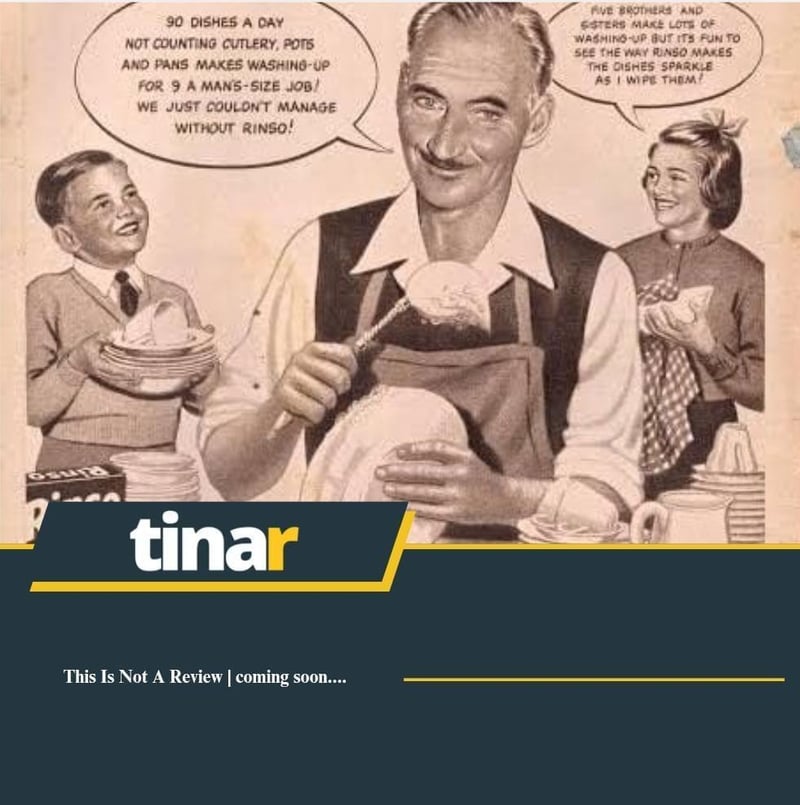
There was a time when South African high schools taught a subject called Home Economics. For some people, the name probably conjures up images of girls in classrooms learning how to cook, sew or bake, preparing themselves for some imagined future as wives and mothers. But that is the lazy reading of the subject.
This Is Not A Review or a nostalgic stroll into the past, but with my internal hindsight and my obviously chaotic musings, Home Economics was much bigger than that. It was an education in food and nutrition, clothing and textiles, household management, budgeting, consumption, housing, family life and the practical economics of running a home. It taught young people about the things that make everyday life function. And given the way things are moving, perhaps that is precisely why Home Economics deserves to be reconsidered. Not because South Africa needs to return to a world where women are trained to keep house for men and his children, but because we may have gone too far in the other direction… educating young people to enter the economy while giving considerably less attention to teaching them how to manage the lives and homes they are eventually expected to build.
The genius of Home Economics was that it understood something education can sometimes forget: a household is an economic unit. People have to eat, they have to buy things, money has to be allocated, clothes have to be maintained, food has to be stored and prepared, children have to be cared for, a home has to be cleaned, organised and maintained, decisions have to be made about what is necessary, what is desirable, what can be afforded and what is simply a waste of money. You can argue with yourself about this but that is economics, even if we don’t call it that. It is also health, nutrition, consumer education and resource management. A young person who knows how to calculate a percentage but cannot construct a basic household budget is mathematically educated but practically exposed. Someone can leave school knowing the chemical composition of carbohydrates and still have no idea how to feed themselves properly for a week without spending recklessly. Home Economics brought those seemingly ordinary things into the classroom and treated them as knowledge worth having. The irony is that these are precisely the skills that become painfully obvious when people enter adulthood, move out, have children, lose income or suddenly have to make a household work on their own.
And while I make this argument, I am not oblivious to the history of Home Economics as a subject in our school’s system which cannot be separated from the society in which it was taught. Its predecessor, Domestic Science, existed within a deeply gendered social order, and Home Economics inherited some of that baggage. The knowledge was often directed at girls because the prevailing assumption was that women would become responsible for the home. If you criticize the subject from that point, that criticism is fair, what I think is less fair is allowing the history of the subject to obscure the usefulness of the knowledge itself. Cooking is not a woman centered role, cleaning is not a woman centered role, understanding a household budget is not a womens role, knowing how to care for a baby and children are not the womans role only, and so goes to sewing a button back onto a shirt or patching up a dent on a clothing item. These are simply things human beings in 2026 and beyond need to know how to do, so this becomes particularly interesting now because we are having increasingly loud conversations about young men feeling left “behind”, the growth of incels, red pill content and those very young men and their peers wanting marriage, fatherhood and family life ad a concept of showmanship and “growth”. And so I ask, “If a young man says he wants to be a husband and a father, why would this education not help him understand what those roles actually require?”
We have spent years telling men that fatherhood should mean more than bringing home a salary, yet somehow the practical education required to participate in family life remains something they are expected to acquire by accident, or in most cases, not acquire at all. Wanting a family is not the same thing as knowing how to run one, this is where South Africa should perhaps become more uncomfortable with itself. We have enormous conversations about unemployment, poverty, food insecurity, the cost of living, gender-based violence, absent fathers, struggling households and the breakdown of social structures, but we rarely talk about the ordinary competencies that sit underneath some of these pressures. Education cannot solve all of those problems, and I am certainly not trying to present Home Economics as some magical cure for South Africa’s social ills. But I do believe, with conviction that education can give people tools, teaching every child how to cook nutritious food, manage a household budget, understand consumption, care for clothing, maintain a living environment and participate in domestic work would not eliminate poverty or misogyny, but it would, however, challenge the idea that domestic life is somebody else’s responsibility. It would tell boys that being a husband includes competence, not simply provision. It would tell girls that they are not born with an obligation to carry a household simply because they are women. It would tell future parents that raising children is work, and it would tell young people that adulthood is not simply about earning a salary and buying things… it is also about knowing what to do with the life that salary is supposed to support, if you seek to build a family within the structure of fatherhood and husbanding.
The history of the subject itself tells us something about how education changes, from Domestic Science to Home Economics right down to Consumer Studies. Domestic Science emerged around domestic skills and vocational preparation, Home Economics broadened the discipline into the management of the household, family and its resources, and unfortunately for human evolution, Consumer Studies placed greater emphasis on consumption, products, resources and the consumer within the economy. Yes, I can reluctantly agree that none of those transitions are necessarily wrong, but perhaps, somewhere along the way, we became too comfortable with the idea that the home was either a woman’s domain or an outdated concept, rather than recognising it as one of the most important economic and social environments in which human beings live. I think Home Economics was a brilliant subject to have in schools, and I would not be particularly interested in changing its name to make it sound more modern, I would change its PR. Home Economics should belong to boys and girls as a subject that both boys and girls in the secondary school sphere should take. If South Africa wants young people to become good husbands, wives, fathers, mothers, partners and economically responsible adults, then we should teach them what those lives require.
A few months ago, I saw a clip of a young boy, discussing in great seriousness with his mom about wanting a “doll” his argument was that: How do I become a good father, if I am not allowed to have dolls as I do cars etc he made reference to his uncle who has a child and a care. I have held onto that conversation between a mother and her “boy child”, and after months of thinking about that clip and my ongoing musings around socio-economic issues South Africa is riddled with, I feel emboldened to say it with my chest: “Bring Home Economics back, make it compulsory, strip away the gender enforcement and teach the actual economics of the home.” Because perhaps part of changing a society is not always about creating another grand programme or another slogan. Sometimes it is about teaching people, while they are still young, how to feed themselves, manage their money, care for another person and take responsibility for the place they call home.