
Digital Gender Gap Persists As Global Efforts Push Girls Toward Stem Careers
Written by: BizCommunity Editor Save to Instapaper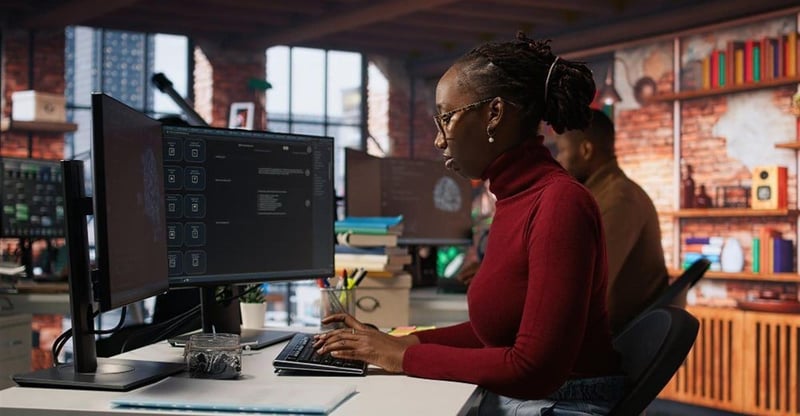
On the fourth Thursday of April, the International Telecommunication Union (ITU) celebrates global efforts to empower girls and young women to pursue careers in Science, Technology, Engineering and Math (Stem) fields. There are speeches about empowerment, photographs of smiling young women at laptops, and hashtags celebrating possibility.
All of it matters. Representation, exposure and symbolism matter. But symbolism often disguises the harder question.
According to the GSMA Mobile Gender Gap Report 2025, more than 885 million women in low- and middle-income countries lack access to mobile internet. In Sub-Saharan Africa, women are 25% less likely than men to own a smartphone. Even in South Africa, where access gaps are narrower, meaningful digital participation remains uneven.
Use it vs shape it
In a rapidly changing world of technological advancement, the question is no longer whether girls should have access to technology, but whether they are being prepared merely to use it or to shape it.
A girl may have access to a smartphone and still feel that technology is “not for her.” She may have internet access and still never imagine herself as an engineer, a coder, a data scientist or an AI entrepreneur.
A 2019 study by the Institute of Electronics and Electrical Engineers (IEEE) found that in marginalised South African communities, deeply held beliefs about gender continue to shape participation in technology.
Boys are associated with machines, experimentation and technical curiosity, while girls are steered towards care, service and support roles, leaving technology quietly coded as masculine. By the time formal opportunities arise, the story has often already been told.
The digital divide is often spoken of as though it were simply a matter of who has a device and who does not. It is not. The IEEE study showed that women meaningfully integrate technology into their lives for social, educational, economic, and personal purposes. However, their participation is often constrained by poor digital skills, lack of confidence, affordability, time poverty, limited social support, and even resistance from male partners.
This tells us something important, namely that the challenge is not simply getting girls interested in ICT, but creating conditions in which women can enter, remain, lead and exercise real agency in the digital economy.
Employment imbalance
While women hold just 23% of jobs, only about 13% of Stem graduates in South Africa are women, according to the 2024 Institute of Information Technology Professionals South Africa (IITPSA) survey.
At the leadership level, the picture is even worse, with women occupying only a fraction of executive and chief executive roles in ICT companies. The pipeline narrows as influence grows, leaving only 5% of ICT CEOs as women. But why should society care?
Overlooked perspective
Because technology is never neutral; it carries the assumptions, priorities and blind spots of those who build it. When women are absent from the rooms where systems are designed, entire realities can be overlooked.
Innovation narrows, products become less responsive and algorithms less fair. Economies grow more slowly, while societies risk automating old inequalities under the guise of progress.
Technology amplifies the assumptions of those who build it. Artificial intelligence reflects the data it is trained on, and policy echoes the voices in the room.
If women remain underrepresented in the industries building today’s technologies, they are likely to be underrepresented in the rooms where tomorrow’s rules are written. This matters even more as South Africa begins serious conversations about artificial intelligence.
If the same inequalities that have shaped education and the workplace are left untouched, artificial intelligence will not reduce inequality. It may deepen it. If girls and women, especially poor Black girls and women from rural and township communities, are absent from the spaces where technology is designed and regulated, the future may once again be built without them in mind.
Meaningful inclusion
The real test of national seriousness is not whether a few girls at elite schools learn to code. The question is whether girls in township, rural, and no-fee schools are meaningfully included in the infrastructure of the future.
That requires more than commemorative days. It requires curriculum reform, investment in teachers, and early exposure to coding, robotics, and data literacy. It also requires affordable access to devices and connectivity, as well as workplaces that do not exclude women.
Ultimately, it requires a national imagination bold enough to see girls not only as users of technology but as its creators. If South Africa is serious about artificial intelligence, International Girls in ICT Day should not simply be a day when girls are invited to touch the machine.
It should be the day we ask whether they have been invited to the table where the machine is imagined, designed, regulated and owned. Anything less is a celebration without transformation.
History has taught us that symbolic inclusion, without structural inclusion, is simply exclusion dressed in better language.
Get new press articles by email
We submit and automate press releases distribution for a range of clients. Our platform brings in automation to 5 social media platforms with engaging hashtags. Our new platform The Pulse, allows premium PR Agencies to have access to our newsletter subscribers.
Latest from
- Eighth Consecutive Level 1 Rating Highlights Samsung Long Term Investment In Inclusion
- Metro FM Music Awards Celebrate 40 Years With Big Wins For Ciza And Shandesh
- Angola Oil And Gas Conference To Feature Siemens Energy On Power And Infrastructure
- Woolworths Reassures Customers On Product Availability During Beyers Dispute
- Sanral Leads Landmark Upgrade To Enhance Capacity And Safety Of Key N1 Tunnel
- Innovative NHLS Dashboard Harnesses Data To Transform Diabetes Care And Outcomes
- New Framework Guides Businesses In Selecting Effective PR Agencies For Impact
- Kabelo Mabalane Joins Nedbank IMC To Share Insights On Resilience And Reinvention
- 75 Years Of Volkswagen In South Africa Honoured Through Revived Iconic Advertising Campaign
- WPP Maintains Outlook As Q1 Performance Aligns With Expectations Amid Market Uncertainty
- Ghana Strengthens Exploration Strategy With National Survey Partnership In Key Regions
- Museum Of Illusions Expands To Durban With Immersive Experience And Interactive Exhibits
- Absa Rewards Pays Out R430 Million As Beauty Spending Drives Customer Value
- Shopping On Eastway Set To Open As Midstream Expands With Lifestyle Focused Retail Hub
- NSFAS Resolves Payment Delays While Addressing Data Issues Affecting Thousands Of Students
The Pulse Latest Articles
- Building Ethical Ai Governance In Hr: From Policy To Practice (April 28, 2026)
- Tension Builds As Aquila Boxing Weigh-in Sets The Tone For Fight Night (April 27, 2026)
- Aquila Boxing Promotions Launches Knockout Chaos 1 With Explosive 2026 Fight Night Line-up (April 27, 2026)
- The Rise Of The Bathroom Selfie: How Skincare Became A Signal Of Personal Identity (April 27, 2026)
- The Ai Antidote: Autonomous Home Ecosystems Reducing Tech Fatigue And Improving Quality Of Life (April 27, 2026)