
International Zinc Association Highlights Galvanised Wire As Key To Sustainable African Development
Written by: BizCommunity Editor Save to Instapaper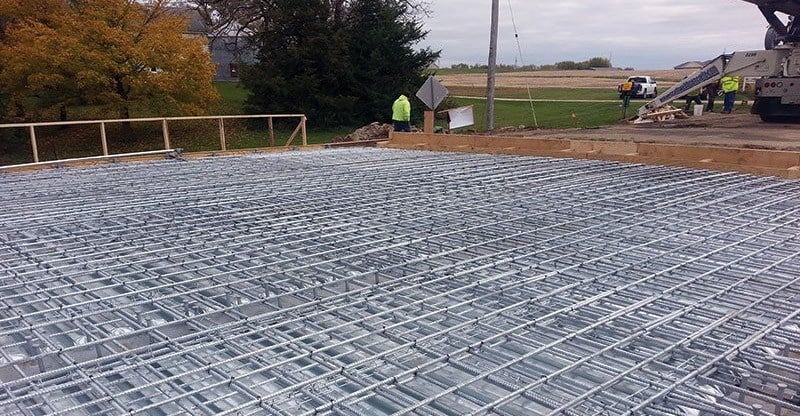
Source: Supplied. Galvanised rebar in place before the concrete pour.
As countries invest in roads, energy, housing and industrial development, durability has become non-negotiable. Across a continent defined by extremes — from corrosive coastal air to harsh inland climates — zinc-coated steel provides the long-term corrosion resistance needed to protect assets, extend service life and reduce maintenance costs, making galvanised wire an unsung enabler of Africa’s infrastructure ambitions.
According to Simon Norton, director of the International Zinc Association (IZA) Africa, “Hot dip galvanised wire is a simple yet vital material, the silent shield protecting our infrastructure. The longevity and resilience it affords are essential to building sustainable and durable systems that can withstand Africa’s diverse and often harsh environmental conditions.”
Hot dip galvanised steel wire is produced from wire rod that is drawn, heated, cleaned, and finally coated with zinc by immersion in a molten bath. The thickness of the zinc layer, generally between 30 and 290g per square metre, is selected according to the environment in which the product will operate.
The galvanising process provides a bright, even surface with a consistent zinc weight per square metre and a strong iron-zinc alloy bond. This results in exceptional corrosion resistance and durability over time, ensuring that the wire performs reliably even in demanding outdoor and industrial settings.
Built for endurance
The applications of hot dip galvanised wire are extensive. It is used in fencing, gabion mesh, barbed wire, cable armouring, wire rope, and packaging, as well as in construction, civil engineering, and power infrastructure.
Due to its thicker zinc coating, hot dip galvanising provides far superior corrosion protection compared to electro-galvanising. This makes it indispensable in sectors such as chemical processing, petroleum refining, marine exploration, metal structures, and shipbuilding, where harsh conditions demand materials that can endure.
The production process begins with pickling and annealing to remove oxides, oil, and other impurities from the surface of the steel rod. The wire is then drawn to the desired diameter before being immersed in a molten zinc bath. After galvanising, it is coiled and prepared for further use in industrial and construction applications. The result is a robust, cost-effective, and low-maintenance material that delivers consistent performance year after year.
Longevity meets value
Norton adds that the beauty of zinc lies in its simplicity: “Once applied, it delivers years, often decades, of protection with minimal maintenance. Galvanised steel wire provides a level of security and durability that simply cannot be matched by uncoated steel or other coatings.”
This combination of performance and affordability is why galvanised wire continues to play a crucial role in supporting Africa’s development. In harsh or high-moisture conditions, galvanised wire can last between 20 and 25 years, while in more moderate environments it can remain serviceable for half a century or longer.
As infrastructure investment continues to expand across Africa, the demand for reliable, long-lasting materials will only increase. Galvanised steel wire ensures that bridges, power lines, enclosures, and other vital structures remain strong and functional for decades.
“Zinc galvanising embodies sustainability and value. It helps us build infrastructure that lasts, protecting not only the steel beneath it, but the future above it,” concludes Norton.
Get new press articles by email
We submit and automate press releases distribution for a range of clients. Our platform brings in automation to 5 social media platforms with engaging hashtags. Our new platform The Pulse, allows premium PR Agencies to have access to our newsletter subscribers.
Latest from
- Dr Linda Meyer Warns Students And Families To Verify Accreditation Amid Surge In College Scams
- The Year Of Impact Sees SME South Africa Strengthen Its Mission To Help SMEs Start And Scale
- Northlink ECD Reinforces High Academic And Professional Standards For 2026 Student Intake
- TikTok Secures Future In US Market After Landmark Deal Ends Years Of Uncertainty
- Gauteng Health Milestone As Steve Biko Academic Hospital Delivers First Public Sector Cryoablation
- Arlecchino By Tashas Introduces Relaxed Mediterranean Flavours To Cape Town’s Sea Point
- Rode Names Jess Moyer COO As Company Expands Data Solutions And Market Reach
- WPP Consolidates Creative Production Capabilities With Launch Of WPP Production Platform
- Provantage Aligns With Broadsign To Build A Smarter More Connected Out-Of-Home Network
- Home Affairs Committee Calls On Limpopo Communities To Shape Final Marriage Bill Hearings
- Truworths Projects Stable Half-Year Earnings Despite Pressure On South African Consumers
- Smartcat Predicts 2026 Will Redefine Marketing Success Through Orchestration Not Content Volume
- South African Mining Sector Records Surprise Production Decline After Months Of Stability
- IFICA Announces Acting President Appointment As Adesh Chetram Steps Into Advisory Role
- SA Rugby Welcomes Biogen As Official Nutrition Partner In Strategic Performance-Focused Deal
The Pulse Latest Articles
- Meet Gloot Energy: Power Made For Women (January 22, 2026)
- The Silent Threat: Why The Passively Complacent Workforce Undermines Business (January 20, 2026)
- Amarantine Travels Announces A Refined Approach To Women-only Travel, Grounded In Intention And Support (January 19, 2026)
- Back To Work, Back To Balance: Rethinking The 3pm Slump (January 15, 2026)
- Zuru Turns Fifa World Cup 2026™ Into The Next Global Collectibles Phenomenon (December 17, 2025)