
User Safety - safe
She said illegal medicine sales on online platforms are becoming increasingly normalised.
“One of my biggest concerns is that these activities are becoming normalised,” said Norcross, who also serves on the board of the Innovative Pharmaceutical Association South Africa (Ipasa).
“When medicines are openly advertised on websites, social media platforms and messaging services, people can begin to assume they are legitimate simply because they are visible.
“Visibility should never be confused with legitimacy,” she cautioned.
Norcross said Novo South Africa has identified and reported 39 suspected unlawful medicine-related cases so far in 2026, most linked to websites, social media platforms, including Instagram, and WhatsApp channels.
The cases included suspected illicit online sales, compounding activities, wellness clinics, aesthetic facilities, unauthorised medicine distribution and other potentially unlawful healthcare-related activities.
“The majority of activity we’re seeing is no longer happening in back rooms,” she said. “It’s happening online, in plain sight.”
More compounding, more problems
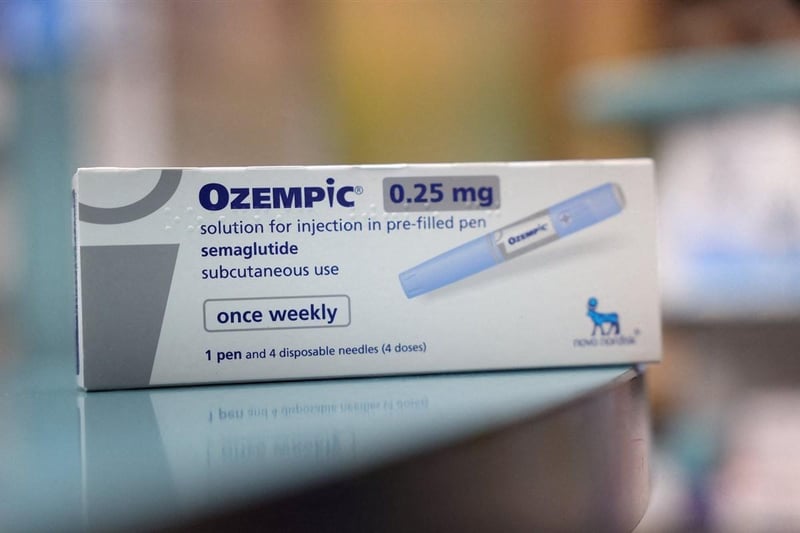
Compounding — pharmacists preparing customised medicines for patients who need a variation of a commercially available product — has become a growing problem as the popularity of GLP-1 medicines, including Novo Nordisk’s Ozempic and Wegovy and Eli Lilly’s Mounjaro and Zepbound, has fuelled growth in compounded versions.
“What we are seeing in the market, and which we are against, is when pharmacies become small-scale manufacturers,” said South African Pharmacy Council (SAPC) registrar and CEO Vincent Tlala.
This has prompted the South African Pharmacy Council (SAPC) and the South African Health Products Regulatory Authority (Sahpra) to update the country’s minimum standards and compounding guidelines.
“There is a scourge of compounded products, especially in the area of weight-loss,” Daphney Fafudi, Sahpra’s senior manager for market control, told Reuters.
Tlala said the council was concerned pharmacies were compounding medicines in anticipation of demand rather than for specific patients.
Fafudi added that Sahpra’s updated guidelines and the pharmacy council’s revised minimum standards were intended to clarify what is and isn’t permissible when compounding medicines, reinforcing the regulatory stakes.
While existing regulations already include provisions governing compounding, differing interpretations have raised regulatory stakes and led to industry disputes, including litigation involving local pharmaceutical compounding company iDexis and Novo Nordisk.
The council expects to review the revised standards in February, with publication targeted for March. Tlala said Sahpra is expected to release the updated guidelines at the same time.