
South Africa’s Education System Under Strain – How Do We Move Forward?
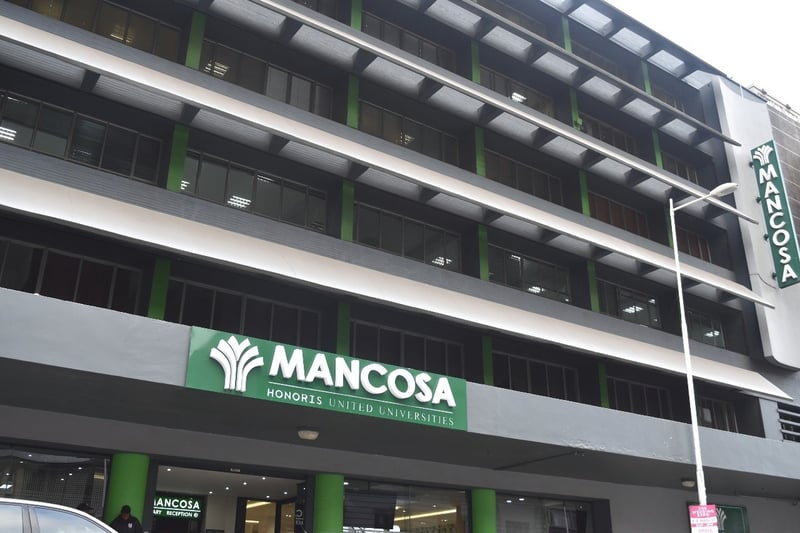
Johannesburg, January, 2026 - South Africa's education system continues to face significant challenges that demand urgent and innovative responses. Unequal access to technology skills across urban, peri‑urban, and rural schools has widened the digital divide.
Public tertiary education providers remain oversubscribed, leaving thousands of students without placement. At the same time, students entering tertiary education often bring varied skill sets, making it difficult for them to adapt to the demands of modern learning environments.
"These realities underscore the need for agile, inclusive, and visionary institutions that can transform lives through education," says Professor Zaheer Hamid: MANCOSA Director and Chief Academic Officer.
Unpacking the Challenges
The South African education landscape reflects both promise and pressure. In urban centres, students often have access to advanced digital tools, coding programmes, and science, technology, engineering and mathematics (STEM) initiatives. Yet, in peri‑urban and rural schools, access to technology remains limited, leaving learners underprepared for the digital economy. This inequality perpetuates socio‑economic divides and restricts opportunities for upward mobility.
"Oversubscription at public tertiary education providers compounds the issue. Each year, thousands of qualified students are turned away due to limited capacity. This bottleneck not only stifles ambition but also undermines national development goals, as skilled graduates are essential for economic growth," says Prof Hamid. According to Statistics South Africa, in 1996, a mere 6.6% of individuals aged 25 and older had achieved post-school education; by 2022, this figure had nearly doubled to 12.7%. Similarly, those completing secondary education rose from 13.8% in 1996 to 35.4% in 2022. “While these statistics reflect progress, they also highlight a significant portion of the population still lacking access to higher education opportunities,” says Prof Hamid.
Furthermore, students entering tertiary education bring diverse skill sets shaped by unequal schooling systems. Some excel in digital literacy, while others struggle with basic competencies. This disparity creates challenges for teaching and learning, requiring institutions to adapt curricula and support systems to ensure inclusivity.
Together, these challenges highlight the urgent need for institutions that can bridge gaps, expand access, and provide flexible, tech‑enabled solutions. As MANCOSA looks beyond its 30th Anniversary (celebrated in 2025), it reaffirms its mission to transform education by addressing systemic issues.
Expanding Digital Learning Platforms
MANCOSA recognises that bridging the digital divide is central to South Africa's future. As part of its future vision, the institution is investing in expanding digital learning platforms that reach students across urban, peri‑urban, and rural communities. These platforms will provide interactive, accessible, and affordable education, ensuring that no student is left behind due to geography or socio‑economic status.
By leveraging its membership in Honoris United Universities, MANCOSA will look into integrating global best practices in online learning, offering students exposure to international standards while remaining rooted in local realities. The institution's digital strategy includes mobile‑friendly platforms, virtual libraries, and AI‑driven learning tools that personalise education to individual needs.
"Digital transformation is not optional, it's essential," says Prof Hamid, "Our commitment is to ensure that every student, regardless of background, has access to the tools and skills needed to thrive in a tech‑enabled world."
An Important Role Player
Tertiary education providers play a pivotal role in shaping the pipeline of future talent by actively supporting tech‑based skill development at the secondary school level. As the demands of the digital economy intensify, these institutions are uniquely positioned to bridge gaps between classroom learning and workplace readiness.
By collaborating with schools and tertiary providers, coding bootcamps, digital literacy workshops, and STEM outreach programmes can be introduced to expose learners to practical applications of technology early on. They can also provide mentorship, teacher training, and access to digital platforms that enhance learning beyond traditional curricula.
"Importantly, tertiary institutions bring credibility and resources that ensure these initiatives are sustainable and aligned with industry needs. In doing so, they not only prepare students for higher education but also empower communities by reducing the digital divide. This proactive engagement ensures that secondary learners enter tertiary education with stronger, more equitable foundations in tech skills," says Mohamed Goga: MANCOSA Managing Director.
In this context, private tertiary education providers emerge as pivotal players in addressing the accessibility gap. Institutions like MANCOSA exemplify this potential. MANCOSA has positioned itself as an innovation hub, offering a range of accredited undergraduate and postgraduate programs that meet the evolving needs of the global market. “MANCOSA focuses on flexible learning solutions, including online education, which caters to a diverse student body, many of whom balance studies with professional commitments. This adaptability not only broadens access but also aligns with contemporary educational trends, ensuring that learning is both relevant and practical. This is where the future of tertiary education should head,” says Prof Hamid.
Enhancing Employability Programmes
As labour markets evolve, employability has become the ultimate measure of educational success. MANCOSA is strengthening its employability programmes to align with the demands of the 21st‑century workforce. This includes embedding digital literacy, problem‑solving, and entrepreneurial skills into curricula, ensuring graduates are not only employable but future‑ready.
MANCOSA is expanding partnerships with employers to co‑design programmes that reflect real‑world needs. Career services, mentorship initiatives, and innovation hubs will provide students with practical pathways to employment and entrepreneurship.
"Employability is about more than securing a job; it's about shaping careers and futures," notes Prof Hamid. "Our graduates must be equipped to lead in industries that are being transformed by technology, and our programmes are designed to make that possible."
Strengthening Community Engagement
MANCOSA's mission has always been rooted in societal transformation. Looking to the future, the institution is deepening its community engagement to ensure that education remains a catalyst for change. This involves expanding outreach initiatives in rural and peri‑urban areas, offering workshops, digital literacy programmes, and community‑based projects that empower individuals beyond the classroom.
By embedding social responsibility into its curriculum, MANCOSA ensures that students graduate not only with academic knowledge but also with a commitment to uplifting communities.
"Education must serve society," says Prof Hamid. "Our role is to ensure that communities benefit directly from the knowledge and skills our students acquire. By strengthening engagement, we reaffirm our commitment to transformation at every level."
Upholding Core Values
As MANCOSA moves beyond its 30th Anniversary, it remains steadfast in upholding the values that have defined its journey: quality, access, affordability, and accreditation. These principles will continue to guide the institution as it navigates a tech‑enabled future.
Quality education remains non‑negotiable, with curricula designed to meet international standards while addressing local needs. Access and affordability ensure that students from diverse backgrounds can pursue tertiary education without a plethora of barriers. Accreditation guarantees that qualifications are recognised and respected globally.
Through innovation and collaboration, MANCOSA will continue to expand opportunities for students while remaining true to its founding mission. "Our values are our compass," concludes Prof Hamid. "They ensure that as we embrace digital transformation and globalisation, we never lose sight of our responsibility to deliver education that transforms lives and society."
ISSUED FOR AND ON BEHALF OF MANCOSA
JONATHAN FAURIE
OF BULLION PR & COMMUNICATION
EMAIL: This email address is being protected from spambots. You need JavaScript enabled to view it.
CELL: 079 566 8814
Release information
Issued on behalf of
MANCOSA
Media contact
Bullion PR & Communication
Jonathan Faurie