
World Poultry Day - FOUR PAWS Urges South Africans to Look Beyond Egg Labelling
Cape Town, 04 May 2026 — This World Poultry Day, marked globally on 10 May, FOUR PAWS South Africa is encouraging consumers to take a closer look at what lies behind egg labels and to reconsider their food choices.
Many South Africans opt to pay more for free range eggs, believing the higher price reflects a kinder, more humane farming system. However, despite the undeniable cruelty inherent to caged and barn systems, FOUR PAWS cautions that the on-farm reality of even free-range systems is often far more complex than it seems.
“Consumers are trying to do the right thing,” says Fiona Miles, Director of FOUR PAWS South Africa. “When people choose free range eggs, they’re making an ethical decision. But price alone is not a guarantee of good animal welfare, and the poor and lacking welfare standards for caged, barn, and free-range systems leave far too much room for suffering behind the scenes.”
What The Price Difference Doesn’t Always Show
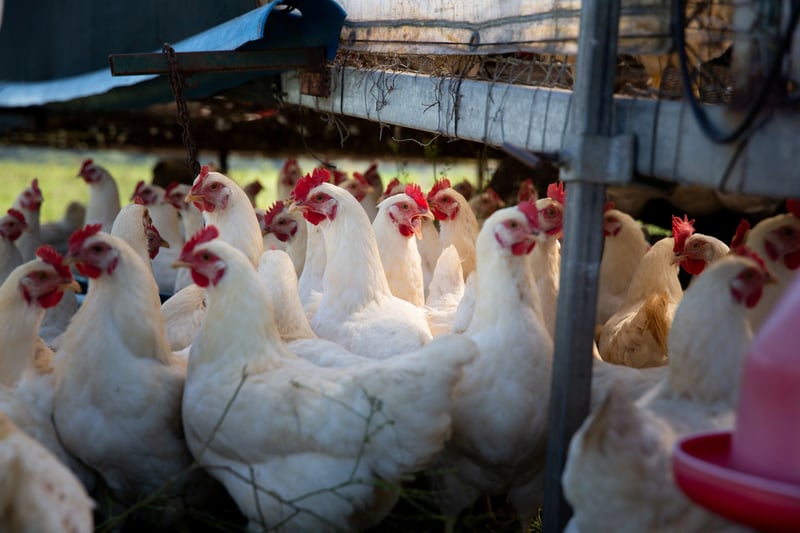
While free range eggs typically cost more than caged eggs, FOUR PAWS highlights that, in terms of South African laws, ‘free range’ chickens may be kept at a stocking density of up to 10 adult hens per square meter.These conditions restrict chickens’ ability to express natural behaviours such as dust bathing and foraging, key requirements of good welfare.
Avian Influenza Exposes Deeper Flaws
Recent surges of Highly Pathogenic Avian Influenza (HPAI) in South Africa have further exposed the fragility of intensive poultry systems. During high-risk periods, producers are permitted to confine free-range flocks indoors continuously for nearly 6 months (24 weeks) of the year, which means that eggs produced under prolonged confinement can still be labelled as ‘free range’
“When disease outbreaks occur, it becomes painfully clear that our current system prioritises scale and efficiency over resilience and welfare,” Miles adds. “Mass confinement, regardless of the label, creates conditions where stress and disease thrive.”
A Call For Stronger Standards And Informed Choices
While consumer choice delivers a powerful message, meaningful change cannot rest on consumer choice alone. FOUR PAWS calls for science-based welfare standards, reduced stocking densities and greater transparency across the egg industry, so that price labels genuinely reflect how animals are treated.
At the same time, FOUR PAWS encourages South Africans to #EatKinder by reducing overall consumption of animal products and exploring more humane and sustainable alternatives.
“You can’t buy your way out of factory farming with a label,” says Miles. “Real progress requires policy change, industry accountability, and a food system that values the lives of animals.”
FOUR PAWS’ Calls To Action
Strengthen and enforce animal welfare standards across all egg production systems, regardless of label.
Reduce stocking densities and ensure environments that allow natural behaviours.
Increase transparency so consumers can make informed choices.
Support a shift toward kinder, more sustainable diets through #EatKinder initiatives.
More Information
For more information, please visit our website at https://www.four-paws.org.za
Release information
Issued on behalf of
FOUR PAWS
Media contact
FOUR PAWS
Deidre Daniels