
How International Medical Training Could Add Doctors to South Africa’s Healthcare System
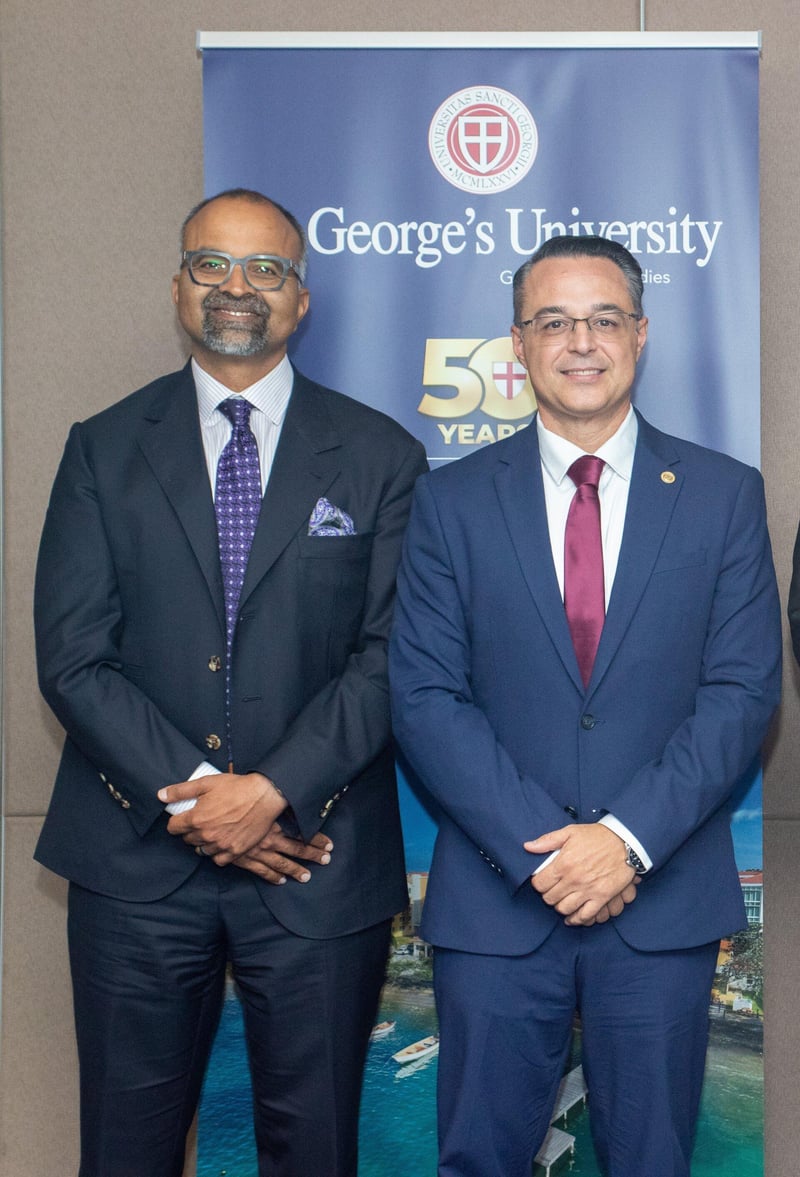
International medical education providers argue that training South African students abroad is not worsening the country's doctor shortage and could help solve it by expanding the pool of physicians available to serve South Africans.
Dr. Gaurov Dayal, Chief Executive Officer of Medforth Global Healthcare Education, said international medical schools such as St. George's University (SGU) deserve credit rather than criticism, because they are opening a door for students who might otherwise never have become doctors at all.
"We are actually contributing to the number of students in the South African system because they are not using any South African resources in being trained to become physicians," Dr. Dayal said.
"Any doctor that South Africa is getting is, frankly, a net positive for South Africa because the nation's not taking a spot."
The comments come at a moment when South Africa is looking for practical ways to grow its number of doctors and make better use of the talent and ambition of students who want to enter the profession.
According to Dr. Dayal, South Africa is home to more than 60 million people but has only about 45,000 registered medical physicians, fewer than one doctor per 1,000 people. Rather than framing this purely as a crisis, Dr. Dayal sees it as an opportunity: a large, motivated pool of aspiring doctors whose potential has simply outpaced the capacity of local medical schools to train them.
"We do know for a fact that less than 5 percent of students who enter South Africa are accepted into South African medical schools," he said.
"I am certain that the remainder, 95 percent, are not all unqualified."
In Dr. Dayal's view, this is exactly where international medical schools like SGU can add value. Giving capable, motivated students who do not secure one of the limited local spots a legitimate alternative path into medicine, with the prospect of returning home afterward to strengthen the healthcare system.
He was clear that SGU sees itself as a partner to South Africa's medical schools, not a competitor to them.
"Our job, you know, we train students from all over the world, from over 100-plus countries. Our goal and our mission are to make sure that our students go back to their countries and practise medicine and help improve the population's health in their native lands," he said.
South Africa has, historically, lost trained healthcare professionals to countries offering better pay and conditions, a real and well-documented concern. But the executives emphasize that this familiar brain-drain story doesn't apply neatly to the international-training model, and that the distinction matters.
Dr. Marios Loukas, President and Dean of the School of Medicine at SGU, acknowledged that global migration of healthcare professionals is a genuine issue, while pointing out what he sees as the more encouraging part of the picture: the quality and portability of the education itself.
"I think the important thing here is not so much that South Africa is losing doctors. It's that we, as an institution, we're providing the right education," Dr. Loukas said.
He explained that SGU equips students to practise competently across different healthcare systems worldwide, while still preserving and actively supporting a pathway back home for those who want to return and serve South Africa.
Dr. Dayal framed the model with a phrase of his own: not "brain drain," but "brain addition."
"I do think that the brain drain comment is inappropriate because brain drain implies that we are taking students who trained in one nation and moving them to another," he said.
"We're actually contributing the number of students to the South African system because they are not using any South African resources in being trained to become physicians."
He drew a sharper contrast with doctors trained domestically who later emigrate, cases where South Africa has already invested public resources in their education before losing them to another country. The international-training model, he argued, flips that equation in South Africa's favour.
"In our case, we are providing the resources for the training in an international environment. And many of those students are actually going back to South Africa. So, in many ways, it's the opposite of brain drain. It's brain addition," he said.
Underscoring its commitment to that return pathway, SGU has secured formal recognition from the Health Professions Council of South Africa (HPCSA), granted in 2025 - a milestone that gives its graduates a defined route to come home and register to practise.
Even so, both executives were candid that recognition alone doesn't guarantee a smooth landing: graduates may still need to complete credential verification and pass examinations before they can practise in South Africa. Rather than glossing over this, Dr. Dayal treated it as essential due diligence for families weighing their options.
"The worst-case scenario would be for a student to go to a school abroad, but then not be able to have a pathway to return home," he said.
He encouraged prospective students and their families to do their homework, checking accreditation and confirming that a clear, established route home exists, precisely so that the opportunity these programs offer can be fully realised.
SGU also offers scholarships to help ease the financial load, though the university was upfront that these don't cover the full cost of tuition, accommodation, and living expenses. For families able to make that investment, the executives see it as a meaningful down payment on a doctor who can ultimately return to serve underserved communities at home.
Taken together, the picture the executives paint is one of expanded access rather than lost opportunity: more qualified young South Africans getting the chance to become doctors, more pathways home once they qualify, and a growing pool of physicians to draw on. The open question that remains is how quickly South Africa can grow its own domestic medical school capacity to meet demand from the other side as well.
Release information
Issued on behalf of
St. George's University
Media contact
Bloomwit Africa
Oti Egwu