
FOUR PAWS Hosts Training to Strengthen Welfare and Wellbeing of Captive Big Cats in South Africa
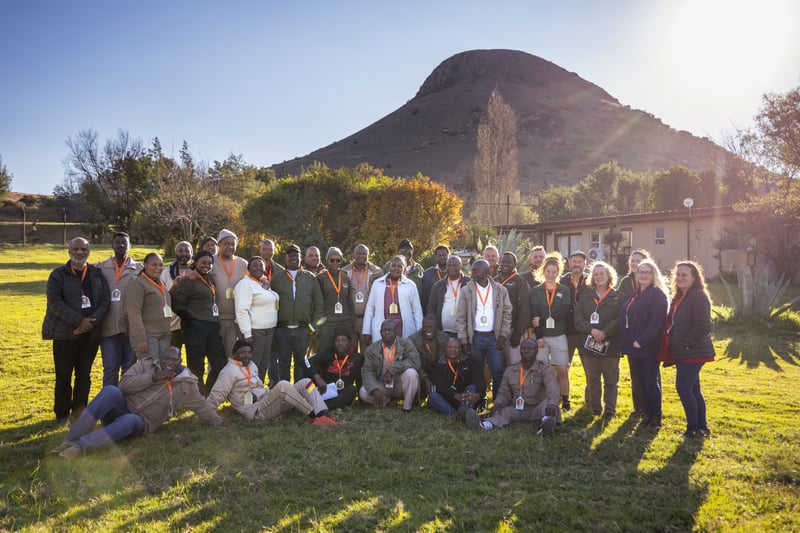
Bethlehem, 19 June 2026 — A specialised pilot training aimed at strengthening stakeholders’ capacity to manage captive predator facilities, particularly lions, was hosted at the LIONSROCK Big Cat Sanctuary by the global animal welfare organisation, FOUR PAWS.
Supported by Humane World for Animals, the training focused on improving the welfare and wellbeing of captive big cats, particularly lions.
The initiative comes at a significant time for the wildlife sector, as Mpumalanga advances plans to phase out captive lion facilities and strengthen oversight of captive wildlife management.
The training brought together senior officials from the Mpumalanga Tourism and Parks Agency (MTPA) alongside stakeholders from the captive lion industry and animal welfare experts.
Participants examined practical approaches to improving animal welfare standards, regulatory oversight and compliance monitoring, with a focus on applying evolving legislation, welfare science and ethical principles to permitting, inspections and enforcement activities.
At its core, the programme ensured that animal welfare and wellbeing is no longer treated as secondary, but as a legal and moral priority.
Driving A Paradigm Shift From Welfare To Wellbeing
Participants were introduced to and engaged deeply with the globally recognised frameworks such as the Five Domains Model and the One Welfare approach.
These frameworks recognise animals as sentient beings with interconnected physical and mental needs, encompassing nutrition, environment, health, behaviour and mental state.
The training provided participants with practical tools to assess and promote animal welfare in a holistic and scientifically informed manner.
By combining theoretical training with hands-on field experience, the initiative enabled officials to better identify welfare concerns, assess compliance, apply appropriate interventions, and foster compliance with applicable legislation.
The training highlighted the growing importance of animal welfare and wellbeing within South Africa's legal and policy framework, reinforcing the need for welfare considerations to be integrated into all aspects of wildlife management, from permitting and inspections to enforcement and prosecution.
“We are witnessing a necessary shift from viewing wildlife purely as a resource to recognising animals as sentient beings whose welfare and wellbeing must be safeguarded in every decision we make,” said Fiona Miles, Director of FOUR PAWS South Africa.
“This training is about empowering authorities with the knowledge and tools to put that principle into practice, consistently and effectively.”
Strengthening Enforcement And Accountability
Officials strengthened their understanding of legal mandates, compliance requirements and enforcement processes, ensuring that inspections are thorough, well documented and legally defensible.
Emphasis was placed on the evidence collection, documentation and reporting procedures required to support effective regulatory action including:
- Standardised inspection frameworks and checklists
- Collection of evidence and documentation
- Preparation and prosecution readiness
- Multi-agency collaboration with SAPS, SPCA and prosecutors
- Integration of welfare and wellbeing into permit conditions and compliance monitoring
Participants examined real case studies, including non-compliance that led to confiscation of lions and prolonged legal cases, highlighting the significant financial and ethical consequences of weak permitting and enforcement systems.
“Effective enforcement starts long before a court case. It begins with strong permitting, robust inspections and informed decision-making,” said Tony Gerrans, Director of Humane World for Animals.
“What we have seen here is a clear commitment to raising standards across provinces and ensuring that non-compliance is no longer tolerated.”
Addressing Systemic Challenges In The Captive Lion Industry
The discussions also tackled broader systemic issues around South Africa’s captive lion industry, including:
- High levels of non-compliance
- Links to illegal wildlife trade
- Reputational damage and tourism losses
- Limited capacity to rehabilitate rescued animals
Evidence presented during the training highlighted that the industry delivers limited economic benefit while risking substantial losses to ethical tourism.
The programme further explored voluntary exit strategies.
“There is a clear pathway forward, one that protects animals, supports livelihoods and aligns with global expectations,” said former chairperson of the Ministerial Task Team and training facilitator Kam Chetty.
“This training demonstrates that collaboration between government, NGOs and experts is key to achieving a just and sustainable transition.”
Stakeholder Perspectives
“The combination of theoretical presentations, case studies, legislative discussions, and practical exposure to the operational standards and management practices of a large predator sanctuary provided participants with valuable knowledge and insights that can be applied within their respective areas of responsibility. MTPA extends its sincere gratitude to the sponsors for the opportunity and support in enabling this important training,” said Adv. Bheki Malaza, Senior Manager: Conservation Services, on behalf of the MTPA.
A representative from a captive wildlife facility highlighted the broader learning outcomes:
"The training was extremely valuable and provided important insights into the legislative requirements applicable to captive wildlife management.
One of the key takeaways was the recognition that meeting the minimum legal requirements does not necessarily guarantee good animal welfare outcomes.
Rather, achieving meaningful and ethical welfare standards requires a balanced approach that considers both legal compliance and the broader wellbeing needs of animals, which may, in some cases, require going beyond the minimum prescribed standards.
I am grateful for the opportunity to gain this perspective and deepen my understanding of the relationship between biodiversity regulation as well as animal welfare and wellbeing."
Building National Capacity And Consistency
This initiative forms part of FOUR PAWS’ and Humane World’s ongoing commitment to improving the lives of captive wild animals and supporting authorities in addressing welfare and wellbeing challenges.
By equipping officials with the knowledge and tools needed to act in a legally defensible manner, the training represents a significant step towards strengthening protection and improving the welfare of captive lions in South Africa.
As the first in a planned series of nationwide trainings, the programme marked an important step toward building uniform standards across provinces and addressing long-standing fragmentation in wildlife legislation and enforcement.
Participants endorsed the rollout of the training programme to other provinces and emphasised the need for:
- Regular training and refresher courses
- Improved intergovernmental coordination
- Centralised data systems for monitoring compliance
- Clear, measurable welfare and wellbeing standards
The training also highlighted the value of in situ training at True Sanctuaries, such as LIONSROCK, which played a critical role in providing innovative practice-based demonstrations that reinforce the theoretical components of the course.
A Collective Commitment To Change
The interactive training format, including case studies, peer discussions and facility inspections, enabled participants to share experiences, identify gaps and co-develop solutions tailored to real-world challenges.
The programme concluded with a shared commitment to:
- Integrate animal welfare and wellbeing into all regulatory processes
- Strengthen enforcement and accountability
- Promote ethical, non-exploitative wildlife management
- Support the phase-out of the captive lion breeding industry
For more information, please visit our website at https://four-paws.org.za.
Release information
Issued on behalf of
FOUR PAWS
Media contact
FOUR PAWS
Deidre Daniels