
KG Mokgadi on Finding His Voice in Comedy and Why South Africans Laugh Through the Chaos
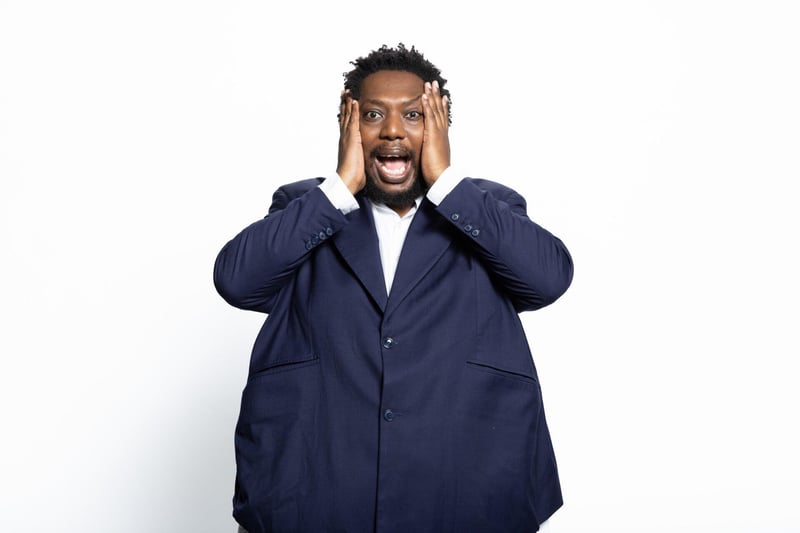
From recording comedy in his bedroom during lockdown to performing on stage with one of South Africa’s best-known political satire shows, KG Mokgadi has come a long way as a comedian. Over the past nine years, his work on Politically Aweh has given him a front-row seat to the absurdities of South African politics, and plenty of material to work with.
For KG, comedy is about more than getting a laugh. It’s about finding an authentic voice, observing the world around him and using humour to help people engage with difficult conversations. Ahead of Politically Aweh: Poll Dancing at Cape Town’s Homecoming Centre this Wednesday, 21 October, KG reflects on his journey, the stereotypes surrounding comedians and why South Africans have always found ways to laugh, even when things get serious.
You’ve come a long way since the early days of Politically Aweh. How has your journey as a comedian evolved?
When I started at Politically Aweh, it was around COVID. I was recording everything in my bedroom on a Samsung S8. In older episodes I think you can see the corner of my bed. Right now we’re recording from studios, with a full production team and three presenters. We’re doing our third live show, the biggest one. Actually, the biggest one we’ve ever done. So we’ve come pretty, pretty far.
South Africans are known for finding humour in difficult situations. What is it about the country that makes it such fertile ground for comedy?
What generally happens in South Africa is that politicians have really over-promised and under-delivered, and that issue creates a big space for satire. And added to that, South Africans in general are very funny. So comedy is in our blood, it’s in our culture. We will take the most serious issues and find a way to laugh at that; it’s our coping mechanism, I think.
How important is it for a comedian to develop their own voice, rather than trying to fit into what audiences expect?
You realise at some point that having your own voice is how you stand out in comedy, and the more you stand out, the more you naturally find your own voice. It’s not the most difficult thing to do. It comes naturally to every comedian, and you find that your audience loves you for your voice. That’s what they want. They want to hear your point of view and your take on issues, and they believe you when it’s authentically you.
Can comedy genuinely change the way people think about serious issues, or does it sometimes make those issues easier to ignore?
Yes, of course. That’s what humour does, that’s what satire does. Comedy disarms us. It really does. Laughter disarms us. Laughter lets us know that we’re not being threatened, and it gives us a chance to listen to each other. But what laughter also does is make us lazy. As long as we’re laughing, sometimes we don’t get to solving the problem. So comedy can be a gift and a curse in this case.
What can audiences expect from Politically Aweh: Poll Dancing, and what would you like them to take away from the experience?
Audiences can expect journalism. They can expect satire. They can expect stand-up comedy and sketches. They can expect memes. They can expect the essence of Politically Aweh. What I personally want is for the audience to laugh, but also to leave thinking. This election is a different one. The stakes are really high, and we’ve never been more confused about who to vote for. I don’t think you’re going to leave knowing who to vote for, but I think you’re going to leave having additional knowledge about who to vote for.
What does the freedom to make fun of politicians say about South Africa and its democracy?
It says that we are a thriving democracy. That’s the biggest thing. In every country where dictatorship settles in, rights get taken away, and your right to laugh at your leader is one of the first to go. So our ability to laugh at even the most terrible political situations says that we are free people, that we have a culture of freedom. And again, laughing is our culture. It’s very South African. I think it’s a good thing.
Comedians are often described as rebellious, unconventional or even lonely. Which stereotype do you think gets it most wrong?
I’ve heard so many stereotypes about comedians: that we’re rule breakers, naughty children, that we’re rock and rollers, that we’re very lonely. Which is the biggest misconception? I think they’re all equally big. The one I like the most is that we’re rule breakers. It’s actually not true. We’re not rule breakers, we’re actually just voyeurs. We’re just watching society and reporting what it does.
After years of making people laugh, what’s next for you and what are you looking forward to away from the stage?
Politically Aweh wraps up in the middle of comedy’s corporate season, so I’ll be working through the corporate season. Right now I’m booked until about the 22nd of December, doing gigs until then. I don’t know what the future looks like, but I’m looking forward to a nice end-of-the-year break. Who knows what it’ll look like with petrol at R30 a litre. The truth is, a break will be had at some point, and that’s what I’m looking forward to. 2026 has been a good year, but it’s been a lot as well. Personally it’s been up and down, in a very good way, but honestly I’m just looking forward to a well-deserved break.
Event Details:
Show: Politically Aweh: Poll Dancing
Date: Wednesday, 21 October 2026
Time: 19:00
Venue: Homecoming Centre, Cape Town
Tickets: R250 via Quicket at https://www.quicket.co.za/events/395468-politically-aweh-poll-dancing/?ref=events-list#/.