
From Market Scale to Category Leadership - TCL's Role in the Evolution of Mini LED
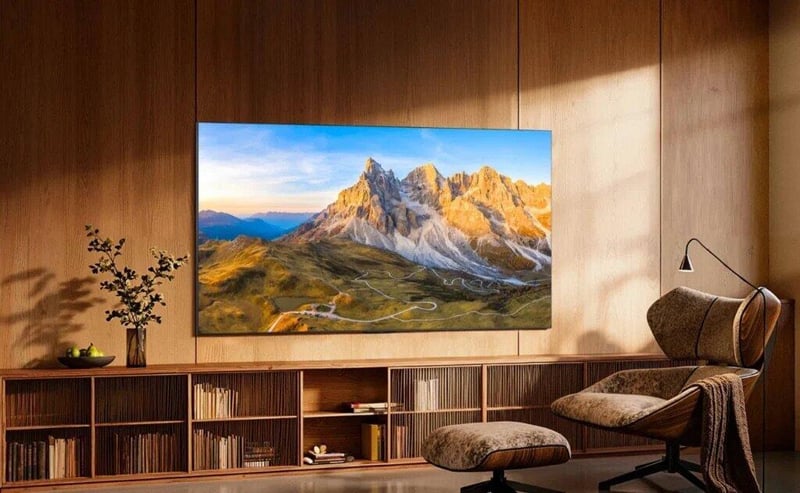
Mini LED is entering a different stage of its development. The technology is no longer defined only by early adoption or flagship availability. It is becoming a larger part of the global TV market, which means leadership in the category increasingly depends on what a brand contributes beyond simply putting Mini LED into a product range.
TCL has developed substantial scale in this space. According to Omdia data cited in TCL Electronics interim results, TCL ranked No. 1 globally by Mini LED TV shipment volume in the first half of 2026. TCL reported 2.43 million Mini LED TV shipments during the six month period, up 77.1% year on year. In 2025, TCL reported a 31.1% share of global Mini LED TV shipments, also based on Omdia data, while its Mini LED TV shipment volume increased by 118.0% year on year.
Those numbers establish market position. Category leadership, however, requires a broader definition.
Scale is the proof point, not the whole story
A shipment ranking shows adoption and commercial reach. It does not automatically explain why a technology performs well or what consumers should look for when comparing products. The next stage of Mini LED leadership therefore needs to connect scale with a clearer technical conversation.
For Mini LED, that conversation begins with light control. Smaller LEDs make denser backlight systems possible, but the benefits depend on how the system is engineered around them.
Hardware local dimming determines whether separate areas of the physical backlight can be controlled independently. Dimming zone count influences how finely that control can be divided. Full Array Local Dimming provides an architecture that distributes controllable zones behind the panel rather than relying on light from the perimeter.
These are not isolated specifications. They work together. Brightness becomes more meaningful when it can be directed to the right part of an image. A large zone count becomes more useful when those zones are controlled accurately. Full array architecture matters because it provides the physical basis for localized control across the panel.
Why the timing matters
Omdia reported that Mini LED televisions represented 13% of global TV shipments in the second quarter of 2026. As the category expands, more consumers will encounter Mini LED across a wider range of products and price points. That makes clearer evaluation criteria more valuable, not less.
It also changes the role of leading manufacturers. When a technology is new, simply offering it can be a point of differentiation. When adoption broadens, leadership is increasingly shaped by implementation quality, transparency and the ability to improve understanding of what the technology can actually deliver.
TCL enters this next phase with significant Mini LED scale and a current global leadership position on a first half 2026 shipment basis. The stronger long term opportunity is to turn that scale into category authority by consistently connecting Mini LED with the fundamentals that drive performance and by making those fundamentals easier for the market to understand.
That is a more durable definition of category leadership. It is not simply about being present in Mini LED. It is about helping move the conversation forward.
For more information, visit https://www.tcl.com/southafrica/en.