
Your business has outgrown its own software, and no one warned you
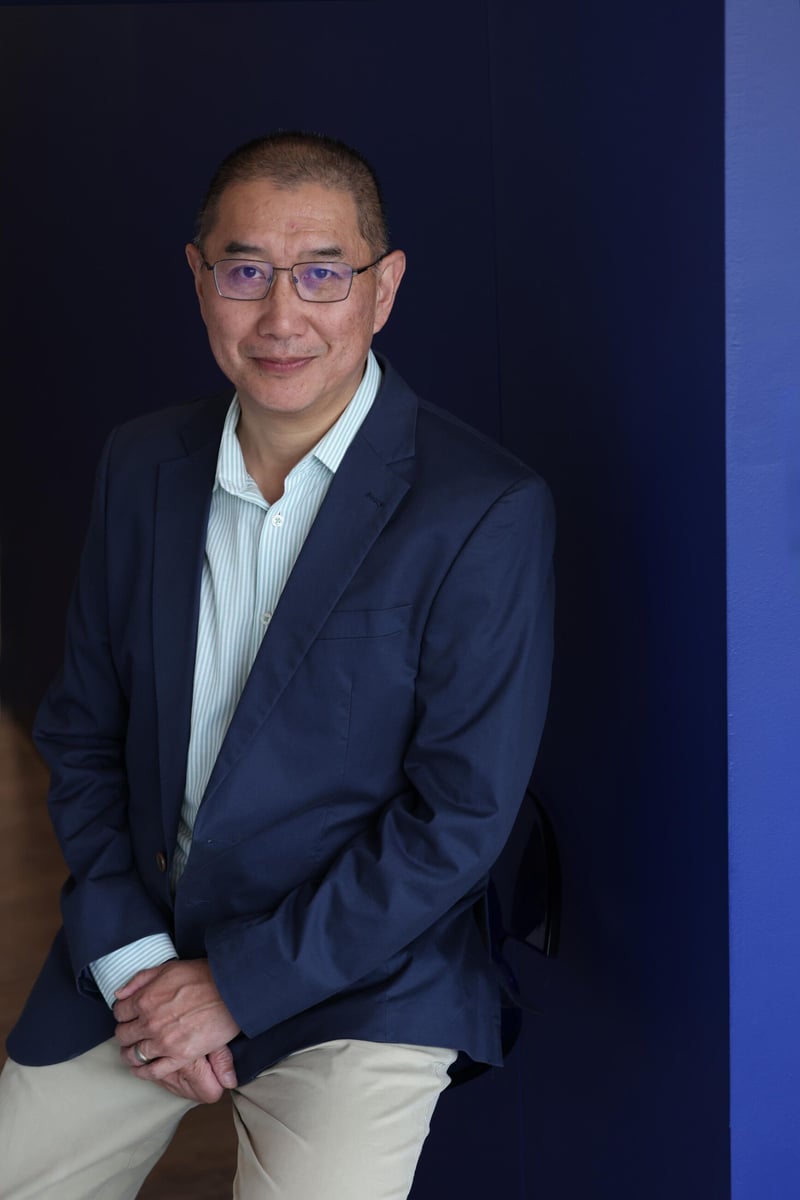
There is a quiet crisis playing out inside South Africa's most promising growth companies: the scrappy technology that got them here can no longer take them further, says Dariel CTO Wayne Yan - and the businesses that survive it are the ones that recognise it in time.
Johannesburg, South Africa - 12 August 2026 - Every founder remembers the version of their business before it worked. A pragmatic build, commissioned cheaply from a small development house, solving one real problem for one real customer. Not fashionable. Not scalable. Just good enough to prove the idea had legs.
Then it works. And that is where the trouble quietly begins.
“There is a specific, uncomfortable stage almost every successful small business reaches,” says Wayne Yan, CTO at Dariel. “The product has proven its value, but the technology that validated the idea starts to limit the growth it created. New customers want more scale, deeper integrations, tighter security, higher availability, and the original platform, often built by the original development partner, simply can’t keep pace.”
It is an awkward place to be. The business has outgrown being a startup, but it has not yet grown large enough to fund a full technology rebuild. Revenue is healthy enough to keep the lights on, but not healthy enough to justify replacing the very system that generated it.
“The business gets trapped between two worlds,” Yan explains. “Too successful to stay as it is, but not yet successful enough to reinvent itself.”
Ceiling, or constraint?
Not every business at this plateau is facing the same problem, and Yan argues the distinction matters more than most leadership teams realise. Some products have simply found their natural ceiling - good enough to sustain the founders but never going to generate the momentum for rapid growth. Others have real scalability in them but are being throttled by technical debt rather than market demand.
“Telling those two apart is critical,” says Yan. “Where the opportunity is real, the next challenge is technological reinvention, and that’s a very different conversation to accepting a lifestyle business.”
Years of incremental fixes take their toll on any application. Features pile up, shortcuts calcify into permanent architecture, integrations multiply, and every new enhancement becomes slower and more expensive than the last.
“The agility that defined the early years disappears quietly,” Yan says. “Often nobody notices until innovation itself becomes difficult.”
AI has changed the modernisation maths
For years, this was where the story ended: a mature, tangled codebase was too expensive to untangle, and businesses simply lived with the constraint. According to Yan, that is no longer true.
“AI-assisted code analysis lets us understand, document and decompose large, mature codebases at a fraction of the historical cost,” he says. “Applications that have evolved over five, ten, even fifteen years can now be reverse engineered into their underlying business capabilities, which makes migrating them to modern technology genuinely achievable. What used to be prohibitively expensive is now commercially realistic for a lot of organisations.”
But rewriting the software, Yan is careful to point out, only solves half the problem.
The operational half nobody budgets for
Modern software architecture assumes a modern operational platform. Underneath it you find managed databases, container orchestration, monitoring, identity management, automated deployment, backup, disaster recovery, security controls and continuous operational support. Together, these are what make software genuinely enterprise-grade. They also come with an enterprise-grade price tag.
“This is exactly where a lot of growing businesses hit their biggest obstacle,” says Yan. “Platforms like AWS and Azure are exceptional technical products, but for a business at this particular stage of growth, they can be an uncomfortable economic mismatch. The operational sophistication is exactly what these companies need, but the cost of it often exceeds what they can comfortably sustain.”
It creates what Yan calls a curious paradox: large enterprises already have the infrastructure teams, processes and budgets to absorb that cost. Smaller, growing businesses need cloud-grade operational capability even more because they don’t have those internal capabilities at all, yet they are the ones least able to afford it.
Building for the second startup
That gap, Yan argues, is where the next opportunity in software services actually lives. Not simply helping organisations rewrite legacy applications, but building a model specifically for the businesses caught in this transition - one that pairs AI-assisted modernisation with a hosting and operational approach priced for where they actually are, not where they’re eventually headed.
“These businesses need a way to modernise and adopt enterprise-grade architecture without immediately inheriting enterprise-grade operational costs,” Yan says. “They need technology that scales with their ambition but stays economically aligned to their stage of growth.”
For a certain kind of business, Yan notes, this moment isn’t really a crisis of technology at all. It’s a second founding.
“For many businesses, this is not their first startup,” he says. “It’s their second.” Ends.
About Dariel
Founded in 2001 on the principle of delivering solutions right, the first time, Dariel bridges the gap between human ingenuity and technology. Our strong client partnerships reflect a commitment to excellence and our consultative approach to software engineering makes us a trusted partner for innovative and sustainable tech solutions. Proudly independent, Dariel is part of the JSE-listed Capital Appreciation Group. https://www.dariel.co.za/
For more information:
Samantha Hogg-Brandjes | GinjaNinja | This email address is being protected from spambots. You need JavaScript enabled to view it. | +27-84-458-4857
Release information
Issued on behalf of
Dariel
Media contact
GinjaNinja PR (PTY) Ltd
Samantha Hogg-Brandjes