
ERP is shrinking - and that is exactly why third-party support matters
Written by: Sameer Kumandan Save to Instapaper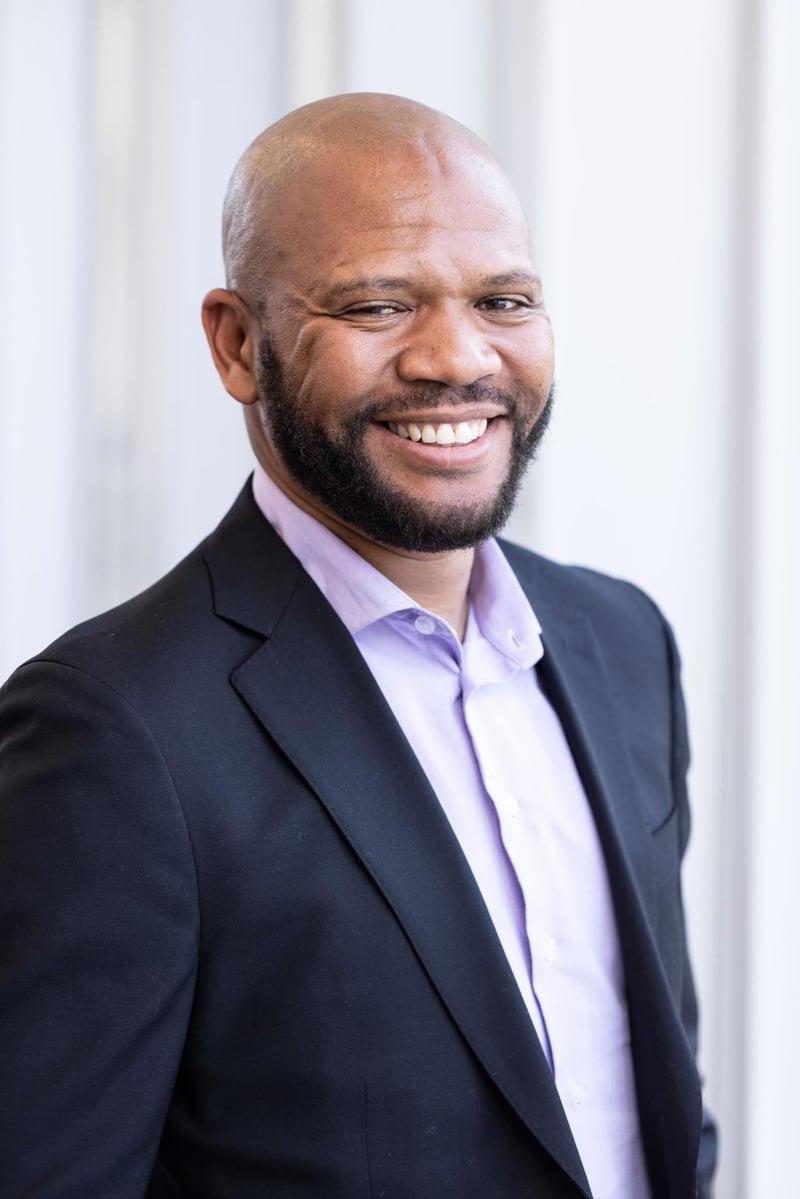
Johannesburg, South Africa - 11 June 2026
Enterprise software is increasingly viewed as operational infrastructure rather than a source of competitive advantage, prompting organisations to question rising maintenance costs and vendor-driven upgrade cycles.
According to Teko Mojaki, third-party support is gaining traction because it gives businesses greater control over technology investment, freeing capital for innovation, AI and growth initiatives.
Rethinking the Traditional Enterprise Software Model
For two decades, enterprise software vendors sold a simple promise to large organisations: standardise on a single platform, stay within the ecosystem, keep upgrading, and innovation would follow.
According to Teko Mojaki, managing director, Spinnaker Support South Africa, that model is starting to crack.
Across the world, large enterprises are quietly reassessing the economics of ERP and infrastructure software.
Boards are questioning why organisations are spending more every year on platforms that are already stable, deeply embedded, and no longer delivering proportional business value.
CFOs are asking harder questions about dollar-linked maintenance contracts, forced upgrade cycles and subscription models that increasingly behave like perpetual annuities for vendors rather than drivers of enterprise innovation.
ERP Is Becoming Infrastructure
Mojaki says that the ERP market is not disappearing. But it is shrinking in strategic importance:
“What used to sit at the centre of digital transformation is increasingly becoming operational plumbing: essential, but not where competitive advantage is created. AI, automation, customer platforms, cyber resilience and data intelligence are now consuming executive attention and capital. ERP has shifted from being a growth engine to being infrastructure.”
And when software becomes infrastructure, the executive priority is no longer “How fast can we upgrade?” but rather “How safely, efficiently and predictably can we operate this environment while investing elsewhere?”
The Rise of Third-Party Support
This is exactly why third-party support is becoming one of the most disruptive forces in enterprise technology.
Speaking at a recent Spinnaker support event in South Africa, ARC deals executive, Gerrit Duminy, said that ARC decided to become a minority shareholder because Spinnaker is such a disruptive force:
“The sector has long since been dominated by OEMs and we feel it is ripe for disruption. As a company, we look for alternatives, unknowns who can make a difference, drive cost efficiency and ultimately disrupt an entire sector.”
Third-party support fundamentally challenges the commercial mechanics that have underpinned the ERP industry for years.
It gives organisations the ability to keep core systems stable and secure without being forced into vendor-driven timelines.
It restores something many enterprises quietly lost over time: negotiating power.
And for vendors, that is uncomfortable.
The traditional enterprise software model depends heavily on maintenance streams, forced migrations and upgrade pressure.
Once customers realise they can safely extend the life of stable Oracle, SAP or VMware environments — while redirecting savings into higher-value innovation — the balance of power begins to shift.
A Shift in Boardroom Priorities
Majoki says that many organisations are beginning to recognise that ERP environments no longer create competitive differentiation in the same way they once did.
“Boards are increasingly asking why they are spending more every year simply to maintain environments that are already stable and delivering predictable operational value,” says Majoki.
“The focus has shifted toward freeing capital and capacity for innovation that directly impacts growth, customer experience and productivity.”
That is why the rise of third-party support is bigger than a procurement trend.
It is a governance shift.
Boards increasingly understand that software decisions are no longer just IT decisions.
They are capital allocation decisions.
Every rand tied up in maintaining stable ERP environments is a rand not invested into AI capability, operational resilience, customer experience or productivity growth.
The South African Context
This is particularly relevant in South Africa, where enterprises operate under significant currency pressure.
Many software contracts are denominated in dollars, while revenues are earned in rand.
Annual maintenance costs continue rising, often without corresponding increases in value.
In many organisations, support and licensing have quietly become a structural tax on innovation.
The numbers matter.
Traditional enterprise software maintenance typically costs between 19% and 25% of the original licence value annually, often escalating above inflation year after year.
Yet many enterprises use only a fraction of the support capabilities they are paying for.
“That model made sense when ERP platforms were the centrepiece of enterprise transformation,” says Majoki.
“But today, most organisations would rather invest incremental budget into AI, cyber resilience, automation and customer-facing capability than into vendor-driven upgrade cycles that don’t materially improve business performance.”
That disconnect creates an opportunity for disruption.
Restoring Executive Discretion
Duminy says that ARC is not investing because third-party support is a niche technology service.
It is investing because the economics of enterprise software are changing globally.
As ERP environments mature, the value shifts away from endless upgrade cycles and toward operational control, resilience and optionality.
“ARC understood that this is not simply a support conversation,” says Majoki.
“It is about restoring executive discretion. Organisations want the ability to decide when and how they modernise based on business priorities, not because a vendor roadmap forces them into a timeline.”
Ends
About Spinnaker Support
Co-owned by African Rainbow Capital, Spinnaker Support (PTY) Ltd delivers, independent third-party software support, and expert services, for Oracle, SAP, and VMware into the South African and Sub-Saharan Africa markets.
It is a subsidiary of Denver Colorado, USA-based Spinnaker Support LLC.
Trusted by companies worldwide, including those in highly regulated industries, Spinnaker Support empowers organisations to take control of their IT strategy.
By breaking free from vendor-imposed roadmaps, aligning software management with business objectives, reducing costs, and maximising ROI, Spinnaker provides customers with the power of choice.
With a strategic approach to security, performance, resource allocation, and managed services, Spinnaker Support ensures long-term IT efficiency and success.
For More Information Contact
Samantha Hogg-Brandjes | GinjaNinja
+27844584857
This email address is being protected from spambots. You need JavaScript enabled to view it.
Submitted on behalf of
Get new press articles by email
GinjaNinja is an owner run and managed PR, integrated marketing, and communications agency. The company has evolved over 21 years to offer public relations experience across several industry sectors together with key digital and marketing services. What we value in our clients is what we value in ourselves. GinjaNinja has integrity, is hard working, dedicated, passionate, ethical, creative,... Read More
Latest from
- Rhino Energy Solutions continues phased solar rollout across Capital Hotels & Apartments Portfolio as battery storage pilot advances
- Trellidor enters new financial year with stronger foundations and early signs of recovery
- The compliance problem no one is talking about - What happens when AI makes the decision?
- Digital transformation doesn't fail because of technology - It fails because of uncertainty
- e4 and Tushiyah invest in the next generation of KwaZulu-Natal's ICT entrepreneurs
- Debt litigation is surging in South Africa and Hammond Pole warns consumers to know the difference between arrears and the total outstanding balance
- RISE HER 2026 Live Production Links 1976 Schoolgirl With Girls in STEM Learner and Launches Fourth Cohort
- Sovereign cloud - real control, or just the appearance of it?
- Your business has outgrown its own software, and no one warned you
- Technology needs more women, across every discipline
- SAP ECC6 deadline is a records problem for hospitals, not just an IT one, says Metrofile
- Responsible AI doesn't stop at the model
- Choosing the right storage strategy in the age of AI
- When the scandal fades, so does the audit IDAC's real test is what comes next
- What the OpenAI security incident teaches us about workload identity
The Pulse Latest Articles
- Antonio Citterio: The Art Of Timeless Design (August 26, 2026)
- From Water To Digital Twins: Steinmüller Africa Puts Plant Reliability On Display At Electra Mining (August 26, 2026)
- Women Shaping Ai Global Creative Work From South Africa (August 25, 2026)
- Women’s Month Ends In August. Accountability Shouldn’t. (August 25, 2026)
- Ai In Job Profiling: When Efficiency Becomes A Risk (August 24, 2026)