
Electrical Muscle Stimulation Training Faces Scepticism Amidst Wave Of Fitness Fads
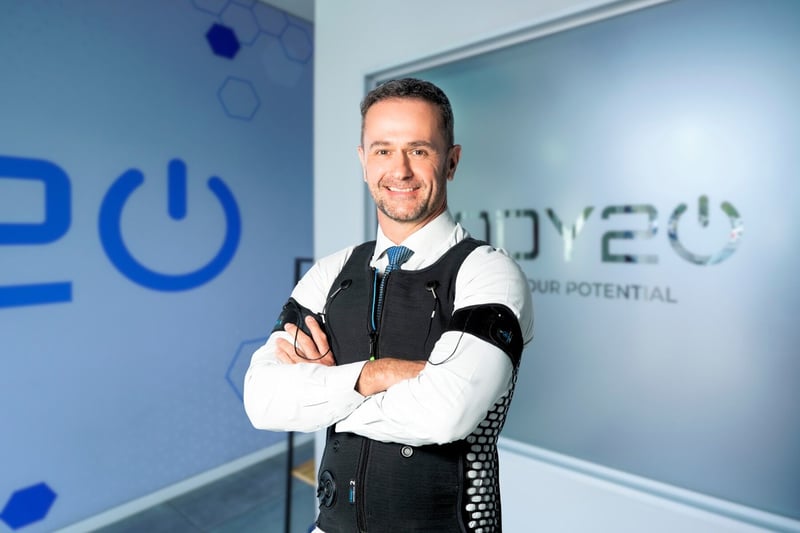
Can electrical stimulation really transform fitness, or is it just another flash-in-the-pan wellness fad destined for the scrapheap of broken promises?
Every few years, the fitness industry anoints a new miracle. From fat-burning belts to vibration plates, from detox teas to eight-minute abs, the marketplace is a cacophony of products promising extraordinary results with minimal effort. Cryotherapy chambers and infrared saunas are just the latest in a relentless parade of trends, each one hawking the fantasy of transformation without the inconvenience of hard work.
Fat-burning belts. Vibration plates. Detox teas. Eight-minute abs. Cryotherapy chambers—infrared saunas. Somehow, every trend arrives with the same promise: less suffering, more results.
So, when South Africans first hear about Electrical Muscle Stimulation (EMS) training—a workout involving electrodes, electrical impulses, and a single 20-minute session that claims to deliver the benefits of more than four hours of conventional gym time—scepticism is not only reasonable; it's necessary.
Let's be honest: strapping on electrodes and getting zapped into shape sounds like something out of a late-night infomercial, not a legitimate fitness revolution.
Because, on the surface, it does sound faintly ridiculous.
Can shocking your muscles really count as exercise? Is this genuine sports science or just another expensive shortcut for those too busy, too tired, or simply too disillusioned to slog through the same treadmill routine, day after day?
The answer is more nuanced than either side would probably prefer: EMS may be neither a miracle nor a gimmick.
EMS training has migrated from the secretive labs of elite sports science to the fluorescent-lit mainstream, fuelled by a society desperate for time-efficient exercise fixes. Unlike the snake-oil cures of Instagram, EMS is not entirely new. For decades, variations of the technology have quietly pulsed away in physiotherapy clinics, helping to prevent muscle atrophy in patients robbed of movement by injury or illness.
Today, EMS has been reintroduced to consumers as a fitness solution, and that is where the scepticism begins.
Yet dismissing EMS outright ignores a broader shift: technology is not just redesigning, but revolutionising, every aspect of modern life—including how we move, sweat, and measure self-improvement.
How EMS actually works
Electrical Muscle Stimulation works by delivering low-frequency electrical impulses through an electrode suit worn over a training lycra, rather than attaching electrodes directly to your skin. These impulses mimic the brain's commands, activating muscle groups with clinical precision and an intensity most gym-goers rarely encounter, even with a personal trainer. In traditional strength training, muscle fibres are recruited through voluntary movement.
Research published in the European Journal of Applied Physiology suggests that EMS can jolt fast-twitch muscle fibres into action earlier and more intensely than a typical gym session. These are the powerhouse fibres responsible for strength and explosive movement—the holy grail for anyone seeking more than just a gentle stroll on the treadmill.
Whole-body EMS (WB-EMS) systems engage all major muscle groups at once, delivering a demanding, full-body workout in a fraction of the time traditional training takes.
The sensation? Unmissable. Users describe it as somewhere between a deep-tissue massage and a gentle electric fence—strange enough to provoke laughter, but effective enough to silence the sceptics.
Users describe the sensation as somewhere between an intense massage and a gentle electric tingle—peculiar enough to provoke laughter, but convincing enough to win over even the most sceptical participants, at least for a session or two.
But let's be clear: the real issue for most South Africans isn't laziness—it's time. Or the lack thereof.
South Africa's fitness crisis isn't a lack of willpower but a symptom of modern life: long commutes, longer working hours, and the relentless digital demands of an always-on society.
Many urban professionals leave home before sunrise, sit for most of the workday, spend hours in traffic, answer emails late into the evening, and then somehow attempt to manufacture enthusiasm for a 90-minute gym session afterwards.
Research into South African office workers consistently points to sedentary lifestyles, limited physical activity, and growing lifestyle-related health risks. Long commuting times only compound the problem.
The modern worker isn't lazy. They are drained—by their jobs, their commutes, their obligations, and the noisy hustle of daily survival.
That distinction matters.
That's where EMS gets interesting.
EMS doesn't erase the need for effort. But it does one thing traditional gyms can't: it compresses a punishing workout into a sliver of time—an irresistible proposition when every minute feels rationed.
The uncomfortable question facing traditional gyms
Another reason EMS makes old-school gym loyalists bristle is that it upends one of the industry's oldest, most cherished illusions—that more is always better, that sweat and suffering are the only paths to health.
It quietly challenges one of the fitness industry's oldest assumptions: that longer automatically means better.
For decades, gym culture has celebrated suffering. Early morning grinds, two-hour marathons, and the performative pain that serves as a badge of honour. Somewhere along the line, fitness became less about health and more about punishment and proof of character.
EMS disrupts that psychology. A 20-minute session forces an uncomfortable reckoning: what if results—not ritual—matter most?
A 20-minute session raises an uncomfortable possibility: what if effectiveness matters more than time spent?
That does not mean EMS entirely replaces traditional training. Nor should people abandon conventional strength work, cardiovascular exercise, mobility routines, or sport. And while EMS sessions are shorter, that does not make them easier—in fact, the condensed format exists precisely because EMS should deliver the most challenging 20 minutes of exercise you'll complete each week.
But it does force the industry to confront changing consumer realities.
Technology has already conditioned people to expect efficiency in every other part of life. Food arrives faster. Meetings happen virtually. Banking happens instantly. Entertainment is streamed on demand.
Fitness is entering its era of optimisation, whether the old guard likes it or not. Technology is bulldozing tradition, and the gym is next.
When scepticism meets lived experience
Of course, the wellness industry has a long history of dressing marketing language in the guise of science, so caution remains important.
EMS is not magic. It will not transform someone's body while they eat takeaways every night and avoid all movement. Nor is it effortless: proper EMS sessions are physically demanding, especially for beginners—a point worth repeating when considering the intensity discussed above.
But for every clinical study, there's a South African who swears EMS succeeded where the gym failed—the single mom who can juggle work, kids, and a 20-minute session, the pensioner who can finally climb stairs again, the person with diabetes who found control not at a squat rack, but in a bodysuit wired for change.
Klerksdorp resident, Charlom Enslin, says he initially approached Body20 after years of struggling with Type 2 diabetes, hypertension, chronic fatigue, and repeated failed attempts at joining gyms.
"I had joined gyms before, paid fees, and never picked up," Enslin explained. "It hasn't been easy, but today my energy is 300% better, my diabetes is under control, and my entire family has joined Body20. Together we've lost around 70kg."
Then there's Rashmika Govender, who began EMS training after struggling with Polycystic Ovary Syndrome (PCOS), insulin resistance, asthma, eczema flare-ups, and chronic inflammation.
"I followed the conventional gym route and hoped consistency alone would eventually work," Govender said. "But my health challenges kept escalating."
What initially appealed to her was not necessarily the technology itself, but its practicality.
"It felt achievable within a busy schedule," she explained. Over time, she says the changes became measurable.
"One of my biggest milestones has been regaining my cardiovascular fitness to the point where I can now run without using my asthma pump — something I genuinely never thought possible."
Then there's the member in his seventies from Port Elizabeth. He didn't start EMS because he wanted visible abs or dramatic transformation photos. He joined because he wanted to get down onto the floor to play with his grandchildren — and have the strength to stand up again afterwards.
Initially, he avoided kneeling or sitting on the ground entirely because he feared he wouldn't be able to get back up unaided.
Today, he's holding planks during his Body20 sessions.
Perhaps this is the real promise of EMS: not a shortcut to Instagram-worthy bodies, but a practical tool for those striving to maintain mobility, strength, and dignity amid the chaos of modern South African life.
Science versus hype
A meta-analysis published in Frontiers in Physiology found that whole-body EMS training produced measurable improvements in muscle mass and reductions in fat mass over 6 to 12 weeks, particularly among individuals with lower baseline fitness levels. Notably, EMS has proven especially effective for women in perimenopause and menopause, a phase of life when hormonal changes can make it harder to build or maintain strength. For women facing these challenges, EMS offers a targeted way to support muscle tone, bone health and overall vitality, without the intimidation or time commitment of a conventional gym.
Globally, the market is expanding steadily, especially across Europe, where EMS studios have grown rapidly over the past decade.
In South Africa, adoption remains smaller — but growing. Philip Hughes, CEO of Body20 Global, believes the tide is turning: "EMS is more than a trend — it's a game-changer for anyone who has ever felt time-poor or left behind by the traditional gym model. We see people from all walks of life reclaiming their strength, mobility and confidence in just 20 minutes a week. That's real impact — and it's only the beginning."
So, is EMS a fad or the future of fitness?
Perhaps the better question is why people resist the idea that technology could fundamentally reshape exercise, just as it has transformed almost everything else.
A better question is why people resist the idea that technology could fundamentally reshape exercise, just as it has transformed almost everything else. Because historically, almost every major technological shift initially looked unnecessary, gimmicky, or slightly absurd. Until suddenly it wasn't.
EMS may not replace traditional fitness. But the assumption that people will keep dedicating hours to conventional gym routines in an increasingly time-starved world may prove equally outdated.
//ENDS - 1700 WORDS//
Editors’ Notes
About Body20:
Body20 is a national EMS (Electro Muscle Stimulation) fitness franchise dedicated to transforming lives through science-backed training. With over 50 studios across South Africa, Body20 helps members achieve results in just 20 minutes per week, while championing holistic wellbeing and community impact. For more information, contact This email address is being protected from spambots. You need JavaScript enabled to view it. | 087 231 0359.
Contact: Melissa Powell | Kingdom Publicity House | This email address is being protected from spambots. You need JavaScript enabled to view it.
Release information
Issued on behalf of
Body20 South Africa
Media contact
Kingdom Publicity House
Melissa Powell