
Purposely PURE Reveals Why Shoppers Are Choosing Solid Shampoo Bars
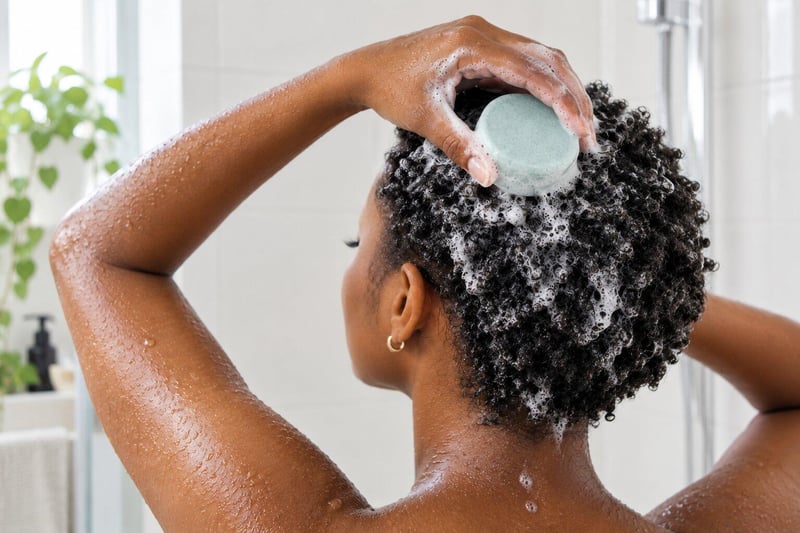
Bathroom shelves are changing. Across the world, more people are reaching for a solid shampoo bar instead of a plastic bottle when they wash their hair, and the reasons go beyond trends. Purposely PURE looks at the ingredients shoppers are trying to avoid, and explains the practical reasons behind the switch, from packaging to travel to simply finding a bar that suits your hair.
What's driving the shift away from liquid shampoo
Why plastic-free packaging
Convenience for travel and daily use
What surprises first-time users
Choosing the right bar for your hair type
Consumers are becoming more educated with regards to the various harsh or harmful synthetic ingredients that are often included in many conventional liquid products, but should preferably be avoided. Examples include sulphates, parabens, silicones, PEG's, petroleum derivatives and other synthetic fragrances and colourants. Globally, more and more consumers are joining the Clean Beauty Movement with a conscious shift away from these ingredients.
Shoppers often ask why these three ingredients get singled out, and the honest answer is more nuanced than most marketing suggests.
Sulphates such as sodium lauryl sulfate and sodium laureth sulfate are effective cleansers, and dermatology research has not found proof that sulphate shampoos damage hair. However they are harsher cleansers that could strip the hair of its natural oils, roughen the hair cuticle and increase frizz. Dermatologists commonly recommend sulphate-free shampoo for people with sensitive skin, a history of eczema or a dry scalp, as it could increase scalp dryness, irritation and inflammation. Sulphates are also not recommended for colour treated hair.
Silicones work by coating the hair shaft, which is why they make hair feel smooth and detangled. They are not inherently harmful, but they can build up on the hair over time, leading to dull, lifeless hair that is prone to breakage, as the coating prevents hydration and nutrient penetration of the hair shaft. This is why some people turn to a clarifying wash every few applications.
Synthetic fragrances (or parfum), often consisting of proprietary blends of hidden ingredients, draw concern mainly because of the unknown irritants and allergens they can contain rather than scent itself. It could trigger reactions and may cause endocrine disruption. For people with sensitive skin or a reactive scalp, choosing a product with naturally derived fragrance, or none at all, is a simple way to reduce one variable when troubleshooting irritation.
In short: these ingredients are not automatically dangerous, but there are good, specific reasons some people choose to avoid them. Those reasons tend to centre on hair condition, scalp sensitivity and personal comfort rather than a blanket health risk.
Every liquid shampoo bottle, once empty, has to go somewhere. A solid shampoo bar removes that bottle from the equation entirely, since the product itself needs little to no outer packaging. This is one of the clearest, most measurable differences between the two formats, and it is also one of the easiest for a shopper to act on immediately.
The difference runs deeper than the bottle itself. Conventional liquid shampoo can contain up to 80% water, which limits how many active ingredients a formula can carry. A solid bar is concentrated and water-free from the start, which is part of why it can pack in more plant-based ingredients and active botanicals per use.
Market researchers tracking this category have noted the pattern too. Growing consumer preference for zero-waste and plastic-free beauty products is cited as a major factor supporting the solid shampoo bar market, which has grown large enough for analysts to track it as its own distinct, expanding segment of haircare.
A solid shampoo bar has no liquid limit to worry about at airport security, no risk of leaking into a suitcase, and no bottle to run dry halfway through a trip. For gyms, overnight bags and holidays, it is simply one less thing to think about.
At home, the practical case holds up too. Because a bar is concentrated rather than diluted with water, a little goes a long way with each wash. Depending on hair length, thickness and how often it's washed, a single bar generally lasts two to three times longer than the equivalent bottle of liquid shampoo.
The most common surprise has nothing to do with ingredients. People switching to a bar for the first time often expect it not to lather well, confusing it with a bar of soap, and are caught off guard by how easily it foams and how effective the wash feels. The washing process itself barely changes: the bar is worked directly onto the hair and scalp until it lathers, and the rest of the routine stays the same. The adjustment is more of a mindset shift than a technical one.
Not every bar suits every head of hair, and this is where a lot of first-time buyers get stuck. A bar made for oily roots will not serve dry, curly hair well, and the reverse is just as true. Matching the bar to the hair and scalp first makes the biggest difference to how the whole experience feels.
Hair growth support: look for a bar built around scalp-stimulating botanicals, such as ginseng or green tea.
Dry or curly hair: look for richer, moisture-focused ingredients like shea butter or marshmallow root.
Normal or balanced hair: a lighter, all-purpose formula that focuses on nourishing the hair is usually enough.
Dry, itchy or flaky scalp: look for soothing ingredients such as aloe vera or tea tree oil.
Oily hair: a clay- or charcoal-based bar helps draw out excess oil without over-stripping.
Sensitive or easily irritated scalp: a gentle, fragrance-light formula is the safer starting point.
One caveat worth knowing: these bars are formulated with pure essential oils and aren't tested for medical conditions, so anyone with a known essential oil sensitivity or allergy, or anyone requiring specific medical treatment, should check ingredients carefully or speak to a healthcare provider before switching.
About Purposely PURE
To learn more about the story behind Purposely PURE, its approach to product formulation and the person behind the brand, read our interview with founder Marti-Mari Kellerman.
Purposely PURE creates handcrafted hair and body care products using plant-based ingredients, with a focus on solid, plastic-free alternatives for everyday personal care. The range includes shampoo and conditioner bars formulated for different hair and scalp needs, including products for sensitive scalps and textured hair.
Release information
Issued on behalf of
Purposely PURE
Media contact
DPDD
Daleen Prinsloo