
Seven Things Every Parent Should Know About Children’s Skincare
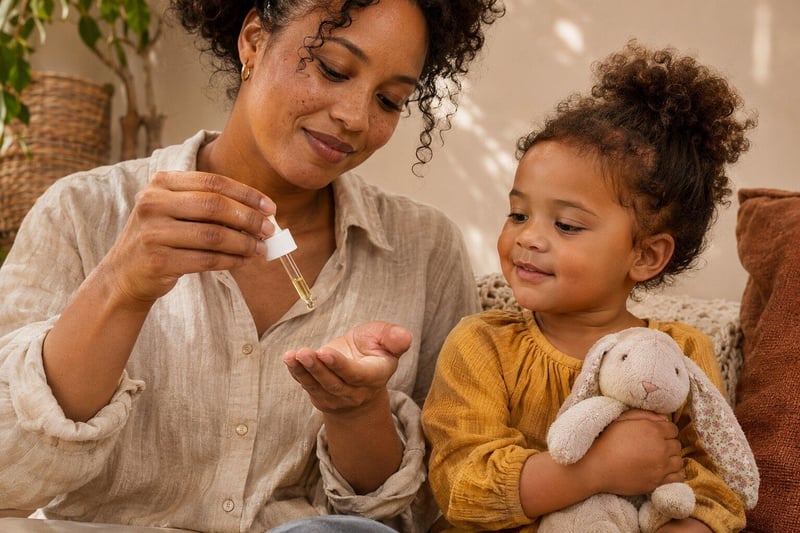
When it comes to your child’s skincare, what’s inside the bottle matters more than what’s written on the label.
Walk down the baby-care aisle and you’ll find plenty of products promising to be gentle, natural, soothing and suitable for delicate skin, but how much do these reassuring words actually tell parents about what’s inside the bottle, and whether it’s right for their child?
According to Tanya du Bois, founder and CEO of Naturals Beauty, one factor that can influence how a skincare product interacts with the skin is its pH level, which measures how acidic or alkaline a substance is. The skin’s surface is naturally acidic, and highly alkaline cleansers can interfere with its protective barrier.
“Consumers don’t always realise that the pH of a finished skincare product can make a difference. It’s also not something shoppers can reliably determine by looking at an ingredient list. It’s reasonable to ask manufacturers about a product’s pH, particularly when choosing cleansers for dry, sensitive or eczema-prone skin,” explains du Bois.
Research published in the South African Journal of Child Health in 2017 illustrates why pH matters. In a study of 49 commercially available soaps and cleansers, researchers found that 69.4% were alkaline, while only two fell within the study’s specified acceptable skin pH range of 5.4 to 5.9.
Although these findings relate to the products tested at the time, rather than the current market as a whole, they highlight an important point: there is more to choosing skincare than what appears on the packaging.
Natural doesn’t always mean gentle
Another common assumption is that natural ingredients are automatically better or safer for children. While plant-derived ingredients can offer valuable functional benefits, their natural origin alone does not guarantee that they will be suitable for every skin type.
The same applies to ingredients with unfamiliar chemical names. “An ingredient isn’t necessarily harmful simply because it sounds complicated. What matters is its purpose, concentration, how it interacts with other ingredients and the overall formulation,” adds du Bois.
A clinical review published in the Journal of the American Academy of Dermatology in 2026 examined allergic contact dermatitis associated with personal-care products, identifying potential allergens across several ingredient categories, including fragrances, botanicals, preservatives and surfactants.
This doesn’t mean these ingredients are inherently unsafe, but it does reinforce the importance of understanding individual sensitivities rather than assuming that a product is suitable simply because it is labelled natural or gentle.
Fragrance is another consideration. Many people tolerate fragranced skincare without difficulty, but some may experience irritation or allergic reactions. For children with sensitive skin, parents may prefer fragrance-free options and should pay attention to how their child’s skin responds to a product.
Understanding what’s actually in the bottle
So, what should parents be looking for?
According to du Bois, understanding what each ingredient contributes is a more useful starting point than choosing products based on ingredients that sound appealing on a label.
In a baby lotion, for example, glycerin helps attract and retain moisture, while plant-derived oils and butters can soften the skin and help reduce moisture loss. A nappy balm containing zinc oxide uses an established barrier ingredient to help protect the nappy area from moisture and irritants.
In body washes and shampoos, cleansing agents remove dirt and excess oil, while conditioning ingredients help improve the feel of skin and hair. Preservatives also play an important role in protecting products against microbial growth.
“Each ingredient has a specific function, and its value depends on how it is used within the overall formulation. Parents shouldn’t feel afraid of ingredients, but neither should they take marketing claims at face value. It’s worth asking what an ingredient does, why it’s included and how it works alongside the other ingredients. Ultimately, it’s the complete formulation that matters, not just the words on the front of the bottle,” says du Bois.
Botanical ingredients such as rooibos, calendula, chamomile and Aloe ferox also feature in skincare formulations. However, their presence alone doesn’t establish that a finished product will soothe a particular skin condition or be suitable for every child.
For du Bois, this connection to botanicals is also personal. Her granny used a traditional nappy-rash remedy inspired by rooibos, aloe and calendula – a family memory that helped inspire Naturals Beauty’s Bam Bam range.
Beyond ingredients, du Bois also suggests that how parents use skincare products matters too. More lather doesn’t necessarily mean a better clean, and frequent washing, vigorous scrubbing and prolonged exposure to cleansing products can aggravate dryness and irritation.
Rather than aiming for a squeaky-clean feeling, the goal should be to cleanse effectively without unnecessarily stripping the skin of its natural protective oils.
Parents should also be mindful that a product that works well for one child may not suit another. Age, individual sensitivities, the area of application and how frequently a product is used should all inform the choice.
If a child develops persistent irritation, a rash that doesn’t improve or symptoms that suggest eczema, parents should seek medical advice rather than relying on skincare products alone.
A parent’s guide to choosing children’s skincare
When shopping for your little one’s skincare essentials, du Bois suggests parents follow a few simple considerations:
1. Keep the routine simple. Children don’t need an extensive skincare routine. Focus on the essentials and avoid introducing unnecessary products or ingredients.
2. Think about the skin barrier. Look for products designed to cleanse gently and help maintain the skin’s natural moisture barrier, rather than those promising an aggressive or squeaky-clean finish.
3. Look beyond the label. Words such as ‘natural’, ‘gentle’ and ‘baby-friendly’ are not guarantees of suitability. Consider the full formulation and what the product is designed to do.
4. Be mindful of fragrance. If your child has sensitive skin or a history of reactions, consider fragrance-free products and watch out for signs of irritation.
5. Choose age-appropriate products. Children’s skin changes as they develop, so consider whether a product is formulated for your child’s particular stage and needs.
6. Use products as intended. A body wash, lotion and nappy balm each serve different purposes. Use products on the appropriate areas and follow the manufacturer’s directions.
7. Pay attention to your child’s skin. Look out for dryness, redness, itching or irritation, particularly when introducing a new product. If a reaction persists, consult a healthcare professional.
Ultimately, choosing children’s skincare should be about understanding what your little ones’ skin needs, keeping things simple and making informed choices that help protect it as it grows, rather than having the biggest collection of products or finding the most impressive-sounding ingredients.
Release information
Issued on behalf of
KDT Agency PTY Ltd
Media contact
KDT Agency (PTY) Ltd
Kerry Du Toit