
Brandvalley and Rietkloof Wind Farm Community Roots Project moves from launch to action as Central Karoo youth build pathways to green enterprise
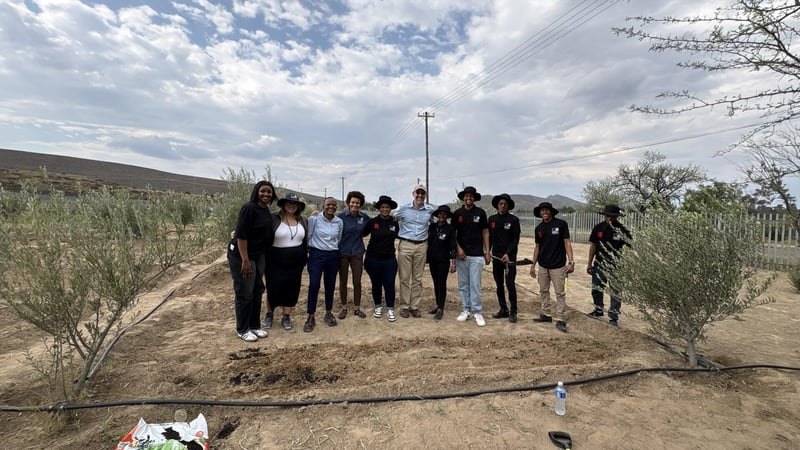
WESSA, Red Rocket and local stakeholders move into the next phase of a community-led initiative connecting youth development, sustainable agriculture and livelihoods.
The Brandvalley and Rietkloof Wind Farm Community Roots Project has moved into its next phase, bringing young people in Laingsburg, Sutherland and Matjiesfontein closer to practical opportunities in sustainable agriculture, environmental stewardship, enterprise development and sustainable livelihoods.
Delivered by the Wildlife and Environment Society of South Africa (WESSA) in partnership with Red Rocket, the initiative is centred on community Eco-Hubs that will provide 15 unemployed young people with accredited training in climate-smart agriculture, agribusiness, environmental stewardship and entrepreneurship.
"An Eco-Hub is a group of young people working together towards a common goal. It is not a school or simply a training unit; it is young people coming together to address challenges such as unemployment and substance abuse, while building skills and opportunities through sustainable food gardens,” shared Sinoxolo Sabelo, WESSA’s Community Roots Project Coordinator.
Magdalena Michalowska-Logan, Sustainability and SHSEQ Director, indicated that for Red Rocket, which supports the Community Roots Project through the Brandvalley and Rietkloof Wind Farms, the programme represents an opportunity to connect renewable energy investment with longer-term sustainable community development.
“It is about addressing unemployment and passing skills and knowledge to young people in the communities we serve. We want young people to gain the confidence and tools to create positive change wherever they go,” says Tsholofelo Moote, Economic Development and Community Manager at Red Rocket.
WESSA conducted a scoping and baseline process in November 2025 using the Sustainable Livelihoods and Vulnerability Framework, and the findings were subsequently taken back to communities in March 2026 for validation.
Kelly Alcock, Head of Education and Sustainability at WESSA, provided more context: “We engaged young people, schools, stakeholders and community members to understand what exists in each community, what the challenges are, and equally, what the opportunities and aspirations are. The community was the starting point.”
In her keynote address, Mayor of Laingsburg, Aletta Theron, noted, "This day is about more than launching a project. It is about recognising the value of partnerships, community participation and opportunities that can make a meaningful and lasting difference in the lives of our people.
Theron also emphasised that lasting impact will depend on local ownership and participation. “To the beneficiaries and members of our community, this project belongs to you. I encourage you to participate fully, take ownership of the opportunities presented and help ensure that the benefits of this initiative are sustained for years to come.”
The practical focus of the programme is also shaped by the environmental realities of the Central Karoo.
Sabelo shared that limited rainfall and soil nutrients require agricultural practices that are both sustainable and suited to local conditions. Participants will explore practical approaches, including rainwater harvesting, mulching, composting, drought-tolerant crop selection and appropriate irrigation scheduling.
For Cindy-Lee Cloete, CEO of WESSA, the long-term value of an Eco-Hub lies not in the infrastructure itself, but in the people and relationships that develop around it.
“An Eco-Hub is not the land or the infrastructure we put in place. It is the people who make it work. It must be a hub of knowledge, shared learning and action. It needs to be a space where young people can grow into individuals who are proud of what they have achieved.”
As Community Roots enters this next phase, WESSA says its approach will remain grounded in co-creation, with the programme adapting to community needs and learning as implementation progresses.
“We do not believe in dropping into a community, imposing a project and then leaving. We co-create. That is why we started by engaging communities, listening to what matters locally and building the project together with the people it is meant to serve,” Cloete says.
Release information
Issued on behalf of
Wildlife and Environment Society of South Africa
Media contact
The Friday Street Club
Claire Watt