
Limpopo blast shows weak links in gas safety protocols
Written by: Mining and Energy Acuity (MEA) Save to Instapaper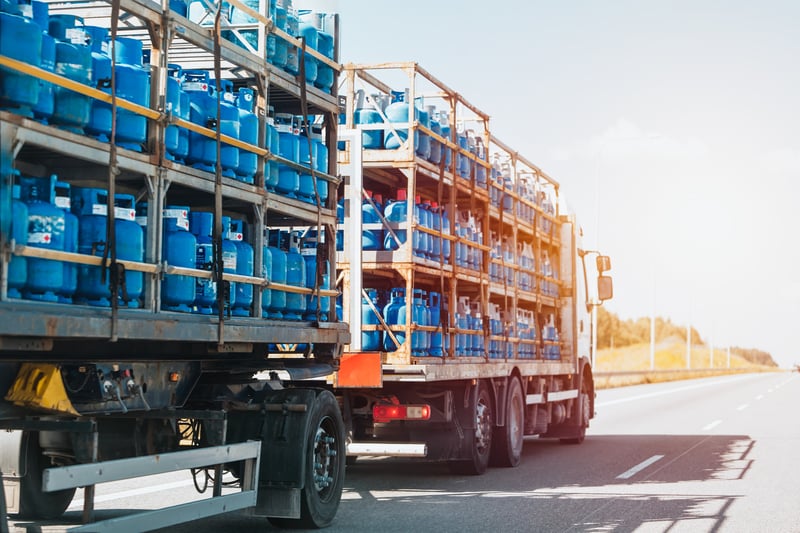
Last month’s roadside inferno outside Tzaneen in Limpopo, triggered when a truckload of gas cylinders erupted along the R71, has raised serious concerns about the effectiveness of safety regulations for the transport of compressed gas. According to Johan von Landsberg, Technical Manager at explosives management company Mining and Energy Acuity (MEA), this incident points to a significant disparity between the safety standards enforced in the explosives sector versus those applied to gas logistics.
“The explosives industry operates under some of the most stringent and comprehensive safety standards of any sector in the country,” he says. “This is essential – we’re dealing with volatile materials that require strict oversight to keep our people, communities, and infrastructure safe. But when it comes to compressed gas, the regulatory environment is far less prescriptive and, in many cases, unevenly enforced.”
Von Landsberg explains that while both sectors fall under South Africa’s broader hazardous goods transport legislation, explosives regulations – such as those under the Explosives Act – include detailed standards for everything from vehicle materials and thermal barriers to driver certification, route restrictions, and pre-trip inspections.
“In the explosives industry, no truck leaves a depot without a signed checklist verifying that every component meets specification. And at MEA, for instance, our trucks use non-sparking materials and thermal barriers to delay fire spread. Our truck drivers undergo specialised crisis training, including tire-fire response drills. This level of control simply doesn’t exist across the gas logistics sector.”
The truck bearing the compressed gas reportedly crashed through a road barrier on the R71 due to suspected speeding and brake failure, leading to multiple explosions as gas cylinders were ignited in succession. The speed limit for explosives vehicles is 80km/h. However, this could still be too fast for the notoriously challenging Magoebaskloof road.
Shortly after the explosion, locals familiar with the area noted that the Georges Valley turnoff is a safer route, but that the R71 route through Magoebaskloof – a steep, winding road – is considerably shorter, offering a dangerous temptation for drivers.
While rare, the explosives industry is not fully removed from similar incidents, such as a 2020 case when a truck carrying explosives caught fire between Delmas and Leandra in Mpumalanga. However, the industry generally has much stronger transport guidelines and adheres to more tightly enforced safety precautions, states von Landsberg.
“By comparison, the transport of gas cylinders is regulated through a patchwork of broader codes, including dangerous goods transport standards and pressure vessel regulations. Although technically enforceable, these can often leave room for interpretation or can be complex and inconsistently applied across operators.”
He argues that aligning certain compressed gas protocols with explosives regulations could substantially improve safety. “Explosives carriers may not leave a depot until a safety officer signs off on the condition of the load. The load is then verified against a pre-trip checklist that forms part of the journey log.
“Replicating that checklist in the gas trade would formalise inspections and remove a lot of the guesswork. The resulting paper trail will also make it simpler for regulators and auditors to examine. Similarly, requiring certified stowage and inspection plans based on cylinder size, valve type, and pressure rating would go a long way to improving traceability and accountability.”
Advanced route planning is also critical, and another area in which the explosives industry leads. “Without close monitoring, some truck operators in the compressed gas transport industry may choose to veer off pre-approved routes to save time. That’s far less of a concern in the explosives industry, where carriers use measures like GPS tracking, day- and nighttime travel protocols, and face severe penalties for route deviations. These ensure that drivers stick to safer roads, and could help avert accidents and crashes in other industries.”
He emphasises that many gas transport companies do everything in their power to minimise risks and uphold high safety standards but adds that relying on individual company ethics is not a sustainable strategy.
“Industry-wide innovations and improvements are typically driven by regulation, not just goodwill. But as professionals tasked with securing and transporting dangerous goods, we must do everything possible to prevent disasters before they happen.
“Ultimately, transporters are in the business of keeping our clients’ hazardous stock secure and accounted for, and, more importantly, keeping communities safe – especially while hauling highly explosive materials down public corridors. The best recommendation we can make is for regulators to take a more critical look at the two industries and explore ways in which cross-regulation adoption or similar protocols could be beneficial to gas transport.”
Submitted on behalf of
Get new press articles by email
PR Worx is a leading, award-winning agency with over two decades of experience helping businesses grow through strategic marketing-communications. Established in 2001, the agency believes PR is more than media coverage—it's about building meaningful relationships with the right audience. With a strong track record across multiple sectors, PR Worx has delivered measurable results for hundreds of... Read More
Latest from
- Who is today's financial advice industry really built for?
- VUT marks 60 years with R5 million investment in revamped science laboratories
- Why your SARS auto-assessment might be wrong, even when it looks right
- The questions I couldn’t answer at Meet the Managers - and why that matters
- The advice gap - Why young South Africans stopped asking professionals what to do
- The South African investor has changed. The industry serving them hasn't.
- "The Escalator Theory" - why South Africa's smartest fund selectors are no longer chasing performance
- Over-diversified and underperforming - The expensive mistake hiding in most South African portfolios
- Africa’s Endangered Wild Dogs Gain Ground Through Conservation Collaboration
- Data, Not Emotion - How SA Investors Can Navigate Market Volatility
- Incentives alone will not solve South Africa’s household savings challenge
- Falling inflation boosts retirement prospects, says Multilink Financial Services CEO
- The R150,000 mistake that could cost you R1 million by retirement
- At your service - Clifftop butlers shine during SABA training
- From Veranda to Boardroom - The Quiet Giant of South African Business and Heritage
The Pulse Latest Articles
- Gloot Partners With Rachel Kolisi's Falling Forward Roadshow (August 5, 2026)
- National Play Day Shines A Spotlight On South Africa's Childhood Play Crisis (August 5, 2026)
- Celebrating The Women Building Futures On Behalf Of Clive Robinson, Md Of Tutor Doctor Sa (August 5, 2026)
- Shorter Safari Getaways Are Reshaping The Greater Kruger Stay (August 5, 2026)
- Philippe Starck: The Visionary Designer Behind Axor's Most Iconic Creations (August 5, 2026)