
Why Cheetah Conservation Is Really About Saving Entire Landscapes
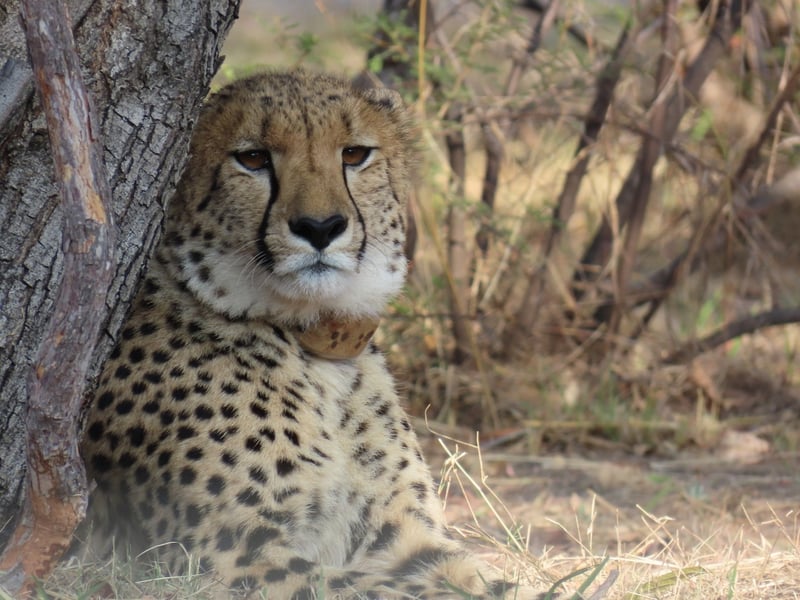
Every year on 4 December, we recognise two important dates on the global conservation calendar: International Cheetah Day and Wildlife Conservation Day. While one highlights a flagship predator and the other celebrates broader biodiversity, their goals are fundamentally aligned. In ecological terms, the condition and behaviour of indicator species such as cheetahs often reveal the health of the wider ecosystem. Their sensitivity to environmental change makes them reliable gauges of ecological integrity.
Cheetahs as ecosystem barometers
After more than a decade working across reserves in the Waterberg, it has become clear to me that cheetahs are not only charismatic apex mesopredators - they are also functional bioindicators. When a cheetah begins to show signs of stress, the cause is seldom isolated. It usually reflects broader environmental pressures: declining prey numbers, habitat degradation, anthropogenic disturbance, changes in interspecific competition, or emerging genetic constraints within small populations. Cheetah ecology, therefore, offers a diagnostic lens through which we can interpret the overall health and resilience of the landscape.
Science at the heart of conservation
At Mabula, our management decisions are grounded in rigorous, science-based research and long-term ecological monitoring. We assess predator–prey dynamics, diet composition, and behavioural patterns, while tracking shifts in vegetation and hydrological systems to ensure ecosystem resilience under changing climatic conditions. Mabula also contributes to the Southern African Cheetah Metapopulation Project, a collaborative initiative designed to enhance genetic diversity and population stability through strategic translocations between reserves. Much of this work is deliberate and meticulous, but it is this consistency that delivers tangible, measurable recovery - results, rather than hope alone.
A regional model for resilient populations
Between 2017 and 2025, Mabula facilitated 15 cheetah translocations, strengthening populations across South Africa and Mozambique. Many relocated females have produced multiple litters, and several males are contributing valuable genetic diversity far beyond the Waterberg. Every healthy cub born elsewhere from a Mabula lineage is evidence of landscapes functioning as interconnected systems rather than isolated fragments. It affirms that evidence-based decision-making has real, far-reaching impact.
Conservation as a collaborative endeavour
None of these successes are achieved in isolation. Universities, NGOs, provincial authorities, partner reserves, and local communities all play essential roles in driving effective conservation outcomes. In my experience, the most meaningful collaboration stems from the exchange of knowledge and best practices. No single reserve - regardless of resources - can ensure the long-term survival of a species alone. The Waterberg’s conservation achievements rest on coordinated efforts, continuous learning, and shared accountability.
The significance of Conservation Days
International Cheetah Day asks us to focus on a species that, despite its iconic status, remains Africa’s most threatened big cat. It reminds us that ecosystems are fragile, yet recoverable.
Wildlife Conservation Day underscores that no species can persist without protecting the environment that supports it.
Together, these observances highlight a core ecological truth: the condition of cheetahs mirrors the health and integrity of the landscapes they inhabit.
Looking ahead
The challenges facing conservation - climate variability, habitat loss, and human–wildlife conflict - are significant and ongoing. Yet there is reason for optimism. Long-term, science-led, and collaborative strategies continue to prove that resilient ecosystems and viable wildlife populations can thrive when conservation is implemented with intention and commitment.
Cheetahs remind us that ecosystems can be fragile, yet remarkably resilient when conservation works.
Observing these days is an invitation to reflect, to support, and to participate in this shared effort. And for that, today is worth celebrating.
Release information
Issued on behalf of
Mabula Private Game Reserve
Media contact
PR Worx
Maryke Willis