
Energy Partners Helps Industrial Businesses Shift From Energy Asset Ownership to Performance-Based Solutions
For commercial and industrial organisations, energy infrastructure is no longer simply a question of purchasing electricity or maintaining equipment. Power generation, refrigeration, steam, utility costs, emissions and operational reliability increasingly need to be managed as interconnected business concerns. Energy Partners addresses this challenge by developing, investing in, operating and managing energy assets for organisations that want reliable energy performance without directing all their own capital and technical resources into infrastructure ownership.
Founded in 2009 and headquartered in Cape Town, Energy Partners works primarily with commercial and industrial clients. Its vertically integrated model brings together project investment, engineering, procurement and construction, operations and maintenance, and ongoing energy management. The company’s industrial energy solutions and investment approach include Power Purchase Agreements, Cooling-as-a-Service, steam outsourcing, Data-as-a-Service, ESG data management and sustainability strategy services.
Moving Energy Infrastructure From Capital Expense to Managed Performance
A central idea behind the Energy Partners model is that a business does not necessarily have to own an energy asset to benefit from it.
The company funds qualifying infrastructure under long-term arrangements and carries its energy assets on its own balance sheet. Its website states that Energy Partners has invested in and manages more than 60 assets across different technologies, supported by funding facilities exceeding $150 million. This structure is designed to free clients from significant upfront capital expenditure while transferring defined operational responsibilities to an energy specialist.
The approach is sometimes described as servitisation: instead of buying equipment and then taking responsibility for operating, maintaining and eventually replacing it, the customer purchases an energy-related outcome or service.
For businesses where refrigeration, electricity or steam is critical to production, this changes the commercial discussion. Decisions can be based not only on the purchase price of an asset but also on its lifecycle performance, reliability, maintenance requirements and energy efficiency.
Power Solutions Built Around Long-Term Energy Requirements
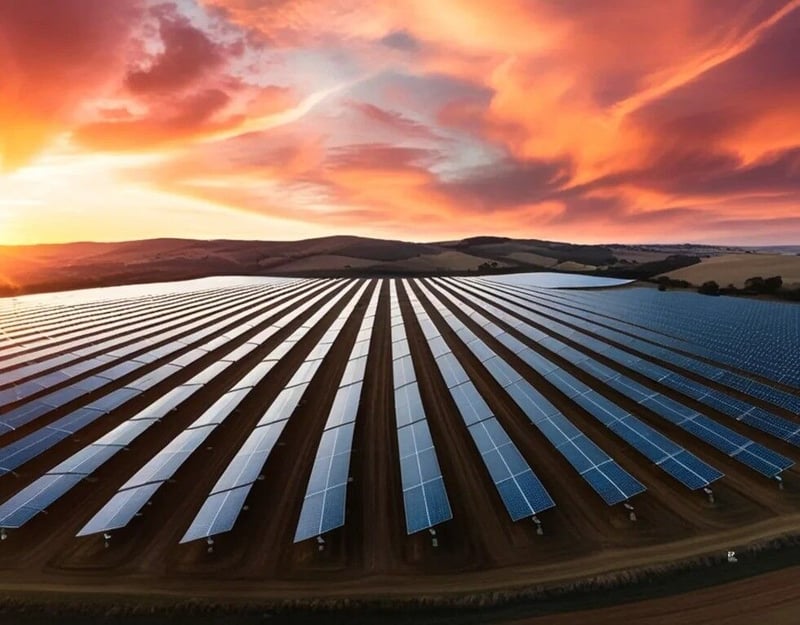
Energy Partners’ Power division develops embedded generation and energy solutions for commercial and industrial customers, including solar photovoltaic projects and Power Purchase Agreements.
Under a PPA structure, Energy Partners can invest in the required generating asset while the customer purchases the electricity produced under an agreed commercial arrangement. This can reduce the need for the client to allocate its own capital to solar infrastructure while still providing access to renewable energy generation.
Businesses investigating this route can explore the company’s commercial and industrial power solutions as part of evaluating how on-site generation may fit into their broader energy strategy. Energy Partners has implemented PPAs for industrial clients including Atlantis Foundries and Kimberly-Clark South Africa.
The value of the model extends beyond installing photovoltaic panels. Long-term energy infrastructure also requires engineering, monitoring, maintenance and performance management. Energy Partners’ integrated structure allows those responsibilities to remain connected throughout the lifecycle of a project rather than ending when construction is complete.
Refrigeration as a Critical Utility
Industrial refrigeration presents a different energy challenge. Cold-chain businesses, food processors, pharmaceutical facilities and other temperature-sensitive operations depend on cooling systems that need to perform continuously and efficiently.
Energy Partners provides Cooling-as-a-Service, or CaaS, through a model in which it takes responsibility for the refrigeration system across its lifecycle. The company designs, builds, operates and maintains the plant, with performance requirements covering areas such as temperature, efficiency and uptime established within the service arrangement.
The company’s Cooling-as-a-Service and industrial refrigeration offering also includes engineering and consulting, integrated EPC services, natural-refrigerant systems, performance monitoring, maintenance and lifecycle modelling. Energy Partners states that its CaaS portfolio includes export packhouses, food processors, pharmaceutical facilities and industrial cold-chain operations in South Africa.
This illustrates an important part of the broader Energy Partners philosophy: energy infrastructure is treated as an operating system that must continue delivering measurable performance after installation, rather than as equipment handed over at the end of a construction project.
Connecting Steam, Cooling and Power
Industrial sites rarely consume only one form of energy. A food-processing facility, for example, may simultaneously require refrigeration, hot water, steam and electricity. Optimising each system independently can overlook opportunities that become visible when the site is considered as a complete energy ecosystem.
Energy Partners’ Steam division provides outsourced steam solutions as well as boiler sales, rentals, servicing, combustion systems and related support. Its outsourced model covers the design and installation of steam infrastructure together with ongoing operation and maintenance.
The benefit of combining disciplines can be seen in projects where refrigeration waste heat is recovered for hot-water or steam-related processes. Energy Partners has documented installations in which cooling, heating and electricity generation were considered together to reduce wasted energy and improve overall plant performance.
This integrated perspective becomes particularly relevant for manufacturers and processors whose energy costs are spread across several utilities. Instead of treating electricity, cooling and heat as unrelated expenses, the business can examine how energy flows through the complete operation.
Data Turns Energy Performance Into a Management Issue
Energy Partners also provides asset management and sustainability services intended to give organisations greater visibility over energy use and performance.
Its asset-management capability incorporates metering, Internet of Things technologies, monitoring and control, energy-flow optimisation and digital modelling of utilities and significant energy users. The company uses its Syntiro platform to consolidate operational and sustainability information and support financial reconciliation, utility management, emissions tracking and ESG reporting.
This reflects a broader shift in industrial energy management: infrastructure performance increasingly depends on the quality of the information available to technical, financial and sustainability teams. Monitoring can help organisations identify anomalies, assess efficiency initiatives and connect operational energy decisions with financial and environmental objectives.
Energy Partners is also a participant in the United Nations Global Compact, with the organisation’s official participant directory listing Energy Partners Holdings in South Africa. The company states that it aligns its sustainability activities with recognised frameworks and provides clients with services covering ESG data consolidation, carbon-footprint strategy, energy audits and sustainability roadmaps.
A Long-Term Partnership Model for Industrial Energy
Energy Partners describes its ambition as becoming a trusted long-term partner to organisations whose operations depend on reliable energy infrastructure. Its model combines technical expertise with financing, ownership and lifecycle responsibility, enabling clients to consider energy as a managed service rather than simply a collection of assets.
The company is a B-BBEE Level 1-accredited provider and operates through specialist divisions covering Power, Refrigeration, Steam, Asset Management and Sustainability. Its current leadership includes Chief Executive Officer Manie de Waal alongside general managers responsible for the individual operating divisions.
For businesses assessing new power generation, ageing refrigeration infrastructure, steam requirements, utility performance or sustainability reporting, the starting point is to understand the energy requirement in the context of the operation as a whole. Energy Partners’ approach is designed to take that assessment from engineering and commercial structuring through investment, construction and long-term operation.
By connecting capital, engineering and performance management, the company provides an alternative to the conventional model in which businesses purchase energy infrastructure and then carry the technical and financial responsibility themselves. For industrial organisations where uptime, cost control and sustainability increasingly intersect, that creates a practical framework for treating energy as a strategic operating resource rather than simply another utility bill.
Release information
Issued on behalf of
Energy Partners Holdings (Pty) Ltd
Media contact
Energy Partners Holdings (Pty) Ltd
Energy Partners Holdings (Pty) Ltd