
Beyond the donation - Why the next chapter of social investment is about how business creates value
Johannesburg, 08 October 2026. Social investment is entering a more demanding phase. In a country facing persistent food insecurity, high unemployment and limited economic opportunities, the question for business is no longer simply how much it gives, but what it can help build through the capabilities, relationships and infrastructure it already has.
The scale of the challenge is clear. According to Statistics South Africa’s 2025 General Household Survey, 22% of South African households reported inadequate or severely inadequate access to food. Meanwhile, Stats SA’s Quarterly Labour Force Survey for the second quarter of 2026 put the official unemployment rate at 33.6%, with youth unemployment at 47.4%.
These challenges are interconnected. Food security depends on resilient producers, suppliers and households, while economic participation depends on whether people and businesses can access markets and build sustainable livelihoods.
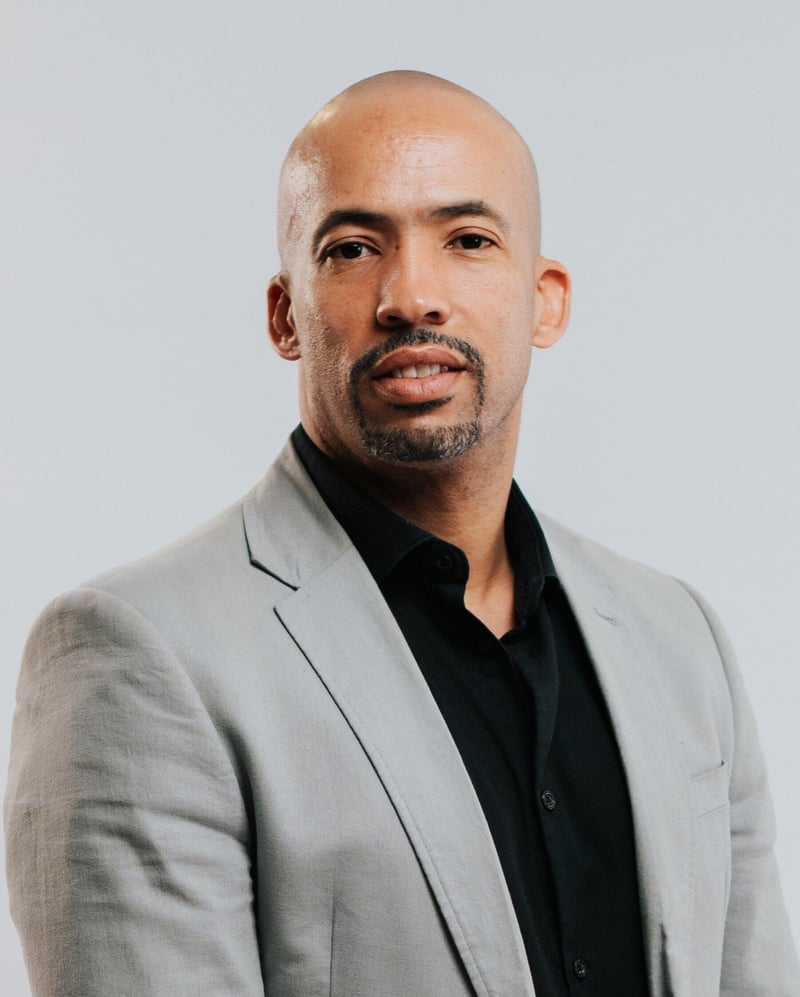
This was explored by The SPAR Group at the 2026 Serious Social Investing (SSI) Conference at GIBS on 07 October, where Justin Julius, SPAR North Rand Divisional Merchandising and Marketing Executive, participated in a panel discussion on how business can support entrepreneurship and job creation at scale.
For Julius, the focus needs to shift from the initial intervention to what it enables over time. “The opportunity is to move beyond funding programmes and think about how business can create pathways that turn entrepreneurship into sustainable livelihoods and greater economic participation.”
Funding remains an important catalyst, but it is rarely enough on its own to make an enterprise sustainable. Entrepreneurs also need customers, market access, skills, networks and the ability to participate in established value chains.
This is where businesses can bring a different set of assets to social investment. Their supply chains, procurement networks, infrastructure, expertise and customer relationships can create practical routes into the economy that extend beyond once-off financial support.
At SPAR, the Supplier Development Hub provides one example. In the 2025 Integrated Annual Report, the Group reported investing R13.8 million in the initiative. The programme supports emerging farmers in building the capabilities needed to become commercially competitive and participate more sustainably in formal markets.
But the same principle applies to addressing food insecurity, where the role of business extends beyond simply providing food. Through the Isonka programme, SPAR works with Operation Hunger to support community-based feeding projects around its distribution centres. The programme combines immediate hunger relief with initiatives such as vegetable gardens, skills development and income-generating activities, creating a pathway towards greater community self-sufficiency.
SPAR’s partnership with FoodForward SA provides another example of how existing business systems can be used to create social value. The partnership helps redirect safe, surplus food to beneficiary organisations serving communities in need, linking food waste reduction with improved access to food. In 2025, Encore contributed more than R3.1 million in SPAR private-label food to FoodForward SA.
The partnership also comes to life through initiatives such as World Food Day, where SPAR has joined FoodForward SA and other partners in practical food-packing and community-focused activities. In 2025, SPAR contributed more than 61 000 meals, with messages from its divisions, as part of the World Food Day effort.
These examples point to a broader opportunity for business by using existing infrastructure and relationships to connect social investment with practical outcomes. Whether supporting an emerging farmer into formal markets, redirecting surplus food to communities or helping local projects develop income-generating activities, the emphasis is on creating value that can extend beyond a single intervention.
This is particularly relevant in the context of South Africa’s unemployment challenge. With around 5 million young people unemployed in the second quarter of 2026, creating viable pathways into economic participation is increasingly urgent. Businesses cannot solve unemployment alone, but they can use their existing ecosystems to create opportunities for entrepreneurs, suppliers and communities to participate in the economy.
It also changes how social investment should be measured. Impact should not only be assessed by the amount of money invested or the number of beneficiaries reached, but by what remains after the programme ends, whether an enterprise is stronger, whether livelihoods are more resilient, whether new opportunities have been created and whether people are better positioned to participate in the economy.
For businesses, this represents a shift from seeing social investment as something separate from the core business to considering how the business itself can contribute to social outcomes.
It does not mean replacing the role of government or civil society. Rather, it is about recognising where business has a distinct contribution to make and using its commercial reach, capabilities and relationships more deliberately.
Ultimately, the next chapter of social investment is about moving from asking how much business can give to asking what business can help make possible. This means creating more practical pathways from entrepreneurship to sustainable livelihoods and ensuring that social investment contributes to lasting economic participation.
The opportunity is to move beyond the donation and towards interventions that help build stronger enterprises, more resilient communities and greater opportunities for people to participate meaningfully in the economy.
About the SPAR Group:
The SPAR Group Ltd (SPAR or the group) is a warehousing and distribution business listed on the Johannesburg Stock Exchange (JSE) in the Food and Drug Retailers sector. The group owns the SPAR retail brand in South Africa, Switzerland, South West England, Ireland and via joint venture in Sri Lanka, but, essentially, supports a network of independent retailers who trade under our brand through our distribution centres. SPAR carries the license rights from SPAR International, which is present in 44 countries and has 240 distribution centres that serve 13 million customers every day. The SPAR Group Ltd, headquartered in Durban, South Africa, is present in nine countries, has 14 distribution centres and serves over 4 500 stores. For more, please visit https://thespargroup.com.
Release information
Issued on behalf of
SPAR
Media contact
SPAR
SPAR