
Time to End Live Animal Exports
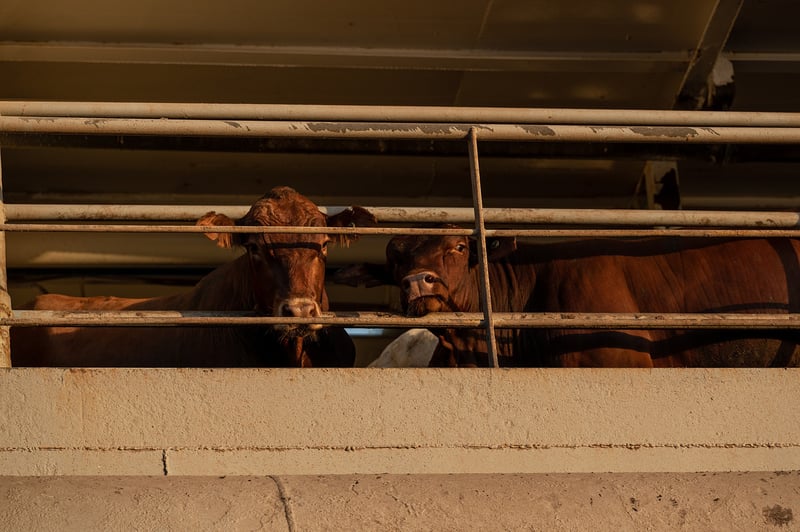
Cape Town, 08 June 2026 — As South Africa continues to allow the export of live animals by sea, the country finds itself at a critical crossroads: whether to regulate a controversial trade or take decisive action to end it.
Currently, live animal exports by sea remain legal, with South Africa exporting thousands of cattle, sheep and goats each year, primarily to the Middle East and Mauritius.
Rather than banning the practice, government is moving to formalise and regulate it. In July 2025, the Department of Agriculture (DOA) published draft regulations under the Animals Protection Act for public comment, to set minimum standards for the export of live animals by sea.
However, animal welfare organisations argue that these measures fail to address the fundamental issue.
“No amount of regulation can make this inherently cruel practice humane,” says Fiona Miles, Director of FOUR PAWS South Africa.
“Animals are sentient beings, not cargo. They experience fear, stress and suffering on these long journeys and that cannot be regulated away.”
A Debate Brought Home To Cape Town
For many South Africans, the issue is no longer theoretical.
In February 2024, the live export vessel Al Kuwait, carrying approximately 19,000 cattle, docked in Cape Town harbour, triggering widespread public outrage.
Residents across the city reported a strong, sewage-like stench, later confirmed to be coming from the vessel.
Reports indicated that the cattle faced over five weeks at sea, standing in accumulated faeces and ammonia, with concerns raised about hygiene, injuries and deaths onboard.
“For many people in Cape Town, this issue became impossible to ignore it was something they could see, smell and experience firsthand,” says Miles.
“It reminded us that what happens at sea is still our responsibility.”
The ship ultimately departed South African waters, highlighting a key concern raised by welfare groups: once vessels leave local jurisdiction, enforcement of welfare standards becomes impossible.
Growing Opposition And Global Pressure
The live export industry faces increasing criticism from civil society, veterinarians and animal welfare organisations, who point to overcrowding, heat stress, injury, exhaustion and death as unavoidable risks of long sea journeys.
At the same time, global momentum is shifting toward bans on the practice:
- New Zealand banned livestock exports by sea in 2023.
- United Kingdom passed legislation banning live exports for slaughter in 2024.
- Australia has committed to phasing out live sheep exports by 2028
“Countries around the world are recognising that live exports have no place in a modern, compassionate society,” Miles says.
“South Africa now has a choice to follow that progress or fall behind.”
A Different Path Forward
Transporting live animals over long distances increases the risk of zoonotic disease outbreaks, threatening both human and animal populations.
The COVID-19 pandemic has shown how urgent it is to mitigate such risks.
FOUR PAWS urges the DOA to:
- Prohibit live exports by sea
- Promote humane alternatives.
- Fulfil its constitutional, legal and ethical duty to protect animals.
“South Africa has the capacity to lead with compassion,” Miles adds.
“By ending live exports and investing in local processing, we can protect animals while strengthening our economy.”
A Moment For Decision
As Ban Live Exports International Awareness Day on 14 June approaches, communities across the country are being urged to reflect on the future of this trade.
With regulations under consideration and public concern growing, the question facing South Africa is no longer whether change is needed but what kind of change it will choose.
“This is a defining moment for our country,” says Miles.
“Do we try to regulate suffering, or do we take a stand and end it?”
For more information, please visit our website at https://www.four-paws.org.za/
Release information
Issued on behalf of
FOUR PAWS
Media contact
FOUR PAWS
Deidre Daniels