
Google Ads AI Max Is Changing Search Campaigns For The Better
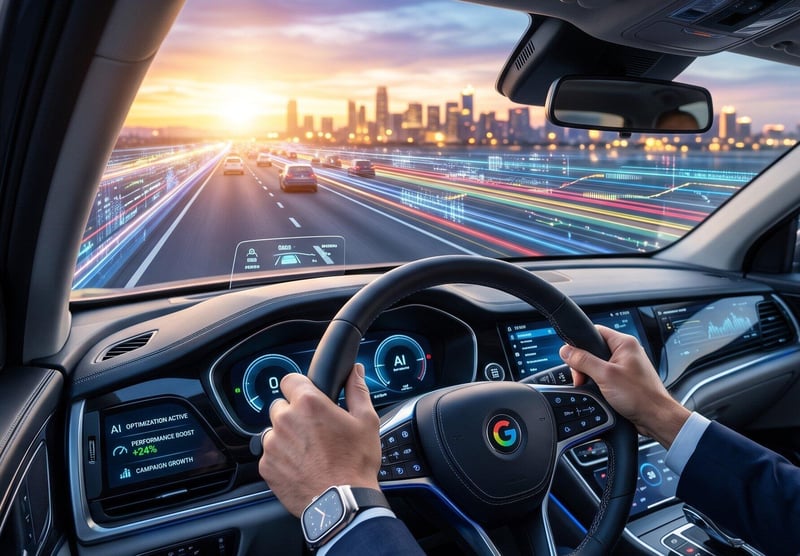
Google Ads is changing the way Search campaigns are managed, with AI Max becoming part of Google's next phase of automation.
For businesses running Google Ads, this is more than a change to the interface. Several existing campaign features are being moved into the AI Max system, while Dynamic Search Ads are also heading towards a sunset.
Google has started automatically upgrading campaigns using Automatically Created Assets and campaign-level broad match settings from September 2026. Dynamic Search Ads are scheduled to begin their sunset and automatic upgrade process in February 2027.
That gives businesses time to look at their accounts, understand the changes and decide how they want to approach the transition.
AI Max Brings More AI Into Search Advertising
AI Max is designed to allow Google's systems to use AI across several parts of a Search campaign.
The system can help with search term matching, ad text and landing page selection. Rather than relying only on the keywords and assets entered by an advertiser, AI Max can use additional signals to determine which searches, messages and landing pages may be relevant.
Google has also introduced controls intended to give advertisers more input into how this process works.
One example is AI Brief, where advertisers can provide information about their business, customers and messaging in their own words. This gives businesses a way to provide context that may not be captured by keywords alone.
Google has also introduced controls relating to brands, locations and advertising text. For businesses that need specific wording to appear in their ads, text guidelines can provide additional control.
That matters because handing more campaign decisions to AI does not mean handing over the business strategy.
What Does This Mean for South African Businesses?
Google Ads has not announced a separate launch date specifically for South Africa. Instead, AI Max is being rolled out as part of the wider changes to Google Search campaigns.
For South African businesses already using Google Ads, this means it is worth reviewing campaigns now rather than waiting for an automatic change.
The first thing to check is which features are currently being used.
Campaigns using Automatically Created Assets and the campaign-level broad match setting are part of the current automatic upgrade process. Businesses using Dynamic Search Ads also have a change coming, with the sunset and automatic upgrade process scheduled to start in February 2027.
These changes mean that campaign structure, keyword targeting, ad copy, landing pages and reporting may all need to be considered as part of an AI Max transition.
Google Is Adding More Reporting and Controls
The AI Max rollout is not stopping with campaign automation.
On 23 September 2026, Google announced further developments, including the expansion of AI Brief to additional languages and new reporting designed to give advertisers more information about the relationship between search terms, ad assets and landing pages.
This type of reporting is important because one of the challenges with AI-driven advertising is understanding what is happening between the search and the conversion.
The more automation is introduced, the more useful campaign visibility becomes.
Should Businesses Upgrade Now?
There is no single answer for every Google Ads account.
A business with an established campaign structure may want to test AI Max before making wider changes. Another business may find that the new capabilities fit its existing advertising strategy.
Google provides one-click experiments that allow advertisers to test AI Max before applying changes more broadly.
Google also reports that advertisers using the complete AI Max feature set recorded an average 7% increase in conversions or conversion value at a similar CPA or ROAS compared with search term matching alone. This is based on Google's internal 2026 data for non-retail advertisers, so it should be viewed as reported performance data rather than a promise of results.
For businesses, the useful question is not whether AI should be involved in Google Ads. That shift is already happening.
The question is how much control, guidance and oversight the business wants to retain while Google's systems take on more of the campaign management.
The Strategy Still Starts With the Business
I have worked in digital since 2005, and Google Ads has changed plenty of times during that period. What has not changed is the need to understand what the advertising is supposed to achieve. AI can help identify searches, create variations of ad copy and connect users with landing pages. It can process more signals than a person can manually manage.
But it does not know your business in the same way you do.
Before an automatic upgrade takes place, businesses have an opportunity to review their campaigns, define their advertising requirements and decide what they want Google's AI to do.
The technology is changing. The business objectives should still come first.
Release information
Issued on behalf of
Daleen Prinsloo Digital & Design
Media contact
DPDD
Daleen Prinsloo