
Measurement Teams Shift From Building Dashboards To Delivering Answers Through Trusted Questions And Clean Data
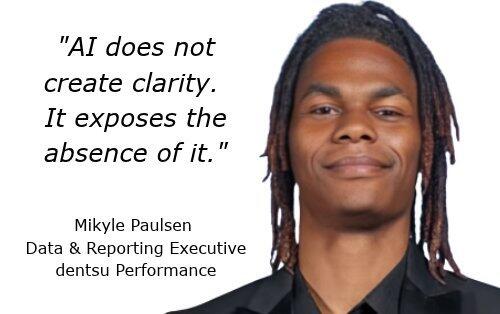
The best measurement teams will not build more dashboards. They will build better answers.
I started my career building dashboards. Like most analysts, I believed that if we could just give people more visibility, they would make better decisions. More charts. More filters. More reports landing in inboxes before the first coffee of the day.
But the question I still hear most often is surprisingly simple; "Can someone tell me what's actually going on?
That is because marketing never had a data problem. It had an accessibility problem. We have spent years making data easier to see. What we have struggled to do is make it easier to understand. And that's where measurement is heading.
Not away from dashboards. Away from the idea that dashboards should be the starting point.
People do not think in reports. They think in questions.
Why are sales down? What changed last week? Which audience is growing? Did that sponsorship work?
For years, answering those questions meant finding the right dashboard, pulling data from multiple sources, or waiting for an analyst to investigate. Now, we are moving towards a world where anyone can simply ask.
That sounds like an AI story. I do not think it is. It is a measurement story.
Over the past few years, I have worked on projects ranging from audience intelligence tools to measuring brand exposure through video AI, and one lesson keeps coming up: the technology is rarely the hard part. The hard part is agreement.
Agreeing what a conversion is. Agreeing how success should be measured. Agreeing which numbers the business trusts.
Every organisation wants AI-powered answers. Far fewer have done the work required to make those answers dependable.
That is because AI does not create clarity. It exposes the absence of it.
If your data is fragmented, your definitions are inconsistent and every team works from a different version of the truth, AI will not solve the problem. It will simply help you arrive at the wrong answer faster.
The organisations pulling ahead are not necessarily the ones investing in the most technology. They are the ones doing the unglamorous work first: cleaning data, connecting systems, and agreeing what their metrics mean.
Only then do the answers become useful. And that is the shift I find most exciting.
The role of measurement is changing. Less time building reports. More time building trust. Less time maintaining dashboards. More time helping people find answers.
Because we are approaching a point where getting an answer will no longer be the competitive advantage.
Knowing which question to ask will be.
I started my career building dashboards, and they will always have a place. But the work I am most excited about today is not building another report.
It is helping create a world where anyone, regardless of their technical expertise, can turn curiosity into understanding.
So, here is my question; What's the one question about your brand, audience, or marketing performance that you wish you could get answered instantly?
The future of measurement may have less to do with the dashboards we build, and far more to do with the questions we are brave enough to ask.
Release information
Issued on behalf of
Dentsu Africa
Media contact
Indigo Zebra Commununications
Ingrid von Stein