
Reframing Africa’s Global Identity Discarding Outdated Labels To Embrace Local Realities And Strengths
Written by: BizCommunity Editor Save to Instapaper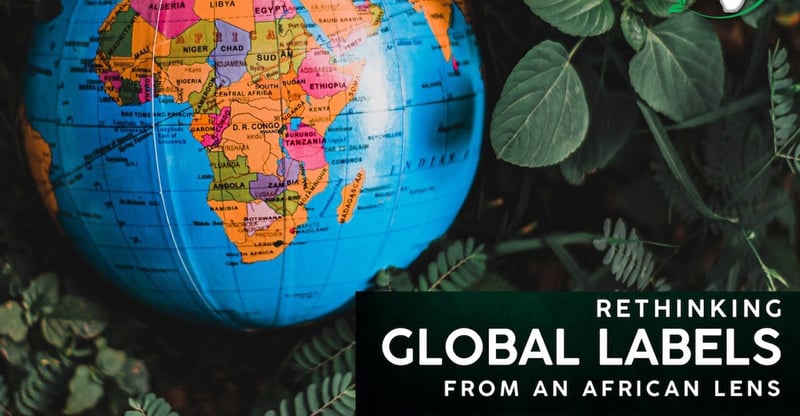
Today, these terms are increasingly outdated, misleading, and counterproductive. They assume a single, linear path toward the lifestyle and structures of industrialisation, erasing diverse models of progress. For Africa, with its rich histories, resource endowments, and socio-economic realities, such framing oversimplifies and undervalues local contexts.
In Sesotho, there is a saying: lebitso lebe ke seromo – 'a bad name is a curse and will manifest'. When Africa is labelled 'developing or least developed', the deficit narrative takes hold, portraying nations as perpetual laggards rather than dynamic actors. Accepting such terms risks internalising and perpetuating the very limitations they imply. Discarding outdated labels is therefore more than symbolic, it is about reclaiming narrative power.
The World Bank itself has recognised the problem, it classifies economies by GNP per capita i.e. low, middle, and high income and discarding 'developed' and 'developing' in its World Development Indicators. This shift acknowledges two realities. Firstly, grouping a diverse set of countries under 'developing' masks profound differences and secondly, many indicators show overlap between so-called 'developed' and 'developing' countries. This is not mere semantics: the labels influence how policy, finance, and cooperation are structured.
Africa leading the future
The evidence speaks for itself. Many African nations are already global leaders in key sectors:
- Financial innovation: Kenya’s M-Pesa mobile money system is a global benchmark, outpacing digital finance adoption in high income economies.
- Green energy leadership: Namibia, Morocco, and South Africa are pioneers in green hydrogen, solar, and wind.
- Growth rates: Ethiopia, Rwanda, Côte d’Ivoire, and Senegal rank among the world’s fastest-growing economies.
- Demographic dividend: With a median age under 20, Africa holds a labour and innovation advantage over ageing societies.
- Digital leapfrogging: Nigeria, Kenya, and South Africa lead in fintech, start-ups, and e-commerce growth.
Despite these advances, the continent is still grouped under vague banners like 'developing' or 'least developed', erasing its leadership in shaping the future.
Africa’s critical minerals, abundant solar, wind, and hydropower potential are not just extractive assets. Used strategically, they can uplift local economies, drive green industrialisation, and build continental value chains. Harnessed this way, resources become levers of agency, rewriting dependency narratives and positioning Africa’s natural wealth and youthful workforce as a global advantage.
Beyond binaries: New groupings
Outdated binaries ignore shifting realities. New coalitions such as Brics and the G20 demonstrate that influence and cooperation can no longer be captured by 'developed vs developing'. South Africa’s presence in both shows that African economies are active shapers of global agendas, reforming financial systems and leading debates on climate justice and energy transitions.
Instead of deficit-driven categories, classifications could affirm agency and contribution, such as knowledge-rich economies, resource-rich economies, demographic-advantage economies, and technology-connector economies. In this context, terms such as 'emerging', 'transforming', or 'innovation-driven' better reflect dynamism and resilience.
Redefining the conversation
Language shapes power. If Africa is to achieve its Agenda 2063 vision, 'the Africa we want', the global community must move beyond labels that perpetuate dependency. Ubuntu teaches us that societies thrive in interdependence, not hierarchy. Countries should be recognised for their unique roles in sustaining the global community, not ranked as better or worse.
For Africa, this is not about fitting into existing categories. It is about reshaping them. The time has come to redefine the conversation. For Africa, this is not about fitting into global categories it is about reshaping them to reflect the continent’s realities, ambitions, resources, and rightful place in the world.
The ESG Africa Conference will be taking place from 15 to 16 October at the Sandton Convention Centre. This is Africa’s premier event for sustainability, and aims to address how sustainability and ESG are applicable in an African context. For more information, visit the website at www.esgafricaconference.com.
Get new press articles by email
We submit and automate press releases distribution for a range of clients. Our platform brings in automation to 5 social media platforms with engaging hashtags. Our new platform The Pulse, allows premium PR Agencies to have access to our newsletter subscribers.
Latest from
- 7 Business Trends Your SME Can Leverage In 2026
- Sadilar Amplifies Visibility And Impact During Conference Season
- Future-ready Logistics- 5 Shifts TO Watch In 2026 (SUB-saharan Africa)
- Dunlop Urges Motorists To Prioritise Tyre Safety On The Busy Joburg To Cape Town Festive Route
- Poverty Trends Report Shows National Progress But Flags Growing Challenges In Gauteng
- SDG Challenge SA 2025 Highlights The Power Of Youth Innovation In Shaping A Sustainable Future
- Experienced Industry Leader Pauli Van Dyk Named Dean Of AFDA’s Upcoming Hatfield Campus
- South Africans Keep Tourism Alive As Homegrown Travel And Local Spending Rise
- Pretoria Student Wins Global Excel Esports Competition
- AfDB Steps Up Support For Somalia With $76m Investment In Roads And Regional Integration
- Corporate Law Experts Warn Directors Of Serious Consequences For Improper Transaction Approval
- New 3% Inflation Target Begins To Shift Expectations In South African Economy
- Retail As A Development Catalyst Drives New Africa Developments’ Inclusive Growth Strategy
- Collaborative SEF Model Shows How Civil Society And State Can Rebuild Economic Trust
- Shumani Accelerates Industrial Growth With Bheka Forklifts And New Equipment Plans For 2026
The Pulse Latest Articles
- Education Is The Frontline Of Inequality, Business Must Show Up (December 11, 2025)
- When The Purple Profile Pictures Fade, The Real Work Begins (December 11, 2025)
- Dear Santa, Please Skip The Socks This Year (December 10, 2025)
- Brandtech+ Has 100 Global Creative Roles For South African Talent (December 9, 2025)
- The Woman Behind Bertie: Michelle’s Journey To Cape Town’s Beloved Mobile Café (December 9, 2025)