
Prasa, Maziya and voestalpine South Africa install diamond crossing at Crossmoor, lifting speed limit from 15 to 60 km/h
Written by: BizCommunity Editor Save to Instapaper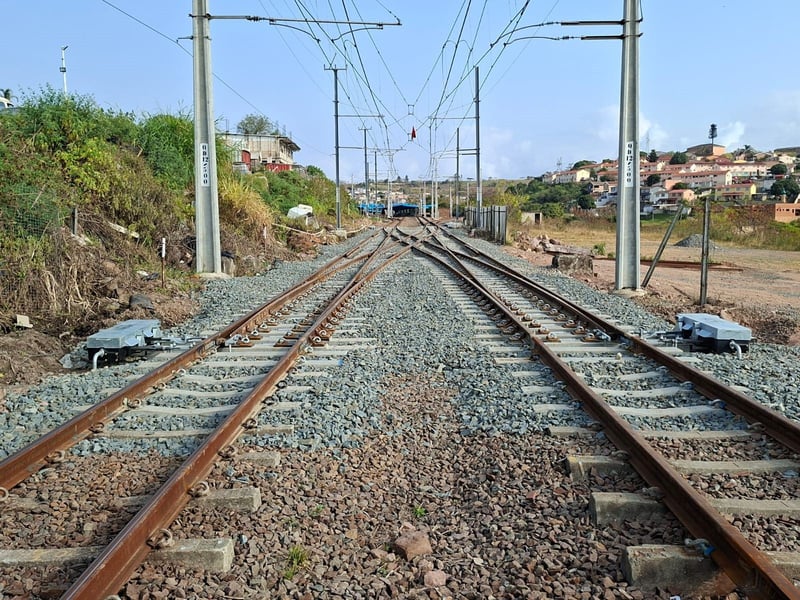
The crossing was delivered by Maziya Group subsidiary Maziya General Services in partnership with voestalpine South Africa (VAE SA).
“The upgrade forms part of Prasa’s multi-year Passenger Rail Recovery Programme and will dramatically improve reliability, safety and travel times for thousands of daily passengers,” says Athanacious Makgamatha, executive: group capital delivery and execution at Prasa.
Crossmoor crossing upgraded
Designed and manufactured by VAE SA at its Isando, Johannesburg facility, the crossing is built on durable concrete sleepers.
“This diamond crossing is a highly specialised piece of rail infrastructure that enables trains to switch between lines in areas with limited space, replacing a worn-out installation that previously sat on wooden sleepers,” explains Sizwe Mkhize, business development officer at VAE SA.
The installation of the diamond crossing and associated turnouts in Crossmoor was performed by PEM-LEM turnout replacement machines, together with a specialised, dedicated track installation team.
Rails, turnouts and diamond crossings are used to manage train movements, with their installation requiring precision, coordination and specialised railway engineering skills.
The PEM-LEM team managed and executed the placement, gauging, levelling and securing of the components to ensure the track geometry meets operational and safety standards.
Speed restriction lifted
The previous speed restriction of 15 km/h over the old crossing has been lifted to 60 km/h following completion of the installation, testing and commissioning.
The improved track geometry also reduces vibration and noise, resulting in smoother train movements through the section.
According to Heinrich Mostert, signalling director at Maziya General Services, the upgrade also addresses capacity constraints on sections of the line affected by vandalism.
“This work restores mobility, restores dignity and restores opportunity,” he says. “For years, large sections of the line have been operating on a single track due to vandalism. Once all upgrades are complete, trains will be able to run in both directions on both lines again—10 minutes apart—instead of one hour apart.”
Local design
Kedibone Madiba, head of the Perway Department at Maziya General Services, said the design and installation process was tailored to the physical constraints of the Crossmoor site.
“This is a brownfield environment with limited space, curves and a platform very close to the installation. A diamond crossing is the only viable solution,” he explains. “We designed everything locally, conducted the surveys, modelled the geometry and worked closely with VAE SA to ensure every component meets the required standards. The result is a system that fits perfectly and performs reliably, even under challenging operating conditions.”
Madiba also highlighted the importance of local technical support for railway infrastructure.
“VAE SA’s local presence is critical. When you run a railway, you need immediate support during derailments or faults, and VAE SA has always responded quickly. Their quality and reliability give us unshakeable confidence,” states Madiba.
“The Crossmoor upgrade is one step among many, but its impact on the surrounding communities will be profound. Reliable rail transport transforms lives. It connects people to jobs, education and economic opportunities. We’re proud to revitalise a network that many people rely on,” concludes Makgamatha.
Get new press articles by email
The Pulse Latest Articles
- India’s Tigers Call Wildlife Photographers For 2027 (August 14, 2026)
- The Mental Load No One Talks About: Why Convenience Is Becoming Self-care (August 14, 2026)
- Rebuilding Culture Through Leadership: Why Values Need More Than Words (August 14, 2026)
- Meet The South Africans Making 'going Green' Part Of Everyday Life (August 13, 2026)
- From Silos To Shared Solutions: Rethinking Supply Chain Resilience In Africa (August 13, 2026)