
Doctor-Entrepreneur Launches Clinimed Clinics Across SA to Advance Holistic Women’s Health
Written by: BizCommunity Editor Save to Instapaper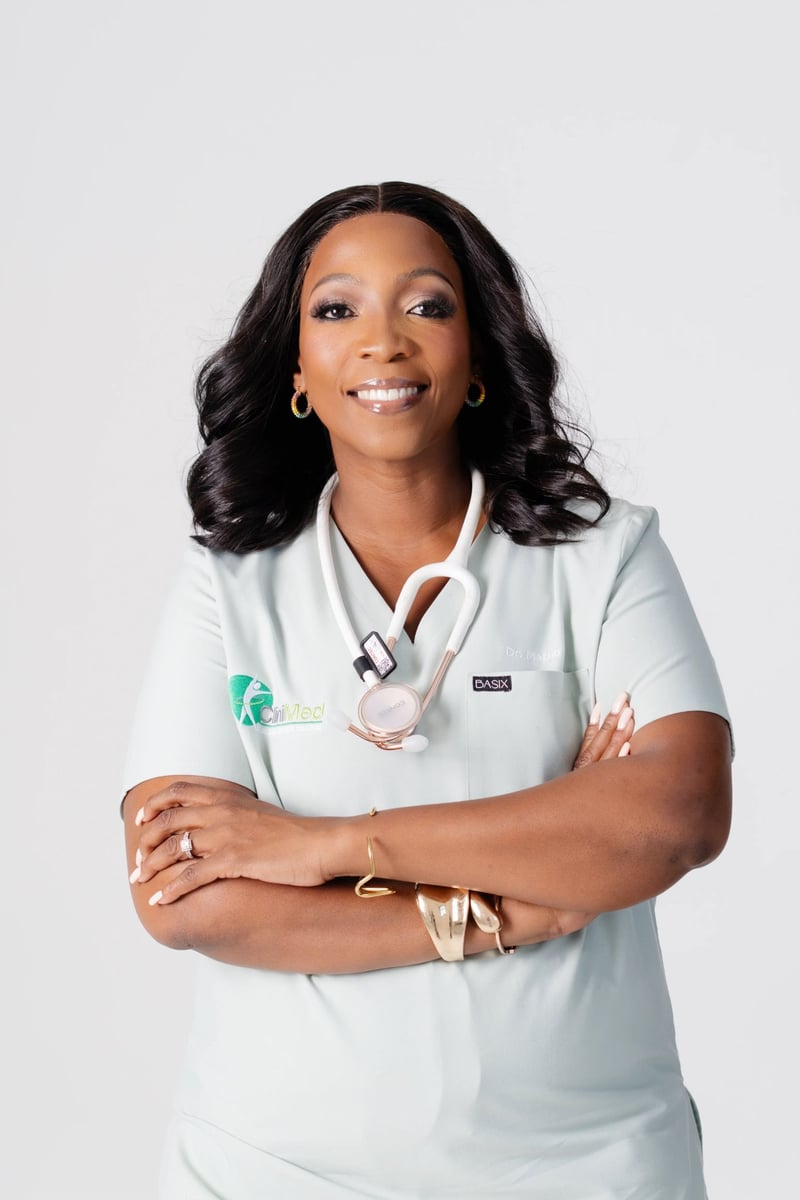
With her medical expertise and business acumen — which she got from her parents, who both chose entrepreneurship after leaving their professions — she opened a one-stop shop for women’s health and wellness solutions.
The private healthcare facility — operating in Khayelitsha, Parklands, Table View, and recently launched in Midland — offers primary healthcare, dental healthcare, wellness programmes, optometry, and aesthetic solutions to support women’s health.
She spoke to Bizcommunity about improving health outcomes for SA women, holistic women’s health, and empowerment.
What led to your decision to pivot from medicine to entrepreneurship?
I wouldn’t say that I pivoted away from medicine. I expanded what medicine could mean to me.
After years of working as a doctor and seeing patients one-on-one, I realised many challenges affecting women couldn’t be solved in a consultation room alone.
I wanted to create healthcare spaces where women could access not only medical care, but also preventative health, aesthetics, wellness and education in a way that felt accessible and empowering.
That is what led to the growth of Clinimed.
Entrepreneurship gave me the opportunity to use the knowledge and experience I gained as a doctor to build systems, services, and opportunities that could reach far more people.
For me, the transition was never about choosing business over medicine. It was about using both medicine and business to create greater impact.
#WomensMonth | Stressed and blessed: South African women are not doing well
Maroefah Smith 1 dayWhat are some of the challenges to women’s health in the country right now? How is Clinimed addressing some of these issues?
One of the biggest challenges is that women often put themselves last.
They are caregivers, mothers, professionals and business owners, but their own health is frequently postponed until something becomes a crisis.
We also need to talk more openly about areas that have historically been neglected — hormonal health, menopause and perimenopause, sexual health, mental wellbeing, obesity, metabolic health and preventative screening.
At Clinimed, we try to approach women’s health holistically.
We want women to have a space where they can ask questions without feeling judged, and where healthcare is not only about treating illness but also about prevention, education, and quality of life.
We are particularly passionate about using education to empower women to understand their bodies and make informed decisions about their health.
How can the private and public healthcare sectors come together to improve the outcomes of South African women’s health?
I believe collaboration is essential. The public and private sectors have different strengths, and instead of operating in silos, we should be looking at how those strengths can complement each other.
The private sector can contribute innovation, technology, infrastructure, training and capacity, while the public sector has enormous reach and a critical understanding of the healthcare needs of our communities.
We need stronger partnerships around preventative healthcare, screening, health education, digital health and skills development.
Technology also gives us an opportunity to bridge some of the gaps.
Telemedicine, digital patient education and better referral systems can help women access the right care earlier, particularly in communities where specialist services are limited.
#WomensMonth | Who runs the beauty world? Girls | Q&A with Skin Functional’s Shannon Dougall
Maroefah Smith 3 Aug 2026What does women’s empowerment look like to you? How do you work to empower women in your industry?
For me, empowerment is not simply telling women that they are powerful. It is giving women the tools, opportunities, and confidence actually to exercise that power.
In my industry, that means creating employment, mentoring young healthcare professionals, giving women opportunities to develop leadership skills and creating environments where women can grow professionally.
It also means being intentional about representation.
When a young woman sees another woman running a healthcare business, making decisions, creating jobs and building something meaningful, she starts to see possibilities for herself.
I believe empowerment should create a ripple effect.
What advice would you give to other women aspiring to replicate your success?
Don’t try to replicate somebody else’s journey. Learn from other people’s journeys, but build your own.
Be willing to start before everything is perfect. There will never be a point where you feel completely ready.
I would also tell women to develop both competence and courage.
Your qualifications and expertise are important, but you also need the courage to take risks, negotiate, ask for opportunities and put yourself in rooms where decisions are being made.
And don’t be afraid to evolve.
The woman who starts the journey may not be the woman who finishes it.
Success is rarely overnight. It is usually the result of consistency, resilience, learning from mistakes and continuing even when things don’t go according to plan.
SA is considered the most economically unequal country in the world. How can we “build resilient economies for all”?
We have to move beyond conversations about empowerment and actually create pathways to economic participation.
That means creating jobs, supporting small and emerging businesses, developing skills and making it easier for people — particularly women and young people — to become economically active.
As entrepreneurs, we also have a responsibility to look beyond our own businesses.
When we create a successful business, we should be asking: How many people am I employing? Who am I training? Who am I giving an opportunity to? Who can grow because this business exists?
I believe resilient economies are built from the ground up.
They are built by thousands of businesses creating employment, by people acquiring skills, by women becoming financially independent and by communities having access to opportunities.
Economic empowerment is ultimately about giving people the ability to create a sustainable future for themselves and their families.
Finally, if you could meet yourself as a little girl, what would you tell her?
I would tell her: You are capable of far more than you can imagine.
I would tell that little girl from Limpopo that she doesn’t need to make herself smaller to fit into someone else’s idea of what is possible for her.
I would tell her that there will be moments when she doubts herself, moments when things don’t work out and moments when people tell her that something cannot be done. But those moments don’t define her.
I would tell her to keep learning, keep dreaming and, most importantly, to remain kind.
And I would tell her that one day she will look back and realise that every difficult chapter taught her something she needed for the next one.
Dream bigger, little girl. Your story is only beginning.
Get new press articles by email
The Pulse Latest Articles
- Antonio Citterio: The Art Of Timeless Design (August 26, 2026)
- From Water To Digital Twins: Steinmüller Africa Puts Plant Reliability On Display At Electra Mining (August 26, 2026)
- Women Shaping Ai Global Creative Work From South Africa (August 25, 2026)
- Women’s Month Ends In August. Accountability Shouldn’t. (August 25, 2026)
- Ai In Job Profiling: When Efficiency Becomes A Risk (August 24, 2026)