
Unitrans Veteran Noddy Ramroop Highlights Adapting Technology to Africa’s Unique Logistics Challenges
Written by: BizCommunity Editor Save to Instapaper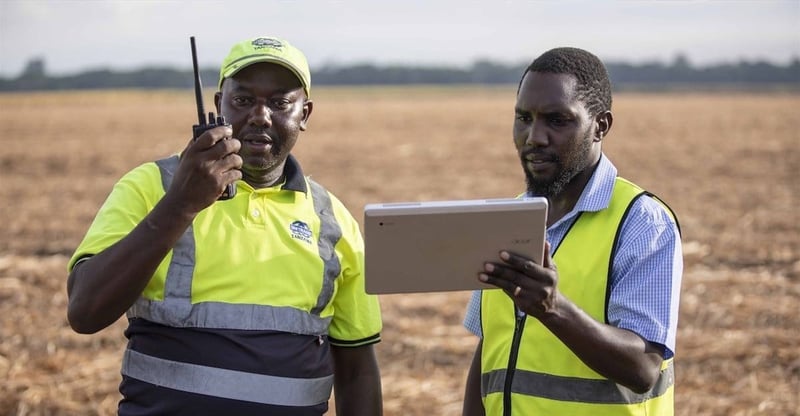
This does not downplay the role of technology. Real-time data, telematics, predictive maintenance, business intelligence and vehicle innovation already help operators work smarter, safer and with greater visibility. However, the real test in Africa is whether technology can be adapted to the conditions in which African industries operate.
This is where African Ingenuity becomes a competitive advantage. It means designing practical solutions for local realities, not forcing them to fit imported templates. It is the intelligence of people who know the road, the customer, the product, the border, the season, the terrain and the risk, and who turn those variables into workable systems.
Few people understand this better than Noddy Ramroop, head of business development for the Freight Division at Unitrans. Ramroop recently celebrated 40 years with the business. Since joining Unitrans in 1986, he has worked across the organisation and in multiple markets, including agriculture, fuel and chemicals and in our operations in Botswana, Malawi and South Africa. Over that time, he has seen the industry change dramatically.
Today, logistics is a specialist, technology-enabled industry. Data, systems, advanced vehicles and operational expertise are part of daily delivery. Yet the evolution of logistics in Africa has never been as simple as moving from manual to digital. It has been about making each new tool work in environments where conditions are not uniform.
A system designed for one route or customer may need to work differently elsewhere. African Ingenuity is about identifying constraints early, understanding local realities, designing around them and improving solutions over time. This is especially important when supply chains span different countries, languages, regulations, infrastructure conditions and customer needs.
That kind of complexity is not a side issue in African logistics. It is the operating environment. “For me, relationships are vital. I can’t actually put a value on it. That’s what makes our business tick,” says Ramroop.
Relationships matter because no logistics solution stands alone. It depends on customers, teams, communities, technology partners, drivers, planners and operational specialists working towards the same outcome. In markets where conditions can shift quickly, trust and collaboration often decide how effectively a solution adapts when the plan meets reality.
Ramroop believes the best logistics partners are those who can look at complexity differently. Instead of seeing a challenge only as a barrier, they look for the opportunity inside it. “As I always say to my team, whatever the complexity is, turn it on its head and come up with a solution,” he says. “That is how you find the opportunity.”
That mindset can be seen in practical ways across the sector.
In areas with inconsistent network coverage, live tracking can be interrupted. The answer is not to abandon visibility, but to design systems that work with that reality. Technology can record and preserve vehicle data while the asset is outside coverage, then upload the information once the signal returns, protecting the data trail and supporting accountability.
Performance-based standards vehicles provide another example. These heavy vehicles are designed and assessed according to strict safety and performance standards, allowing operators to improve efficiency while maintaining safety on approved routes. In Africa, efficiency is often tied to distance, road conditions, payload, route approvals and the safe movement of high-risk products. This is engineering applied to operational need.
Agriculture offers a further example. In cane operations, progress has often come through trial, adaptation and close collaboration with growers. Ramroop points to the evolution from traditional transport into more integrated field services, where teams had to consider field conditions, compaction, loading methods and the time between cutting and crushing. Through testing, technological advancement and operational adjustment, the process evolved to support better movement from field to mill.
The same discipline applies to product integrity and fuel loss prevention. In high-risk, high-value sectors, vigilance is not a once-off intervention. It is a continuous process of monitoring, learning, improving and adding new layers of control.
This is where talent becomes vital. Experienced employees hold institutional knowledge that systems cannot provide. They know why routes behave differently, where gaps may emerge, how customer needs have changed and which details can influence larger outcomes.
At the same time, younger talent brings digital skills, new ideas and ease with emerging tools. African logistics does not need to choose between experience and technology. The sector should deliberately combine both, pairing operational knowledge with digital skills to create teams that understand ground realities and improve the systems that support them.
For Unitrans, this is where logistics becomes more than a transport function. By moving goods, materials, people and essential products, the sector forms part of the operating infrastructure that enables industries to grow, communities to function and economies to progress. As Ramroop’s 40-year journey shows, artificial intelligence will continue to shape supply chains, but Africa’s real advantage lies in organisations that combine smarter systems with African Ingenuity, developing practical, fit-for-purpose solutions around local conditions. The real AI in African logistics is therefore about the people whose expertise, adaptability and problem-solving keep industries moving and make growth possible where it matters most.
Get new press articles by email
We submit and automate press releases distribution for a range of clients. Our platform brings in automation to 5 social media platforms with engaging hashtags. Our new platform The Pulse, allows premium PR Agencies to have access to our newsletter subscribers.
Latest from
- Gauteng To Modernise ICT Infrastructure And Establish AI Office Under New Funding Programme
- Frikkie Faces Business Disruption After Planned National Shutdown Affects Supply Routes
- Mature Professionals Urged to Embrace Reskilling to Amplify Experience
- Minister De Lille Announces R2.54bn Budget To Expand Tourism Across Provinces And Small Towns
- Investments and Upgrades Drive Renewal of Upper Long Street Precinct
- Ark Provisions Enters Checkers Shelves With Mexican Inspired Confectionery
- Amendment Bill Proposes Use It Or Share It Spectrum Rule And National Roaming Obligations
- AIDC-EC Board Appoints Acting CEO Amid Investigations Into Internal Transgressions
- Liberty Group South Africa Distributes Tens of Thousands of School Shoes During Youth Month
- Twin Transition Challenge Tackles Youth Unemployment And Skills Gap Linking Digital And Green Solutions
- Coca‑Cola South Africa Moves Stoney Ginger Beer to Clear Bottles to Improve Recyclability
- Intelligent Workplace Design Emerges As Strategic Asset Amid Downsizing Trends
- Creslow Energy Secures Abadali Fund Investment to Scale Lithium Battery Production
- Hansa Pilsener Targets Older Drinkers With Not For Persons Under The Age Of 30 Campaign
- African Mining Week 2026 To Host Middle East Africa Roundtable Connecting Gulf Investors With African Mining J
The Pulse Latest Articles
- The Real Ai: How African Ingenuity Drives Growth And Distinguishes The Continent’s Logistics Sector (June 25, 2026)
- Sotru Launches To Stop Supplier Fraud At The Moment Of Payment (June 23, 2026)
- The Death Of The Dinner Party? Why South Africans Are Choosing Convenience Over Traditional Entertaining (June 23, 2026)
- Wildbeest Media Launches 2026 Tourism Marketing Campaign Service For South African Travel Brands (June 22, 2026)
- Opinion Piece: The Chair Is Not The Person: A Ceo’s Hardest Leadership Lesson (June 22, 2026)