
Mbali Mchunu of The Odd Number - Africa should export strategic thinking, not stereotypes
Written by: BizCommunity Editor Save to Instapaper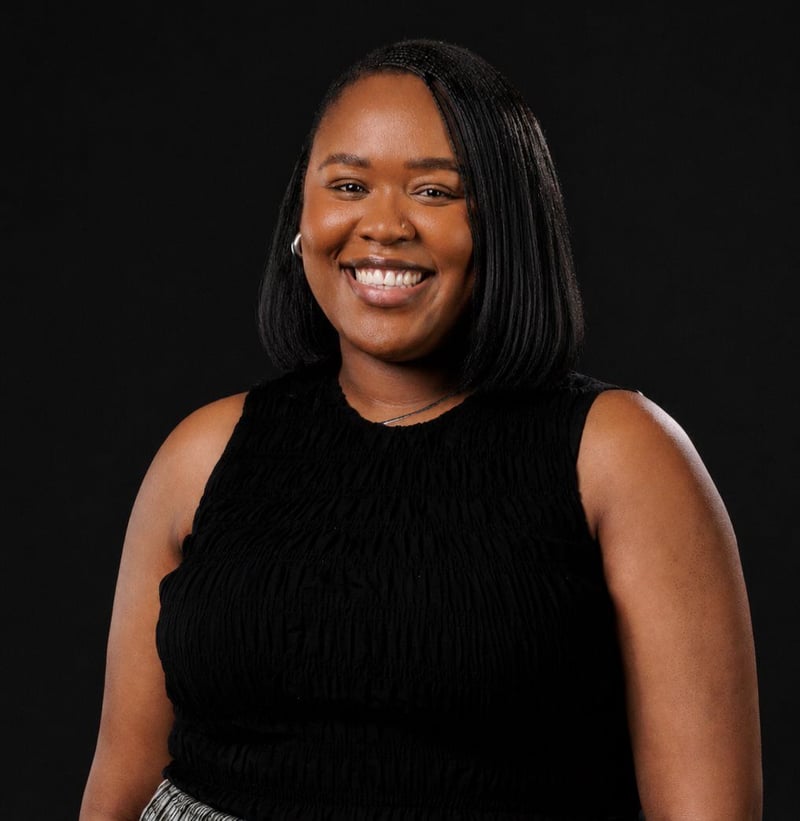
Clio recognised strategist
Recently recognised by the Clios among Africa's top strategists, the 29-year-old senior strategist has built a career around curiosity — about people, culture, business and, perhaps most importantly, the problems advertising is trying to solve.
Mchunu says interest in strategy started long before she knew to call it that.
“I was fascinated by all of it,” she says of growing up surrounded by a large extended family with very different personalities, ways of communicating and ways of seeing the world.
She became an observer of people: why one person could command a room while another quietly controlled the conversation, or why people could respond completely differently to the same thing.
“I didn't know it then, but I think I was practising strategy.”
That curiosity eventually found a home in advertising. After entering the industry in 2018, Mchunu worked across TBWA, Ogilvy and Yellowwood.
What has kept her in strategy, she says, is its position at the intersection of people, culture, business and creativity.
But her understanding of what a strategist actually does has changed along the way.
“Early in my career, I thought the strategist's job was to arrive with the answer,” she says. “Now I think it's more nuanced.”
Sometimes the strategist provides the answer. Sometimes they ask the question that exposes a flaw in the problem. Sometimes they challenge the team's certainty or give creatives permission to push an idea further.
Showing Ghana love
For Mchunu, that was particularly evident in the award-winning #ShowGhanaLove campaign, a proactive idea developed by The Odd Number's Sibuyiselwe Nhlangwini and Tebogo Kgapola, with creative direction from Neema Nouse.
The campaign presented a different kind of strategic challenge. There was no conventional brief neatly outlining a problem, audience and business objective. Instead, the team was responding to a human and social issue in Ghana while working from South Africa.
That meant strategy could not simply live inside a presentation.
“There was no PowerPoint presentation,” Mchunu says. “Strategy was a steer, an answer, sometimes a question.”
Her role became about helping the team navigate the work as it developed — challenging ideas, unblocking problems, debating possibilities and figuring out the next move.
Even after the team travelled to Ghana to make the work, the strategy continued to evolve as the campaign entered the public conversation.
For Mchunu, this is what strategic value looks like.
“I don't measure strategic value by how good the strategy deck looks. I measure it by whether the team makes a better decision because the strategy exists.”
That philosophy also shaped the way the team approached creating work for a country and culture outside its own.
#Newsmaker | Siwelile Thusi brings a new strategy to Orchard on 25
Karabo Ledwaba 18 Aug 2026Rather than attempting to make a South African interpretation of a Ghanaian issue, the strategic challenge was to understand the context well enough to create something that was useful, respectful and true.
That meant accepting that the team did not — and could not — have every answer.
They relied on Ghanaians on the ground, including activists, community members and allies, to help navigate the context.
Africa is not a monolith
The experience reinforced another belief Mchunu holds about African strategy: the continent cannot be treated as a single cultural market.
“There's a tendency to flatten the continent into a collection of familiar tropes: youth, mobile-first, resilient, entrepreneurial, vibrant, culturally rich,” she says.
“All of those things can be true, but they can also become shortcuts for actually understanding people.”
For Mchunu, African strategists have an opportunity not only to export African creative work, but African strategic thinking.
It is a perspective that also informs how she thinks about representation in the industry, particularly the growing number of young Black women finding their voice in strategy.
Mchunu is careful not to reduce that progress to the idea that simply having women in a room automatically produces better work.
“Women aren't a monolith,” she says. “I don't think putting a woman in a room magically produces better advertising.”
What does change, she argues, is the questions being asked when people with different lived experiences have genuine influence over the work.
Influence matters
A Black woman may recognise that a representation is technically correct but culturally false. She may challenge an assumption others have unconsciously accepted. And because strategy is fundamentally about deciding what matters, those perspectives can alter the direction of the work itself.
But representation without influence is meaningless.
“It's not enough to have women in the room. They need to be able to disagree, challenge the brief, influence the strategy and change the work.”
She adds: "Women aren't a monolith, and I don't think putting a woman in a room magically produces better advertising. That would be a very convenient story, but a very lazy one."
That is where Mchunu sees herself within a broader generation of young Black women in strategy.
“We're bringing our lived experiences into rooms that historically didn't always make space for them,” she says, “but we're also bringing ambition, intellectual curiosity and a very strong point of view about what advertising can be.”
Get new press articles by email
The Pulse Latest Articles
- Ai In Job Profiling: When Efficiency Becomes A Risk (August 24, 2026)
- Women Are Performing While Physiologically Depleted (August 24, 2026)
- Kwv Marks 100 Years Of Brandy-making With Top Two Scores At Iwsc South Africa Judging (August 20, 2026)
- From Personal Pain To Beauty Gain: The Story Behind Tanya Du Bois And Naturals Beauty (August 20, 2026)
- Spring Kitchen Trends: Warmer Spaces, Smarter Taps And Fresh Inspiration (August 20, 2026)