
WWF Appeals To G20 For Urgent Action On Sustainable Mining To Secure Africa’s Green Development
Written by: BizCommunity Editor Save to Instapaper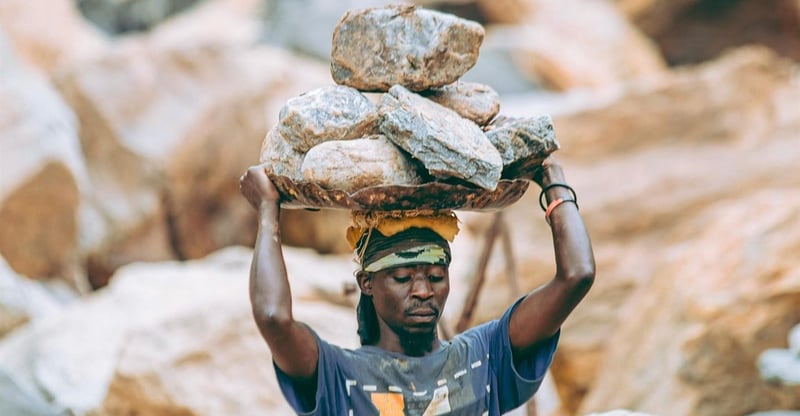
At the outset, this document warns that we need to avoid “past patterns of extractivism in Africa – the resource curse, rent-seeking by elites, illicit financial flows, exploitative jobs, displacement and disruption of local communities, plus water, land and biodiversity impacts”.
Among these impacts are pollution and the loss of productive land, carbon sinks, biodiversity habitats, and freshwater systems.
Transition minerals are sometimes referred to as green minerals or a sub-category of critical minerals. Their defining quality is that they are essential for the transition to low-carbon technologies.
Smallest possible carbon footprint
A World Bank estimate is that there will be a 500% increase in demand for minerals such as graphite, lithium and cobalt by 2050 to meet the needs of the global just transition to a new energy order.
As many of these minerals are found in developing countries, among them South Africa, we must prepare to meet this growing demand with, as the World Bank puts it, “the smallest possible carbon footprint, while safeguarding the environment and people”.
The best way to do this is to minimise mining as far as possible by creating circular economy industries, which include reclaiming these minerals from tailings dams, slag heaps, stockpiles and mine-polluted water sources and from scrap metals and post-consumer waste.
This is an opportunity for all countries, not just those with minerals in the ground.
A South African government strategy document on the economic potential of “critical minerals and metals” concedes that mineral exploitation is linked to “environmental degradation, displacement of communities, negative health impacts, illegal mining, and the continuation of inequality”.
The issue of the sustainable development of a transition minerals industry could not be more pertinent as South Africa prepares to host the G20 nations later this year, where many of the players in this new world order will be present.
Six key recommendations
The WWF discussion document outlines six key recommendations to ensure that we are able to both benefit from this emerging industry while avoiding the mistakes of the past.
Implicit in most of these points are current failures in our mining industry, which urgently need to be addressed, along with the need to prioritise environmental sustainability.
- Circular economies: Create circular economies for transition minerals to build out new industries and jobs, and minimise the need for destructive virgin mining.
- Land-use planning: Mandate strategic land-use decision-making at a national level to establish relative benefits of different land uses and possibly “no-go areas” for mining, before a mining project’s conception and impact assessments.
- Workers’ rights: Adopt and implement legislation and action plans on work in mining, and strengthen institutions, including enforcement agencies, relating to the eradication of child labour, human trafficking and modern slavery; and to improve worker rights, in line with the decent work guidelines of the International Labour Organisation (ILO).
- Sufficient funds for rehabilitation and offsets: Grant prospecting permits and mining licences only if the business case for the mine indicates sufficient funds for sustainability practices in operations, for both rehabilitation and offsets to compensate for residual negative impacts.
- Sustainability best practices: Adopt and implement best practices for sustainability during preparation, mining and post-mining. To ensure this implementation happens, aspects of these best practices should be translated into regulations; otherwise, there is no guarantee they will be followed or the necessary benefits realised.
- Global framework: Establish a global framework and mechanisms for traceability, transparency and accountability in the mining and processing of transition minerals.
To access the full document, go here.
Get new press articles by email
We submit and automate press releases distribution for a range of clients. Our platform brings in automation to 5 social media platforms with engaging hashtags. Our new platform The Pulse, allows premium PR Agencies to have access to our newsletter subscribers.
Latest from
- DA Hires Consulum Three Months After Ryan Coetzee Negotiated Entry Into GNU
- JSE Adopts Multiple Reference Points Model After Pilot for Deliverable Soybean Futures
- Avatar Agency Confirms Leadership Team to Continue Amid Interim Appointment of Phil Ireland as Chief Creative Officer
- Reserve Bank Surprises With Rate Hold At 7%
- Venezuela Energy Week Hosts Houston Industry Showcase To Engage US Upstream Stakeholders Ahead Of October Summit
- Food Inflation Slows To 15.5 Year Low Driven By Bumper Harvests And Global Supply
- Skills Gap and Compliance Hurdles Block Young Food Entrepreneurs From Scaling in South Africa
- Cape Town Gives Go Ahead for 38 Battery Electric MyCiTi Buses After Volvo BZRLE Prototype Passes Tests
- Chery Q Compact Electric Hatchback Priced From R350,000 To R400,000 Ahead Of South Africa Launch
- Government Raises Small Claims Court Limit To R30,000 To Improve Access To Justice
- Allegations of Access Trading at Resolve Communications Raise Questions About Trust in Human Judgement
- Land Reform Must Restore Dignity And Unlock Productive Economic Transformation
- South African Annual Inflation Rises To 5.0% In June Driven By Fuel And Transport Costs
- Content Creator Awards Reveal 55 Judges for In-Person and Virtual Panels Supporting Emerging and Established Creators
- SME South Africa Launches The Founder’s Circle To Build Community Support For Small Businesses
The Pulse Latest Articles
- Knockout Chaos 2 Sets The Tone As Boxing Takes Centre Stage At Rpm Performance Gym (July 23, 2026)
- The Growth Of Trading Card Games (July 21, 2026)
- Why Supplier Verification Is No Longer Enough To Stop Fraud (July 20, 2026)
- Why Empathy, Not Algorithms, Is The Key To Unlocking South Africa’s Billion-rand Digital Economy (July 20, 2026)
- Thousands In Cape Town Gave Ladles Of Love A Hand (July 19, 2026)