
Industry Visit To Portugal Reveals Key Trends Shaping The Future Of Global Viticulture
Written by: WineLand Media Editor Save to Instapaper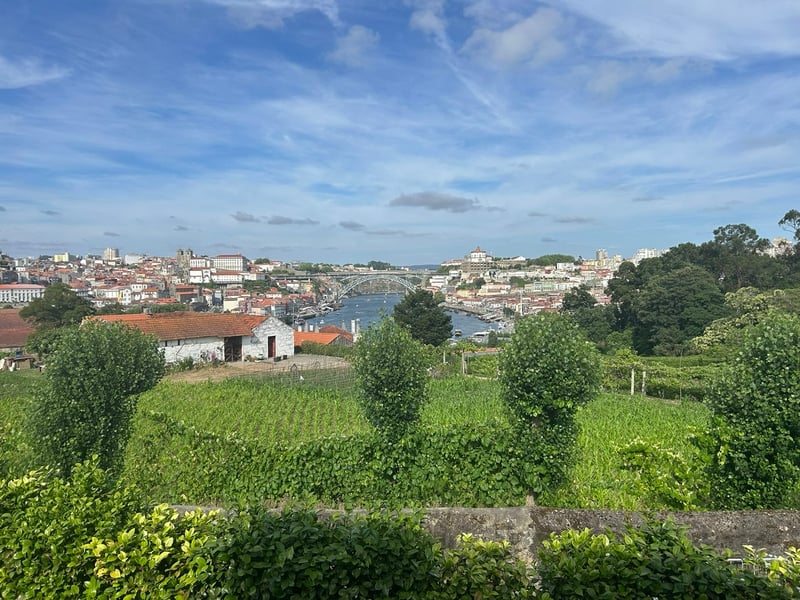
Viticulture and vineyard management are complex fields when one considers the multitude of factors that potentially influence grapevine performance: soil, climate, grapevine material and human decision-making, to name only a few. Textbooks are no substitute for learning firsthand, experiencing vineyard landscapes, in-field conversations with experts, and observing practices and innovations on the ground. There is also a great deal to be said for seeing how different communities approach similar challenges in our world of viticulture. It was with this in mind that Gert Engelbrecht (Vinpro Regional Consultant for Stellenbosch and Cape South Coast) and I readily embraced the opportunity to visit Portugal in June last year.
Long celebrated for its fortified wines – most notably Port and Madeira – the country is commanding increased international attention for the quality of its table wines. According to OIV figures, Portugal has approximately 173 000 hectares under vine and is the 10th largest wine producer, producing 690 million litres in 2024. To put this in perspective, South Africa’s 87 000 hectares produced 747 million litres in 2024 (Sawis, SA Wine Industry 2024 Statistics nr 49). Portugal is facing immense challenges in terms of international competition, undervalued price points, climate change and labour shortages. Portugal, which is reportedly ranked the highest per capita wine consumer in the world, is also experiencing decreased domestic consumption, in line with international trends. Despite this, the industry is making impressive inroads in export markets and with the government committing funds to PR and marketing on the international scene, there is a great deal of energy and positivity in the sector.
Gert and I were hosted by Luís Marcos, General Director at ADVID (Association for the Development of Viticulture in the Douro Region). Luís generously gave up his week to take us on a whirlwind tour of Portugal’s wine regions to meet producers, winemakers and viticulturists who were equally generous with their time leading up to harvest, sharing stories, insights and wine with us along the way. ADVID is a non-profit organisation that was established in 1982 to support the modernisation of viticulture in the Demarcated Douro Region. It has since then extended its reach, through collaboration, to the other wine regions in the country.
The tour took us from Porto to Lisboa, the Alentejo Region, Setúbal, Dão, Douro and Vinos Verdes over six days and encompassed tastings, vineyard meetings and cellar tours, but I would like to highlight just a few of the topics and visits:
Wine regions of Portugal. (Map from Wine Folly was downloaded from https://maps-portugal.com/maps-portugal-tourist/portugal-wine-map.)
Gert Engelbrecht and Emma Carkeek (Vinpro) and Luís Marcos (ADVID) at Graham’s Port House in Vila Nova de Gaia in Porto.
View of the Douro River and the Ponto Luis bridge from Graham’s Port.
Climate adaptation strategies and sustainable practices
Research and innovation in the Portuguese wine sector are driven by local entities and institutions, whose activities are supported primarily by European Union funding, often in collaboration with prominent wine companies, such as SOGRAPE, Graham’s Port and Niepoort, amongst others. In the research sphere, there is a strong focus on developing solutions and adaptive strategies to overcome challenges presented by climate change, particularly extreme heat and low water availability during the growing season, as well as wildfire risks.
In the mid-2000’s, a comprehensive climate assessment for the Douro Valley was commissioned by ADVID, with government support, to examine past and projected climatic conditions in the Douro Wine Region, assess climate suitability for viticulture, trends in climate indices and extremes, regional variability, and future climate change impacts. The study was headed up by Professor Gregory Jones (Southern Oregon University) and Fernando Alves (ADVID and R&D Manager for Symington Family Estates). This body of work has provided the region with a foundation from which to develop adaptive strategies. Fernando hosted us for a late afternoon visit to one of Symington’s experimental vineyards located at Quinta Do Bomfim in the Upper Douro Valley, near the village of Pinhão. The property has been farmed by the Symington family for five generations. The Douro Demarcated Region consists of three main sub-regions, Baixo Corgo, Cima Corgo and Douro Superior. In the summer months, the Douro Region experiences high variability in precipitation and high evapotranspiration, with Douro Superior receiving the lowest annual precipitation of about 600 mm and lower. Considered one of the drier wine regions in the world, the area is now experiencing shifting patterns in rainfall and elevated temperatures in the growing season. These changes present a major challenge to the growers, as irrigation in the Douro is not common practice, largely due to the high infrastructure costs and technical difficulties associated with irrigating on such steep slopes.
Symington’s R&D team is conducting in-depth monitoring of different clone-cultivar-rootstock combinations using a variety of tools and methods. This has been supported by investment in technologies to enhance the assessment of grapevine water stress, including sap flow sensors and dendrometry. Dendrometers are neat, but rather pricey sensors that measure daily expansion and contraction of the grapevine trunk to assess the plant’s hydraulic stress levels in real-time – a wish list item for any grapevine researcher. Phenology monitoring, carbon isotope analysis to quantify grapevine water stress, and pre-dawn leaf water potential measurements are being integrated with weather station data, satellite imagery and drone imagery. The cultivar- and rootstock-specific insights generated are refining “cultivar-maturity groupings”, which classify cultivars based on phenological requirements and growing season average temperatures needed for premium wine production. This deeper understanding of climate suitability, and drought and heat tolerance of key cultivars aids decision-making related to vineyard location, cultivar and rootstock selection, and management practices, to achieve specific quality goals. The cultivars under assessment at multiple sites include Touriga Franca, Touriga Nacional, Tinta Barroca and Sousão. These insights are a powerful tool in the quest to maintain consistent quality amid changing and variable climate conditions, a necessity for the larger port houses and wine brands to remain competitive.
Fernando Alves (R&D Manager, Symington Family Estates) in the R&D vineyard at Quinta do Bomfim, where dendrometry and sap flow sensors are integrated with pre-dawn stem water potential measurements to assess grapevine water status and responses in different cultivars.
View from Duorum, which extends down to the riverbanks, and our first stop in the Douro Region.
Another strategy to enhance the sector’s adaptability to climate change is Portugal’s investment in polyclonal diversity research, including the development of an innovative polyclonal selection methodology grounded in more than 40 years of research. This work is led by PORVID (Portuguese Association for Vine Diversity), based in Pegões on the Setúbal Peninsula, under the direction of Professor Elsa Gonçalves of the Instituto Superior de Agronomia, Technical University of Lisbon.
The project involves prospecting ancient grapevine varieties (cultivars) from commercial vineyards, in collaboration with the private sector. Selected material is rooted in pots, conserved, and evaluated at an experimental farm before being grafted and assessed in large-scale field trials using robust, resolvable experimental designs. The methodology seeks to achieve genetic gains while preserving intra-varietal diversity and of course protect the country’s rich heritage. For each variety, the field trials include a wide range of clones representing the variety’s full genetic spectrum, assessed for yield, quality, and tolerance to abiotic stress. From these trials, a set of approximately seven to 20 complementary clones is selected as a “recipe”. The logic is that plant material shaped over centuries has already demonstrated resilience to diverse conditions, and combining multiple clones within a vineyard further spreads and reduces risk.
Gert Engelbrecht and Professor Elsa Gonçalves at PORVID with selected material in the background.
Technology and innovation
Resources are also being directed toward technology development and mechanisation solutions. Labour shortages, particularly in the Douro Region, have necessitated the use of implements for most vineyard practices. The VineScout, an autonomous electrically powered robot developed to monitor vineyard parameters like vigour, grapevine water status and canopy temperature, was developed and tested from 2016 to 2019, and a mechanical harvesting machine designed to navigate the difficult Douro terrain is also currently under development. Interestingly, the structure of the Douro terraces has also evolved over time – from narrow, single-row terraces in the pre-phylloxera period, to broader post-phylloxera terraces accommodating six to seven rows (approximately 6 000 vines per hectare), and later reverting in the 1970s to narrower, two-row terraces (3 000 – 3 500 vines/ha) designed to allow the use of small tractors.
At Herdade do Esporão, an organic producer in the Alentejo Region, with 440 ha vineyards and over 90 ha of olive groves, technology and digital-based management is integral to their operation. The vineyard manager is using Sentinel images, drones and electrical conductivity maps to support decision-making and identify irrigation leaks. GPS trackers with smartphones are used to track vineyard teams and spray operators, to record man-hours/practice and assist with planning. A short turnaround time on spraying is essential when managing over 400 ha of organic vineyards. Frequent pre-drawn water status measurements are performed over three seasons to calibrate soil moisture probes for irrigation decisions, and the evaluation of grapevine water stress of various cultivars in their own ampelographic field is supporting long-term decision-making about cultivar selection and placement.
A key takeaway from our visits to Esporão in Alentejo and Quinta dos Carvalhais in Dão was the importance of flexibility in mechanical weed control. Effective weed management without chemicals depends on matching the right implement to the prevailing soil moisture and soil type. This does call for a few implement options to be on standby in the farm shed, depending on the seasonal conditions. On Esporão’s stony soils, a soil-loosening chisel mounted in front of a Clemens blade-weeder performs very well and appears to cause minimal soil disturbance. At Quinta dos Carvalhais, a vertical weed-eating implement is used on the grapevine row when weeds are tall, followed by mechanical weed removal or tillage. Across organic, regenerative and low-input conventional systems, establishing a diverse mixture of plant species on the vineyard floor that supports diversity without aggressively competing with the vines requires patience and intentional management. The mechanical weed control strategies we observed usually incorporated cover crops or native plant species and there was a notable absence of clean or barren grapevine rows.
Esporão’s Agricultural Manager, Rui Flores, demonstrates the blade-weeder with chisel used in their mechanical weed control programme.
Vineyard floor in the early-mid season (after pea-size) at Esporão, where grapevine rows are either slashed or tilled.
Schist soils at Esporão, Alentejo.
Double-sided vertical weed trimmer used to slash weeds on the grapevine row.
The Quinta dos Carvalhais vineyards surrounding neolithic ruins in the Dão Region, where we had our first experience with Encruzado, the popular white Portuguese cultivar often used in blends, but more recently achieving single-varietal success.
Steep slope viticulture
One of the most eye-opening visits was to Quinta do Seixo in the Cima Corgo sub-region of the Douro, where we observed bulldozers constructing terraces on slopes steeper than 30 degrees. The level of operator skill is remarkable, and the cost of establishing vineyards on such terrain is immense. Terrace construction can take months and involves multiple stages, from detailed design to managing run-off, to cutting the terraces with bulldozers, breaking up schist with excavators to ‘create soil’, and finally refining the terraces with smaller machines. After a day in the Douro, one comes to appreciate that developing vineyards on such terrain is as much an artform as a science – and the skill required of the machine operators, a fading craft. We also visited a nearby site where planting was underway using an excavator-mounted drill. Six people carried out planting, fertiliser application and watering, supported by tractors equipped with hoses and tanks – an excellent example of overcoming labour shortages using technology and tools.
Planting vines at a newly prepared SOGRAPE-owned property.
Quite a large proportion of Portugal’s vineyard area consists of very small holdings (typically 0.1 – 1 ha) owned and farmed by part-time “viticultores” who supply grapes to wine companies of different scales. At Quinta de Carvalhais, for example, apart from their own vineyards, the cellar receives grapes from over 200 small vineyards. At the Symington Family Estate and SOGRAPE properties, what was particularly impressive was the large wine producers’ effective use of technology to mitigate this logistical complexity, enabling the production of premium quality at quite a large scale. Although much of South Africa’s vineyard area operates at higher production levels than Portugal, there are still important insights to be gained from several of the Portuguese wine brands’ approaches to integrating tools and in-house research to achieve quality. Adoption of imaging technologies verified by field measurements under different seasonal conditions, for example, provides data sets that support harvest decision-making for vineyard managers and winemakers. Producing wines of consistent quality at such a scale is no small feat, and sustained investment in research and technology clearly underpins this success.
Portugal’s food and wine culture leaves a lasting impression, matched only by the warmth of its hospitality. It’s difficult to adequately capture a week of in-depth discussions and vineyard visits, but in conclusion, we left Portugal moved by the vineyard stories, in awe of the rich wine heritage and deeply impressed by the sector’s strong focus on integrating technological tools to consistently produce high-quality wines that offer real value for money, from sustainable vineyard eco-systems.
For more information, contact Emma Carkeek, Vinpro Manager Knowledge and Technology Transfer at [email protected].
Click here to get your copy of WineLand Magazine.
Get new press articles by email
We submit and automate press releases distribution for a range of clients. Our platform brings in automation to 5 social media platforms with engaging hashtags. Our new platform The Pulse, allows premium PR Agencies to have access to our newsletter subscribers.
Latest from
- South Africa Launches Comprehensive AI Policy Built On Ethics Innovation And Inclusive Development
- White Star Launches Real Homemakers Initiative To Celebrate Caregivers And Community Champions
- Angola Oil And Gas Conference Returns As Sector Enters New Phase Of Growth And Investment
- Investment Conference Delivers Record Commitments To Fuel Growth Jobs And Economic Recovery
- Brazil Africa Energy Nexus Emerges As Key Driver Of Offshore Investment And Project Delivery
- Standard Bank And National Arts Festival Announce 2026 Young Artist Award Winners
- Air Cargo Demand Climbs Sharply In February As Industry Navigates Fuel Costs And Conflict Risks
- CFAO South Africa Reports Resilient Performance Through Diversification And Cost Focused Strategy
- Caribbean Energy Week Brings Leaders Together To Advance Oil Projects Renewables And Regional Growth
- Pantry Introduces Enhanced Pop Up Experience In Sandton With Focus On Quality And Convenience
- TotalEnergies Invests In West Coast Entrepreneurs Through Training Mentorship And Enterprise Support
- GIBS Highlights Importance Of Human Centred Leadership In Times Of Uncertainty And Change
- Sars Delivers Above Target Revenue Performance Amid Tough Economic And Global Conditions
- Industry Warns Of Growing Illicit Alcohol Trade Amid Rising Costs And Easter Demand Surge
- Khoi Tech Leads Innovation In Africa With Locally Developed Wearables And Integrated Health Platforms
The Pulse Latest Articles
- Bright Beginnings Preschool Celebrates Linden Campus (April 2, 2026)
- Female Founders Announce Launch Of South Africa’s Premium Brand Advisory Firm: Aura (April 2, 2026)
- Ai Fraud Defence Launches In South Africa As Deepfakes Hit Financial Institutions (April 1, 2026)
- Influencers Share Their Favourite Holiday Games (March 26, 2026)
- Procurement Can Buy Pr. It Cannot Buy Judgement. (March 25, 2026)