
Absa Champions Entrepreneurship Education as Pathway to Economic Inclusion
Written by: BizCommunity Editor Save to Instapaper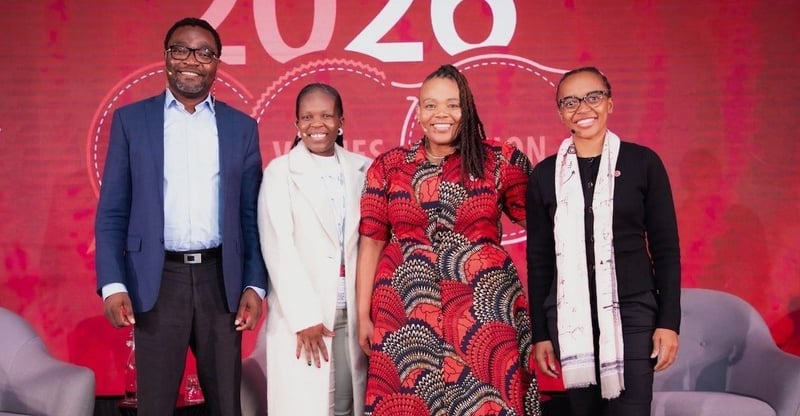
Edwell Gumbo, Entrepreneurship, Universities South Africa | Lerato Tladi, Hunadi Air Conditioning and Refrigeration | Zimkitha Peter, Allan and Gill Gray Philanthropies CEO | Nonhlanhla Magagula, Absa head of Corporate Citizenship Programmes
Absa’s strategic contribution to this challenge pivots around building a workforce that is innovative, resourceful, responsible and motivated to create its own value. To that end, Absa has corporate citizenship identified entrepreneurial mindset as the key to economic participation, whether in formal employment or self-generated work. And it is a mindset that Absa believes can be taught and developed.
Entrepreneurship education was the focus of Absa’s sponsored panel at the Trialogue Business in Society Conference 2026. Panellists debated the effectiveness of teaching and embedding entrepreneurship, which barriers need to be addressed to encourage and reinforce entrepreneurship, and the challenges young people face in seeking genuine economic participation as entrepreneurs, while navigating a survivalist reality. The discussion drew on practice, philanthropy, academia and lived experience to discuss the process of instilling entrepreneurial intent as a pathway to durable economic inclusion.
From passive participation to active contribution
In his panel introduction, Absa interim group managing executive: Corporate Citizenship, Clement Motale, spoke about economic exclusion as a pan-African issue that is crippling economic growth. “Social pressure and economic constraints are no longer separate conversations. Youth unemployment, inequality and limited access to opportunity can adversely reshape the sustainable growth outlook of our country and continent.”
Motale outlined the value of entrepreneurship as a practical and credible pathway to economic participation, shifting individuals from passive participants in the economy to active contributors.
He outlined how Absa’s Corporate Citizenship efforts are structured to build a culture and pipeline of entrepreneurs through staged entrepreneur education interventions. “The work is about equipping young people with the capabilities that hold real economic value, the ability to recognise opportunity where others see constraint, the confidence to solve practical everyday problems, the discipline to think commercially and the resilience to navigate risk with maturity.”
Absa’s programmes build the root system for entrepreneurial thinking within the basic education system, creating early exposure pathways that foster solution-oriented attitudes and problem-solving skills. Targeting youth and higher education and training institutions, entrepreneurship is then positioned as a potential career choice, building practical skills, strengthening confidence and deepening business understanding to increase youth intent to start their own enterprises. Supporting these ventures through access to funding, mentorship and networks closes the loop, providing some solutions to the unemployment challenge.
Embedded within Absa’s entire ecosystem, the company mobilised R53.5bn in sustainable finance in 2025 to drive economic and social outcomes.
- Absa’s financial education initiatives reach over 237,000 people with measurable improvements in financial competency from just over 15% to more than 85% among participants.
- Absa’s education, entrepreneurship, and financial inclusion efforts have reached over 366,000 people.
- In 2025, Absa invested over R373m in corporate citizenship initiatives that were fully focused on youth and women driving entrepreneurial intent and action.
- More than 74,000 young people were supported through education and work readiness initiatives, with over 5,000 small and medium enterprises, mainly youth- and woman-led provided access to markets, finance and mentorship.
Clement Motale, Absa interim group managing executive: Corporate Citizenship
Cultivating mindsets through entrepreneurial education
Panellist Nonhlanhla Magagula, Absa head of Corporate Citizenship Programmes, acknowledges that entrepreneurship is neither a silver-bullet solution to unemployment nor a suitable form of economic participation for everyone. However, the attitudes and mindsets that inform entrepreneurial thinking justify broader entrepreneurial education to build a generation of youth with agency and drive that they can also bring to the workplace.
Debating whether entrepreneurial spirit is a matter of nature or nurture, Absa partner Allan and Gill Gray Philanthropies CEO Zimkitha Peter likened natural entrepreneurs to professional athletes. She noted that while an entrepreneurial drive is innate in the same way that genetics predispose certain individuals to professional sports. The fundamental attitudes, skills and approach have universal value. Entrepreneurship education conveys these essentials while ensuring that those with a special talent for entrepreneurship receive the knowledge, skills, mentorship and networks to set them up for success. “The most important thing is to give every young person who aspires to be an entrepreneur, at the very least, the chance to be able to start on that journey.”
Designing entrepreneur education that works
Well-versed in the data of what entrepreneurship education can and cannot achieve, Universities of South Africa Entrepreneurship Director Dr Edwell Gumbo agreed that entrepreneurship education is not a conveyor belt for successful entrepreneurs. It can certainly contribute to building confidence in identifying problems and devising appropriately aligned solutions. However, the real value comes from conveying the commercial understanding of investment, clients and markets that is needed to succeed as an entrepreneur at any stage of life.
Embedding entrepreneurial thinking at the basic education level is an essential building block for active entrepreneurship training in higher education. Gumbo indicated that young people can be exposed to the necessary facilities, resources and tools that shape entrepreneurial thinking.
Reinforcing Magagula’s earlier comment that entrepreneurship education efforts should focus on outcomes in the form of meaningful economic participation, he added that entrepreneurship education cannot apply short-term measures of success. Instead, organisations should recognise the long-term game in this space and instead value long-term venture creation.
Gumbo also drew attention to the welcome rise of micro-credentials in this space as a valuable tool in entrepreneur education. Micro-courses and micro-credentials make it possible to assemble a package of targeted, specific skills from multiple institutions, unbound by geographic location.
Commenting on the growth of entrepreneurship education in CSI, Magagula noted the increase in funders in the space. She attributed this to the growing recognition of entrepreneurship as an alternative pathway to include young people in the economy and to the need for an ecosystem to support young entrepreneurs. She highlighted this as an opportunity for greater collaboration around entrepreneur education.
Identifying the teachable skills that define entrepreneurial success
When asked which critical ingredients young South Africans needed to become successful entrepreneurs, conference audiences identified an entrepreneurial mindset and self-belief as second to supportive networks and mentorship.
Lerato Tladi, a recipient of entrepreneurship education through Absa and the Alan and Gill Gray Philanthropies, shared her entrepreneurial journey and how she launched her own venture, Hunadi Air Conditioning and Refrigeration. She highlighted that it is the values and knowledge she acquired through education that enabled her success.
Quipping that she initially registered her business 'out of anger', Tladi told conference attendees that, as the only female in a male-dominated air conditioning company, upon starting her career, she was relegated to washing cars and managing the stockroom, despite her qualifications. She knew she was worth more than that, so she resigned and established her own company.
Entrepreneurial education prepared her mentally for the setbacks, slow progress and constant problem-solving that come with establishing one’s own venture. It took her from cold calling on foot to developing a strategic management compass that now guides her through threats and opportunities. Built on the understanding that a good business must sustain itself, Tladi acquired financial management and marketing skills, a thorough understanding of compliance and governance and an appreciation of the resilience needed to navigate the process.
Most importantly, however, was the funding she received from Absa. This, she said, helped her purchase the equipment she needed, stabilised her business through volatility, and enabled her to overcome the critical problem of scaling her business by retaining the skills she needed.
Supporting entrepreneurship education
The panel considered aspects of growing entrepreneurship education for systemic impact.
Peter noted the limited reach of programme interventions from both funding and geographical perspectives. She highlighted the value of partnerships, such as the one between Absa and Allan and Gill Gray Philanthropies, as a means of widening reach. “It is incredibly important for all organisations that are in this space, especially in entrepreneurship education, to collaborate, to partner, share resources and knowledge so that these programmes can scale to other provinces where we're not necessarily represented,” she commented.
Echoing Gumbo’s calls for long-term views on entrepreneurship; she urged funders and philanthropists to commit for the long term to see systemic change from interventions.
Peter also highlighted the importance of government as a critical stakeholder in entrepreneurship education. While philanthropy and CSI programmes play a part in creating proof of concept, systemic uptake needs government commitment and action.
CSI can play a further part by building an ecosystem that serves entrepreneurs. Magagula said that Absa’s model not only meets young people where they are on their journeys but also seeks to unlock commercial value. This ranges from creating pathways for young people to take entrepreneurial action to further support them through Absa’s Enterprise Development initiative and ensuring Absa’s products and services serve young entrepreneurs while enabling access to market opportunities.
Boosting entrepreneurial success
Closing the panel, MC Nozipho Tshabalala asked the panellists for their final thoughts on how to improve entrepreneurs' success rates. “Our next generation of entrepreneurs need market access,” asserted Gumbo, calling on companies to seek ways to help entrepreneurs open the markets to sell their products and services.
While Magagula emphasised the need to unlock opportunities for talented young people, Peter reminded audiences of the importance of identifying talent in the first place. She called for greater effort to recognise, target and support the individual needs and stages of entrepreneurial individuals who use business as a tool for social good.
Tladi reinforced this sentiment, asking that entrepreneurship programmes open applications to more people with the right problem-solving mindset to succeed, instill the skills they need to thrive and fund their efforts to generate success.
Get new press articles by email
We submit and automate press releases distribution for a range of clients. Our platform brings in automation to 5 social media platforms with engaging hashtags. Our new platform The Pulse, allows premium PR Agencies to have access to our newsletter subscribers.
Latest from
- Woodside Sponsors African Energy Week 2026 As Sangomar Moves Into Steady Production
- Experts Urge Young South Africans To Build Credit Early To Improve Future Finance Access
- Major Unions Urge Attendance as South Africa Braces for Protests Over Immigration Deadline
- Deal Room Strengthens AEW Investment Agenda By Connecting Investors With Bankable Energy Projects
- Kaspersky Study Finds Over One‑Third Of Infostealer Infections Begin From Temporary Browser Folders
- Generation Schools Partners With OMAI to Boost Vocational Training and Improve Youth Employment
- Concerts SA Wins 2026 Music Cities Award for Music Led Placemaking
- ECP And AMSG Form Strategic Partnership To Advance Policy Engagement And Capital Flows In African Mining
- Trilateral Launch Highlights Regional Co‑operation as Pipeline Seeks to Supply Up To 30bn m³ to Europe
- Winner of 2026 Trialogue Strategic CSI Award To Receive Feature in Business in Society Handbook
- Abdullah Ibrahim Fuses American Jazz and Southern African Rhythms to Challenge Apartheid
- Vodacom Eco‑Warriors 2026 Mobilises Learners Across Five Provinces to Tackle Environmental Challenges
- DA Appoints Aucamp To Strengthen Agriculture Portfolio Amid FMD Outbreak
- Stengel to Deliver Inaugural Lions Laureate Seminar Ahead of Cannes Award
- GSMA Report Finds African Operators Shifting From Connectivity to Digital Transformation Partners
The Pulse Latest Articles
- Magic: The Gathering Assembles The Marvel Super Heroes (June 17, 2026)
- Rethinking Performance: Part 4 Of 5 Why Judgement Matters In Performance Evaluation (June 15, 2026)
- How Should Water Feel? Inside The Innovation Shaping Modern Showering (June 15, 2026)
- Hisense Launches Soweto Football Pitch Project (June 12, 2026)
- Magic: The Gathering Assembles The Marvel Super Heroes (June 12, 2026)