
Eskom Reports Lower April Energy Availability Amid Increased Planned Maintenance Ahead Of Winter
Written by: BizCommunity Editor Save to Instapaper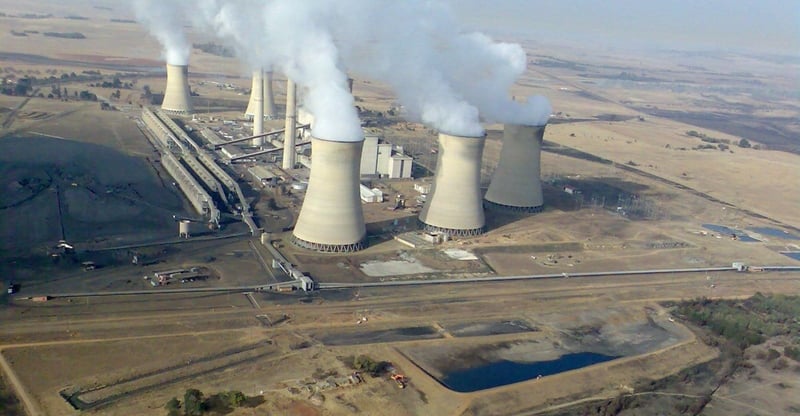
Eskom's Arnot Power Station in Middelburg. Image credit: Gerhard Roux , CC BY-SA 4.0, via Wikimedia Commons

Eskom’s energy availability factor (EAF) declined month-on-month (m-o-m) in April 2026, averaging 59.9%, down from 66.8% in March.
This decrease is mostly seasonal, reflecting increased maintenance activity ahead of the winter peak period.
Unplanned outages increased by just over 2,000 MW in April, while planned maintenance rose by 1,217 MW.
In total, maintenance surged by 3,227 MW over the month, contributing to the deterioration in the EAF.
Looking ahead, Eskom’s Winter Outlook (released on 22 April for the period 1 April to 31 August 2026) points to a more stable supply outlook.
Eskom expects no loadshedding over this period, supported by an estimated 6,000 MW of surplus capacity during peak winter demand.
Divergence between demand and supply
Nevertheless, data released by Statistics South Africa (Stats SA) highlight a sustained contraction in both electricity production and consumption in South Africa.
Seasonally adjusted real electricity generation declined by 6.9% year-on-year (y-o-y) in March 2026, marking a continued downward trend that has persisted since June 2025.
On a m-o-m basis, output slumped by a further 1.6%, reinforcing the weak trajectory.
Over the first quarter of 2026, electricity generation was 5.6% lower than in the same period of 2025.
Since 2024, South Africa has seen the closure of some energy-intensive firms, including Bridgestone, Nissan (Rosslyn plant sold to Chery), and a number of automotive component manufacturers.
In the mining sector, the ferroalloys industry has closed smelters because of uncompetitively high electricity prices.
When assessing the data, there is a clear and persistent divergence between electricity demand and generation capacity, which aligns with the ongoing decline in electricity production.
Peak demand has been trending lower since 2025, reducing the need for generation.
At the same time, improvements in Eskom’s plant performance have increased available capacity, widening the gap between supply capability and actual demand.
This signals a structural shift in the economy, which appears to be consuming less electricity.
Part of this adjustment is likely due to embedded generation, particularly solar, substituting grid-supplied electricity, alongside the impact of elevated tariffs incentivising more efficient consumption.
Under pressure
In addition, segments of the energy-intensive industry remain under pressure.
Ferroalloy smelters continue to face prohibitively high and uncompetitive electricity costs (notwithstanding Negotiated Price Agreements (NPAs) for firms such as ferrochrome producers Glencore and Samancor), while closures such as Mozal, the South32 aluminium smelter in Mozambique, due to high electricity prices, further point to weakened industrial demand.
Taken together, these dynamics translate into lower electricity demand, subsequent reduced production, and a growing surplus in generation capacity.
Net electricity exports declined to near zero in March, largely reflecting the shutdown of the Mozal smelter, a key recipient of electricity exports from Eskom.
This sharp reduction in export volumes is expected to place additional pressure on Eskom’s revenue base, alongside other constraints, including localised load-reduction to address illegal connections, electricity theft, and infrastructure vandalism, as well as rising municipal arrears now standing at an estimated R111bn.
Softened demand
There are divergent trends in the electricity sector that complicate the overall narrative.
On the one hand, the improvement in generation capacity, particularly Eskom’s plant performance and reliability, is clear and well established.
Despite the seasonal decline in the EAF in April, driven by increased maintenance (and breakdowns) ahead of winter, performance has improved materially over the past year.
This has translated into a sustained period without loadshedding, now approaching a full year.
On the other hand, this improved supply position is being met with weakening electricity demand. In our assessment, this reflects two key factors.
First, there is a structural, legacy effect from the period of intense loadshedding during 2023. Households and firms increasingly invested in alternative energy sources, particularly rooftop solar.
Estimates from the South African Reserve Bank suggest installed rooftop solar capacity has risen to around 7–8 GW, up from approximately 3GW in 2022.
This expansion has structurally reduced reliance on grid-supplied electricity, contributing to the persistent decline in electricity production and consumption behind the meter.
Second, persistently above-inflation electricity tariff increases have further dampened demand.
Elevated electricity costs have placed pressure on energy-intensive users, with some industries scaling back production or closing operations altogether.
This has reinforced the downward trend in electricity consumption.
Taken together, while supply capacity and reliability have improved significantly, demand has softened, resulting in lower electricity production and a widening surplus in generation capacity.
Get new press articles by email
We submit and automate press releases distribution for a range of clients. Our platform brings in automation to 5 social media platforms with engaging hashtags. Our new platform The Pulse, allows premium PR Agencies to have access to our newsletter subscribers.
Latest from
- Partnership Launches Major Digital Upgrade Programme For South African Community Broadcasters
- New Carling Black Label Campaign Shines Spotlight On Football’s Behind The Scenes Champions
- African Mining Week 2026 Brings Industry Leaders Together To Advance Junior Mining Growth
- South African B2B Brands Urged To Adapt As AI Search Reshapes Buyer Behaviour
- AI Driven Brand Shifts Push Kantar BrandZ Global Rankings To Record $13.1 Trillion Value
- Trafigura And Egyptian Partners Advance Major Aluminium Complex To Boost Local Processing
- Brands Gain Prime Digital Exposure Through Daily Investor’s High Traffic Homepage Takeovers
- Meta Introduces Private AI Chat Mode Amid Growing Focus On Data Protection And Trust
- CMAS 2026 Positions Africa At The Centre Of Emerging Global Carbon Market Opportunities
- Tourism Safety Initiative Boosts Durban Beachfront Security With New Patrol Equipment
- Jacaranda FM Marks Major Milestone With Continued Focus On Innovation And Community Support
- Fractional CMOs Offer South African Businesses Affordable Access To Senior Marketing Expertise
- African Mining Week 2026 To Explore Energy Solutions Powering Mining Growth Across Africa
- South Africa’s E Commerce Boom Creates New Growth Opportunities For SMMEs And Tech Brands
- Google South Africa Expands AI Skills Programme With Flexible Sessions For Businesses And Youth
The Pulse Latest Articles
- Medical Cannabis In Sa: What Section 21 Means (May 14, 2026)
- Mega Evolution Returns With Chaos Rising (May 14, 2026)
- Setting The Beat Of Water: 125 Years Of Hansgrohe Innovation (May 14, 2026)
- Opinion Piece: Why The Best Leaders Start With Themselves. (May 12, 2026)
- If Ai Is Doing The Work, Should We Still Pay For The Results? (May 11, 2026)