
Cape Town's Water Use Remains Too High Despite DAY Zero Lessons
Written by: BizCommunity Editor Save to Instapaper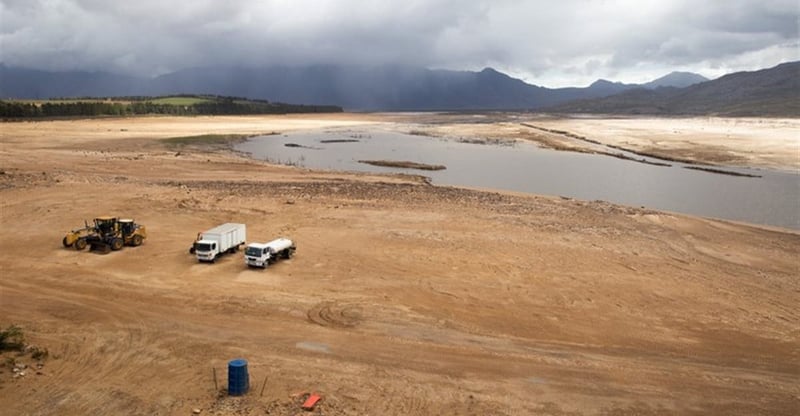
Theewaterskloof Dam on 24 April 2018. Archive photo: Ashraf Hendricks
Cape Town’s bulk water managers are not ignoring the warning signs. The near Day Zero crisis of 2018, when dam storage fell near to the critical 13% capacity, has permanently shifted how the municipality manages its water resources.
Now there are models and baseline reference data that should avoid the city getting anywhere near that critical level, when water can no longer be pumped from our dams and treated effectively.
A data-driven model, updated weekly, determines the level of water risk. This data is shared on the municipality’s water dashboard, which is updated at 2pm every Monday.
But information alone does not address water demand, especially during the dry, hot summer months or periods of below-average rainfall.
Furthermore, the six major dams feeding Cape Town do not serve the city alone, but also supply farmers and other towns. The municipality is licensed to abstract about 60% of the available supply, while the rest is allocated to agriculture (33%) and the remainder to smaller towns.
Demand this year is tracking similar to 2023, when the municipality did not impose any restrictions. Fortunately, it rained. By July, the main dams were almost at 100%. But this should not make us complacent. There is no guarantee that we will receive a typical winter rainfall this year.
South African Weather Services predict a below average rainfall. If their models are accurate, we may return to that early warning sign, when water storage was about 39% of capacity in November 2017 and little prospect of rainfall until at least June of the following year.
Climate projections for the Western Cape suggest temperatures will rise by between 1°C and 3°C over the next three decades. Farmers will be on the frontlines of this temperature increase.
Rainfall is harder to predict. Some years, like 2018, which was the same year Cape Town experienced its Day Zero scenario, significant rainfall occurred on three occasions after August. The Berg River even overtopped the dam wall in September 2018.
Usage remains too high
Across the city, water use is too high, and much higher than the average per-person use in cities in Europe and other parts of Africa.
The municipality has set a target of less than 975 million litres per day (MLD) for the summer season. But usage has been consistently above this. Cape Town’s population of approximately five million people is consuming about 1,056 MLD, equating to 212 litres per person per day. The world average is between 120 and 160 litres per day.
Part of the problem is structural. Surface dams lose water through evaporation, especially under hot and windy conditions. Surface water dams are not the most efficient means of storing water, but there is no other viable option currently for Cape Town.
The municipality also estimates it loses about 23% of its water through leaks or unaccounted for water. What the municipality has to do right now is to address the water losses, fix the leaks, and increase the means of collecting revenue from all water users. Revenue is vital to establish and maintain future water resilience and to afford the more expensive options of water desalination and water reuse. These are expensive solutions, but probably the only long-term strategy for sustaining the city.
Cape Town’s population is expected to grow by about a million people over the next ten years. Not only will a rising population need to be supplied, but climate change is set to affect the south Western Cape, making it more drought prone.
We have to reduce consumption, fix losses, and invest now — before we face another Day Zero scenario.
This article was originally published on GroundUp.
© 2025 GroundUp. This article is licensed under a Creative Commons Attribution-NoDerivatives 4.0 International License.
Get new press articles by email
We submit and automate press releases distribution for a range of clients. Our platform brings in automation to 5 social media platforms with engaging hashtags. Our new platform The Pulse, allows premium PR Agencies to have access to our newsletter subscribers.
Latest from
- New Bond To Fund Ecological Restoration And Water Catchment Protection In South Africa
- Africa’s Green Economy Summit Calls For Scaled Climate Finance And Net Zero Growth Across The Continent
- Why Businesses Are Outsourcing Payroll As SARS Submission Deadlines Put Teams Under Pressure
- Data Reveals How South Africans Choose Pizza And Other QSR Meals Across Major Fast Food Brands
- Why Photography Tours Offer The Perfect Holiday For Creativity Mindfulness And Travel Discovery
- Ronette Marx Talks Volspoed Modelling And Building Age Zero Aesthetics For International Women’s Day
- Capitec Introduces Pulse System To Improve Customer Support With Real Time Client Insights
- Insider Threats Rise In South African Organisations As Human Risk Becomes A Growing Security Concern
- Standard Bank Reports R23.2bn Half Year Earnings As Retail And Markets Income Strengthen
- Standard Bank Leads As South African Banking Brands Gain Global Strength In 2026 Rankings
- Ghost Elephants Documentary Explores Mystery Of Angola’s Elusive Giants With Werner Herzog
- Dimension Data Nigeria Secures SEC Approval For N20bn Bond To Boost Connectivity Infrastructure
- South Africa Seeks Local Manufacturer For Gilead’s Twice Yearly HIV Prevention Injection
- Vopak Extends Pre FEED Study As Eskom Uncertainty Delays Zululand Energy Terminal Decision
- Castle Lite Investigation Reveals Real Drinking Habits Through Documentary Study Of Abandoned Beers
The Pulse Latest Articles
- Strategy Is Easy. Execution Is Everything (March 5, 2026)
- The Paradox Of Leadership: Ntombizone Feni’s First Year As Ceo (March 4, 2026)
- Beyond The Pit: Why Mining Partnerships Are Being Redefined (March 2, 2026)
- A Refreshing Reset For Your Tastebuds (March 2, 2026)
- Celebrating 125 Years Of Hansgrohe: Setting The Beat Of Water Since 1901 (February 25, 2026)