
Truck Driver Turned Storyteller Preserves Namibian History Through Voices Of Local Communities
Written by: BizCommunity Editor Save to Instapaper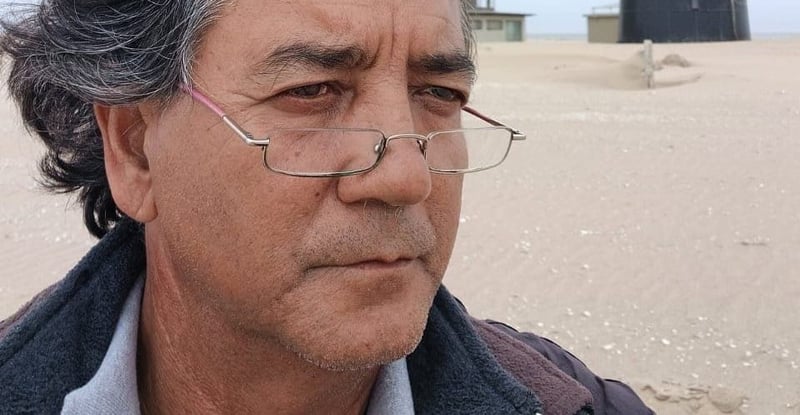
Mogamat Salie Saban, storyteller and Unitrans truck driver
Instead of withdrawing to a guesthouse, he seeks out people – usually elders. The men and women who recall the town before tar roads, shopping centres and expansion. He sits with them, listens closely, and asks one direct question: What was this place like when you were young?
Over time, those conversations have become more than passing exchanges. They have become the foundation of books he has written about Namibian history, built not from academic archives, but from lived memory. For Saban, the road is not only a transport route. It is a research method.
The instinct to observe and document did not begin on the road. It has followed him across decades.
Born in South Africa and raised in Namibia since the early 1970s, Saban’s life has followed a path shaped by service, movement and curiosity. He served as a marine in the South African Navy. He worked as a lighthouse keeper at Pelican Point and Diaz Point, roles that required solitude, vigilance and discipline. Today, he is a long-haul truck driver at Unitrans. Each chapter appears different on paper, yet a thread connects them: responsibility to place and people.
Driving across Namibia week after week has given him something few writers possess. Access. He sees the small towns that others pass by. He meets people at their most unguarded. He notices the shifts in landscape, language and local economies. Where many would see routine, Saban sees material.
He carries notebooks, questions, and a sense that history is fragile.
“In some towns,” he explains, “if you do not speak to the older people now, the stories disappear.”
That awareness drives him. He does not present himself as a formal historian, but as a collector of voices or a custodian of recollection; the detail of an old railway siding, the story of a family business that once defined a town centre, or the memory of how Sandwich Harbour or Walvis Bay functioned decades ago. These fragments, gathered at truck stops and roadside cafés, are shaped into a narrative.
His creativity does not end with writing. Last year, he appeared on a television cooking segment where a host travels from town to town, inviting locals to cook. Saban prepared a seafood pot, drawing on his Cape Malay heritage. The moment was both personal and symbolic. Food, like oral history, is a way of preserving culture. During the interview, as cameras rolled, one of the Unitrans Salt vehicles passed in the background, capturing two parts of his life intersecting: the professional driver and the community storyteller.
His manager, Phil Henning, describes Saban as someone who consistently goes beyond his formal role. “Saban is one of those individuals who does not look for recognition,” Phil says. “He is dependable on the road, disciplined in his work and deeply respectful of the communities he travels through. What stands out is that he always leaves a place better than he found it, whether that is through planting a tree, sharing knowledge or simply taking the time to listen.”
Since 2016, Saban has planted approximately 400 trees in different towns across Namibia. Some now stand three to four metres high. The initiative began simply. He noticed areas where shade was scarce and he decided to act. In many cases, local residents have helped to water and protect the saplings once he has moved on. The trees, like his stories, outlive his overnight stay.
His efforts to leave something behind did not stop at trees. At several truck stops, his focus has extended to food security. Recognising that drivers often rely on processed or fast food while on the road, Saban has planted fruit and vegetables including watermelons, mielies, onions and tomatoes. The intention is simple. Fresh produce should not be a luxury. By leaving something tangible behind, he hopes fellow drivers can access healthier options during long hauls.
For Saban, driving is not only about cargo. It is about presence. He speaks openly about road safety and the responsibility drivers carry. He positions himself as an ambassador for safer roads, particularly for younger drivers entering the industry. The road has taught him caution, patience and foresight. It has also taught him that every town has depth beyond what is visible from a highway.
There is something quietly radical about his approach. In an industry defined by speed and efficiency, his approach is quietly radical.
His story challenges common assumptions about who preserves history. Archives are often associated with universities and institutions. Yet in Namibia, a significant portion of local memory lives in conversation. Saban’s contribution lies in recognising that value and taking the time to capture it.
He does not claim to speak for communities. Instead, he creates space for them to speak for themselves. His books are shaped by voices he encounters on his routes. His poetry, published in local outlets during occasions such as Father’s Day, reflects on identity, responsibility and belonging. Each expression adds another layer to a life lived on the move.
Within Unitrans, colleagues see him as more than a driver. Trucks link ports to towns, farms to markets, cities to remote settlements. In Saban’s case, those connections extend beyond freight. They connect generations.
When he parks his truck tonight, somewhere between destinations, he will likely do what he has done countless times before. Step out. Look around. Ask questions. Listen.
The engine may rest. The work of preserving memory does not.
And in that quiet exchange between a driver and an elder, Namibia’s living archive grows a little larger.
Get new press articles by email
We submit and automate press releases distribution for a range of clients. Our platform brings in automation to 5 social media platforms with engaging hashtags. Our new platform The Pulse, allows premium PR Agencies to have access to our newsletter subscribers.
Latest from
- Google Partnership Advances Digital Skills And AI Integration In South African Higher Education
- Mobile Digital Library Initiative Expands Access To Education And Technology In Underserved Schools
- Investors Urged To Focus On Discipline And Strategy As Geopolitical Risks Drive Market Volatility
- Leafline Transforms Pineapple Waste Into Sustainable Sanitary Products Empowering Local Communities
- Phetheni Nkuna Takes On COO Role At CDH To Drive Strategy And Operations Across Africa
- South African Businesses Poised To Lead AI Deployment Success By Closing The Execution Gap
- FlySafair Adds Extra Johannesburg To Harare Flights To Meet Peak Easter Travel Demand
- Generative AI Disrupts Agency Models As CMOs Rethink Creativity And Speed In Modern Marketing
- TFG Expands Flexible Payment Options With Interest Free Instalments Across More Than 20 Brands
- Stiles Unveils National Campaign Highlighting Integrated Design For Modern Living Spaces
- The Belly Restaurant Group Announces Expansion With Three New Boutique Dining Destinations In 2026
- Why Procurement Models Are Failing To Capture The True Value Of Public Relations Services
- Digital Advertising Growth Surges In South Africa As Internet And Social Media Usage Expands
- Africa’s Bunkering Sector Gains Momentum As Carriers Avoid Key Middle East Trade Routes
- South Africa’s Coffee Market Surges As Younger Consumers Drive Demand For Premium Experiences
The Pulse Latest Articles
- Procurement Can Buy Pr. It Cannot Buy Judgement. (March 25, 2026)
- Cape Town Fintech Happy Pay Raises $5m To Reinvent Bnpl In South Africa (March 23, 2026)
- Why Hr Dashboards Are Now A Compliance Imperative — Not A “nice To Have” (March 20, 2026)
- The Truck Driver Who Turns Overnight Stops Into A Living Archive Of Namibia (March 18, 2026)
- “hisense Celebrates 30 Years In Sa, Highlighting Local Manufacturing At Buy Local Summit & Expo (March 18, 2026)