
CESA Sets Out A Vision For Reliable Transport And Infrastructure Excellence In South Africa
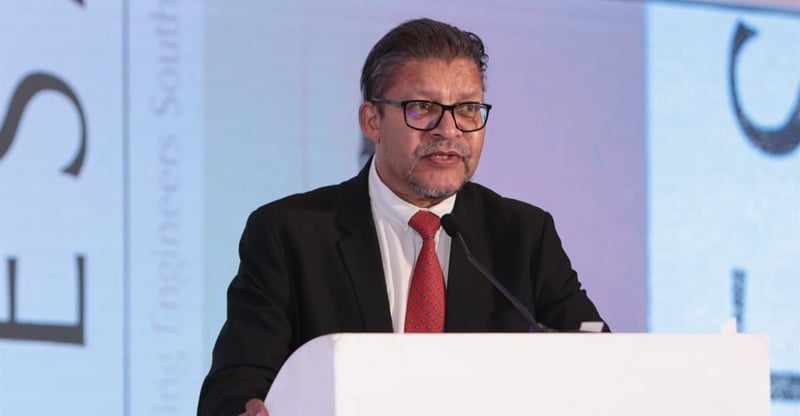
Source: Supplied. Chris Campbell, CESA chief executive officer.
This is no distant utopia, it's the infrastructure nirvana we, as Consulting Engineers of South Africa dream of, a "dare to dream" vision where assets thrive on 30 to 50-year lifecycles, rural roads spark local economies and urban hubs pulse with balanced energy. As 2026 starts, we would like to paint this ideal picture, revealing what makes it work, before a stark reality check pierces our reverie.
In an ideal South Africa, an integrated transport app confirms a train arriving precisely on schedule, linking flawlessly to a bus that ferries you from point A to point B; rural connectors bridge townships to markets - curbing urban sprawl by empowering local job creation and trade, while signage guides orderly traffic.
Roads, repaired once, stay pristine through vigilant inspection and ring-fenced maintenance budgets.
Clean water flows unfailingly from taps, driven by dedicated city engineers who oversee service delivery with autonomy and accountability, not impunity. Large metros are supported by in-house technocrats collaborating seamlessly with consulting engineers, while smaller municipalities flourish through targeted capacitation with a public-private trust as the glue, and value-for-money the creed.
To achieve this dream, we need objective, nonpartisan civil servants and city engineers at the helm of technical departments who are committed to the delivery of this infrastructure. We envision teams procuring services and goods strategically, not based on cheapest-bid downplays.
Maintenance will not be a soft target for vote-chasing; it will be sacred, with lifecycle ownership ensuring bridges don't crumble prematurely, freeways evade repeat crises and every rand stretches across decades.
Procurement harmonises transformation and localisation without clash: national contractors nurture emerging enterprises nationwide, fostering sustainable growth over short-term fixes.
In this dreamscape, citizens don't patch their own potholes and governments deliver, backed by mutual accountability.
Education feeds the engine
Maths and science need to be reignited at school level, producing quality graduates who evolve from young and inexperienced to mentored masters through deliberate programmes – think medical residencies but for engineers, where knowledge morphs into skill under seasoned guidance. The engineering talent pipeline is faltering as our engineers are seeking opportunities in other countries offering a strong infrastructure pipeline and spend, while graduates are not gaining the practical skills they need through deliberate mentorship.
Far from instant expertise, engineering demands a steady and time-consuming progression – from degree in hand to real-world application under seasoned guidance, avoiding both impatient overreach and outdated practices. State-owned entities must reclaim mandates to train both artisans and professionals, spilling talent into industry with guaranteed pipelines.
Reality check – where South Africa really stands
Yet, here's the pinprick reality check. South Africa's infrastructure faces systemic failures that demand immediate, bold action to prevent further economic stagnation and public hardship.
As custodians of critical infrastructure assets, such as freeways, bridges and water systems continue to prioritise short-term savings over long-term durability, South Africa risks repeating cycles of crisis and costly rehabilitation. Procurement inconsistencies, such as conflicting localisation, enterprise development and transformation mandates, stifles national contractors and fosters unsustainable local hires. Contractors bid nationwide, nurturing emerging enterprises, only to face barriers that reverse progress by confining talent to single regions.
With local government elections on the horizon, we need to emphasise that cosmetic fixes will no longer suffice – only structural reform can deliver the reliable roads, seamless public transport and resilient networks essential for growth.
We have, therefore, identified three non-negotiable priorities to bridge the gap between aspiration and reality:
- First, embed qualified engineers in local government, with robust consequence management to jail corrupt operators and restore accountability.
- Second, streamline procurement under a unified framework that treats infrastructure as a strategic economic driver, harmonising empowerment goals without undermining broader development.
- And lastly, enforce lifecycle ownership through mandatory inspections and protected maintenance budgets, ensuring assets endure rather than demand premature, budget-busting rebuilds.
Consulting engineers, through organisations like ours, advocate for the inclusion of these deeply specialised and technical skills back into our municipalities, local and regional governments, to ensure competent, accountable service delivery.
This will empower professionals to manage procurement and maintenance effectively and sustainably.
As the new year and new economic activity begins, we call on government and industry partners to commit to timely, quality service delivery that our citizens and businesses deserve.
Temporary event-driven changes must yield to sustainable overhaul in players, processes and mindsets. The engineering community stands ready to collaborate, bringing our extensive expertise focused on turning infrastructure from liability into a launchpad for economic and social prosperity.