
Africa’s creatives generate global value—now the continent must capture more ownership and investment
Written by: BizCommunity Editor Save to Instapaper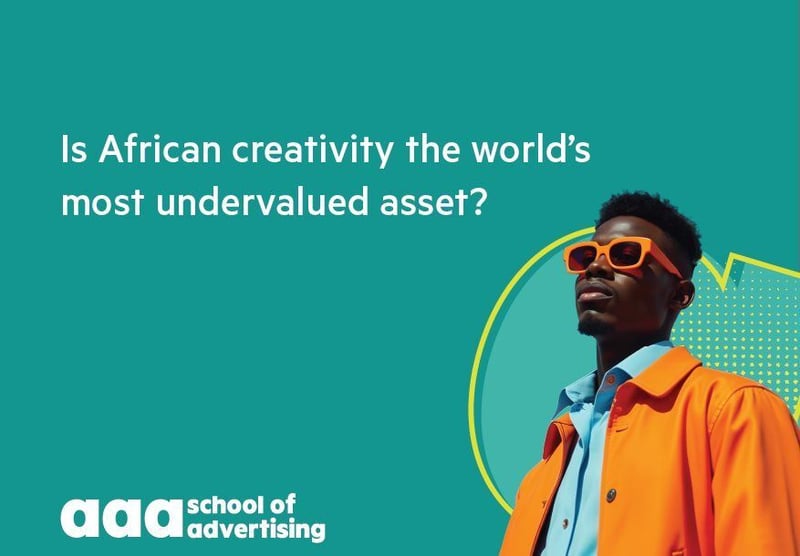
This distinction matters because creativity has become one of the world’s most valuable commodities. South Africa’s cultural, creative and sports industries already contribute approximately 3.9% of national GDP. Yet, too often, our creatives are generating commercial success while receiving only a fraction of the long-term value for themselves.
This is not simply about recognition. South African agencies continue to perform on the world’s biggest creative stages. African musicians shape global music charts. Designers influence international fashion. Nigerian film continues its remarkable expansion, while African coders and developers are redefining global gaming and technology.
The problem is that ownership frequently follows a different path from creation.
Many global businesses source creative talent from Africa because it is highly skilled, adaptable, and competitively priced. This creates valuable opportunities, but it also exposes an imbalance. Too often, African ideas are commercialised through international platforms, investment, and ownership structures, leaving relatively little long-term value on the continent itself.
The conversation therefore needs to move beyond talent. We should be asking how Africa builds stronger systems around creativity, including education, funding, intellectual property protection, entrepreneurship, commercialisation, and distribution.
Investment remains one of the biggest obstacles. While businesses readily fund engineering, medicine, and other traditional professions, creative careers are often viewed as higher risk or less economically important. This perception ignores the growing contribution of creative industries to economic growth and employment, as well as their ability to drive innovation across sectors.
Ownership is equally important. Young creatives often understand how to develop compelling ideas, but far fewer understand how to protect, licence, and commercialise their ideas over time.
Creative education therefore has a broader responsibility than teaching technical skills alone. Students need to understand strategy alongside storytelling, entrepreneurship alongside execution, and commercial thinking alongside creative excellence. They need exposure to real industry challenges where they learn not only how to solve problems, but also how to create lasting value from their solutions.
The recent success of AAA students in the L’Oréal Brandstorm competition illustrates this shift. Their achievement emerged from rigorous research, relentless creative refinement, commercial viability, and a deep understanding of human behaviour. While the competition provides valuable global exposure, it also highlights an important lesson for the wider industry: great ideas become truly valuable when they are developed through disciplined thinking and supported by the structures that allow them to grow.
This means that building stronger partnerships between educators, industry, and brands is imperative. Students benefit enormously from working on live briefs, learning from practising professionals, and understanding how creativity operates within real commercial environments. At the same time, businesses gain access to fresh thinking while helping develop the next generation of creative leaders.
Africa also has something international players cannot replicate: deep local understanding. Creative work developed for African audiences cannot simply be imported or translated. It requires genuine cultural insight, linguistic understanding, and an appreciation of local nuance. African creators are uniquely positioned to solve African challenges while producing ideas with global relevance.
The future of Africa’s creative economy will not be determined by whether the continent can produce exceptional talent. It already does. The real opportunity lies in building the investment, partnerships, intellectual property frameworks, and commercial confidence that will allow African creators to own more of what they create.
When this happens, Africa will not only shape local and global culture. It will retain far more of the value it generates.
Get new press articles by email
The Pulse Latest Articles
- Knockout Chaos 2 Sets The Tone As Boxing Takes Centre Stage At Rpm Performance Gym (July 23, 2026)
- The Growth Of Trading Card Games (July 21, 2026)
- Why Supplier Verification Is No Longer Enough To Stop Fraud (July 20, 2026)
- Why Empathy, Not Algorithms, Is The Key To Unlocking South Africa’s Billion-rand Digital Economy (July 20, 2026)
- Thousands In Cape Town Gave Ladles Of Love A Hand (July 19, 2026)