
South Africa Wine Explores The Future Of Dealcoholised Wines With Insight From Dr Adriaan Oelofse
Written by: WineLand Media Editor Save to Instapaper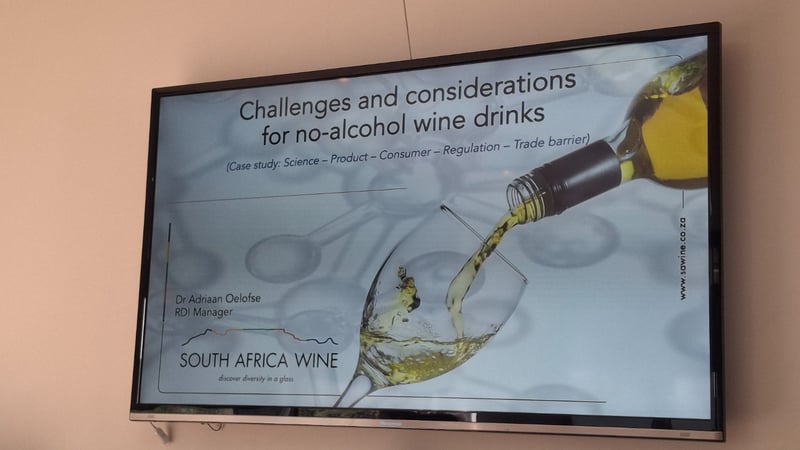
Dr Adriaan Oelofse, Research, Development and Innovation manager of oenology at South Africa Wine, recently shared some insights about the technical progress and challenges of making dealcoholised wine.
With some European wineries now selling dealcoholised sparkling wines at up to €100 a bottle, there’s little doubt that early scepticism about this category is giving way to a range of innovative products with the potential to compete with traditional wines at higher price points.
People are always interested in innovative products, and drinking trends have opened up new markets for no and low-alcohol wines wines, but new opportunities also bring new challenges. “We still need to understand the idiosyncrasies of different markets,” Adriaan says. “For example, Germany likes high-sugar carbonated drinks, but they also prefer low-alcohol drinks more than no-alcohol drinks. As a result, some local producers have found success, while others have ceased operation.”
A growing market
While OIV statistics show global wine consumption is at an all-time low, the global market for low and no-alcohol wine is expected to grow by at least 6% within the next two years and up to 10% in the next five to ten years (albeit from a low base).
“This category is appealing in terms of sustainability, health and wellness trends, shifting consumer preferences and inclusivity – accommodating athletes, pregnant women and non-drinkers – on top of regulatory and tax benefits,” says Adriaan. “You don’t need a liquor licence to produce dealcoholised wines below 0.5% ABV.”
The possibilities extend beyond wine, and could include popular drinks such as sangria, mimosa, and aperol spritz.
Confusion
Unfortunately, consumers are often confused by the differences between dealcoholised/partially dealcoholised wines (no/low-alcohol wines), wine-based beverages (products with wine added), and aromatised wines (wine that has been flavoured with fruits, herbs, spices, or other botanicals).
To complicate things further, wines are also legally classified on a scale according to alcohol content. OIV defines any wine grape beverage containing more than 8.5% ABV as wine; wines above 4.5% ABV are considered ‘reduced alcohol’; between 0.5 and 4.5% ABV is considered ‘low-alcohol’ wine; and anything between 0.05% and 0.5% is regarded as dealcoholised wine. Only wines with less than 0.05% ABV is classified as alcohol free.
These legal distinctions are embedded in the country’s Liquor Act, aligned with international standards, although categories and definitions may vary in many global legislations. Each of these classifications face unique challenges, not only for marketing but also in terms of production.
Reduced complexity
Traditional wines, especially red wines, are prized for their complexity and structure. Alcohol plays a leading role in keeping this symphony of expression in harmony and balance. “Removing alcohol affects wine chemically, sensorially, emotionally and scientifically,” Adriaan says. “The challenge of crafting dealcoholised wine is about preserving this symphony of parts without the role that alcohol plays as conductor.”
In other words, removing alcohol changes the mouthfeel and texture of the wine, producing a lighter, more acidic, astringent, and “flatter” taste profile.
Technological considerations
Over the past ten years, producers have been experimenting with fermentation, enzymes, yeasts and vineyard techniques to mitigate these effects. Technology has made great strides in reducing the ABV below 8.5%.
But preserving quality becomes exponentially more challenging at lower levels, especially below 0.5% ABV, and there are no shortcuts. “The matrix is changed, and people should not expect wine, but rather a new product from wine. That means you first have to make wine, with all the applicable costs and processes.”
Forward-thinking producers are looking at specific cultivars that might be more suited for dealcoholised wines, but most producers rely heavily on technology. The most common technology for removing alcohol in many countries, including South Africa, is vacuum distillation by spinning cones.
Alternatives such as reverse osmosis and membrane separation processes are also effective, but they require a significant amount of water, which raises questions about sustainability. The latest advancements also involve the use of combinations of technologies. This is especially true in South Africa, where better equipment is not always available or accessible.
These considerations are especially relevant for discussions about policy and regulations in Europe and other developed markets.
Key challenges in dealcoholised wine
- Flavour and Aroma Loss: Alcohol enhances aroma and mouthfeel. Removing it often dulls the sensory profile.
- De-alcoholisation Methods: Improved techniques – these still remove both alcohol and key flavour compounds.
- Microbial Stability: Without alcohol as a preservative, products are more prone to spoilage and need added stabilisation and alternatives.
- Sugar-Acidity Balance: Alcohol affects taste balance. Its removal can make the wine seem too sweet or acidic.
- Regulatory Compliance: “Non-alcoholic” definitions vary by region. Accurate labelling and legal alignment are essential.
- Consumer Perception: Consumers may expect a full wine experience. Managing taste expectations is key.
- High Production Costs: Must first make wine. Special equipment and processing increase costs, especially for small producers.
Key challenges in dealcoholised wine.
Sweetening the deal
Since alcohol is correlated with a perception of sweetness in wine, lower alcohol content is perceived as more acidic. This is why dealcoholised wine often tastes slightly sour. “The presence of ethanol in wine makes it taste sweeter, improves the taste of tannins, adds warmth and removes acidity,” Adriaan says.
South African researchers have also identified glycerol, which occurs naturally in wine, as an excellent substitute to improve mouthfeel, viscosity, structure and even the perception of sweetness in dealcoholised wine. Glycerol is allowed under the Liquor Products Act for use in spirits, beer, aromatised wines in South Africa, but the OIV has not yet reached a consensus on the requirements for dealcoholised products, so there is still uncertainty about the international regulations. As president of the OIV Technology Expert Group, which assesses new oenological practices, Adriaan advises on these resolutions.
Dealcoholised wines require correction due to the destructive effects of the dealcoholisation process, and these interventions can occur all along the wine production process. Producers can make an effort to produce quality base wines – for instance, by using cultivars with a lower natural acidity, such as Chenin, and by paying attention to product intrinsics. “It’s important to understand your base wine for the specific technologies that will be used to improve quality in the future,” Adriaan says.
Meanwhile, dealcoholised wine is one of South Africa Wine’s flagship projects. “Stellenbosch University is currently conducting important research on aroma composition, preservation and yeast spoilage, and mouthfeel modulation. In some cases, South Africa is leading the world in this research.”
Get new press articles by email
We submit and automate press releases distribution for a range of clients. Our platform brings in automation to 5 social media platforms with engaging hashtags. Our new platform The Pulse, allows premium PR Agencies to have access to our newsletter subscribers.
Latest from
- 7 Business Trends Your SME Can Leverage In 2026
- Sadilar Amplifies Visibility And Impact During Conference Season
- Future-ready Logistics- 5 Shifts TO Watch In 2026 (SUB-saharan Africa)
- Dunlop Urges Motorists To Prioritise Tyre Safety On The Busy Joburg To Cape Town Festive Route
- Poverty Trends Report Shows National Progress But Flags Growing Challenges In Gauteng
- SDG Challenge SA 2025 Highlights The Power Of Youth Innovation In Shaping A Sustainable Future
- Experienced Industry Leader Pauli Van Dyk Named Dean Of AFDA’s Upcoming Hatfield Campus
- South Africans Keep Tourism Alive As Homegrown Travel And Local Spending Rise
- Pretoria Student Wins Global Excel Esports Competition
- AfDB Steps Up Support For Somalia With $76m Investment In Roads And Regional Integration
- Corporate Law Experts Warn Directors Of Serious Consequences For Improper Transaction Approval
- New 3% Inflation Target Begins To Shift Expectations In South African Economy
- Retail As A Development Catalyst Drives New Africa Developments’ Inclusive Growth Strategy
- Collaborative SEF Model Shows How Civil Society And State Can Rebuild Economic Trust
- Shumani Accelerates Industrial Growth With Bheka Forklifts And New Equipment Plans For 2026
The Pulse Latest Articles
- Education Is The Frontline Of Inequality, Business Must Show Up (December 11, 2025)
- When The Purple Profile Pictures Fade, The Real Work Begins (December 11, 2025)
- Dear Santa, Please Skip The Socks This Year (December 10, 2025)
- Brandtech+ Has 100 Global Creative Roles For South African Talent (December 9, 2025)
- The Woman Behind Bertie: Michelle’s Journey To Cape Town’s Beloved Mobile Café (December 9, 2025)