
Convenience Retail Emerges As Key Growth Driver In South Africa’s Forecourt Sector Outlook
Written by: BizCommunity Editor Save to Instapaper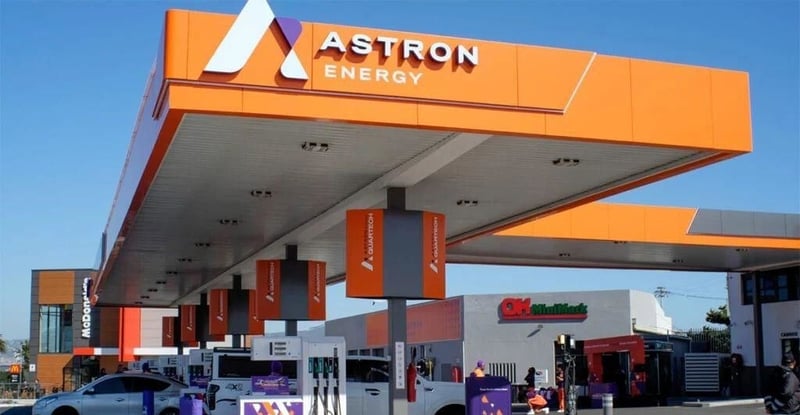
Insights from the latest Forecourt Retail Report 2025/2026, presented at a Nedbank-hosted media briefing, highlight how convenience retail is fast emerging as the sector’s primary growth engine.
The session began with an economic overview by Nedbank Economist, Crystal Huntley, who outlined how domestic and global factors are shaping the fuel and retail landscape.
She noted that South Africa’s economy is showing early signs of recovery, supported by easing inflation, lower interest rates, and improvements in electricity supply, rail performance, and port efficiency.
Consumer spending is gradually returning and GDP growth improved in 2025, pointing to a slow but steady recovery.
However, Huntley cautioned that global risks remain significant. Geopolitical tensions around the Strait of Hormuz – which carries roughly 20% of global oil supply – have pushed oil prices higher and reintroduced inflationary pressure.
"Domestic conditions are improving, and consumer activity is recovering, but global risks, particularly oil, continue to pose a major threat to stability," she said.
"While inflation is easing, rising oil prices and a weaker rand could push it above the SARB’s target range, as we saw during the Russia-Ukraine conflict in 2022. That episode illustrates how rapidly fuel-driven inflation can spill over into broader price increases and influence consumer behaviour."
Fuel consumption declined by 6.3% in 2024, highlighting structural shifts in demand.
Huntley stressed that forecourt operators should plan for volatility, as price shocks, demand fluctuations, and cautious consumer spending will shape the market.
"Even with some recovery, consumers remain highly price-sensitive, and margins will stay tight. Growth will need to come from diversification and operational efficiency," she added.
A shrinking pie amid growing competition
Nicola Allen, forecourt analyst at Trade Intelligence, said that this is not simply a cyclical downturn.
"We are seeing long-term behavioural and economic shifts – ranging from constrained consumers and hybrid working models to improved fuel efficiency – that are fundamentally reducing demand."
Despite declining fuel consumption since 2019, the number of forecourts continued to grow, increasing market saturation and intensifying competitive pressure on profitability. Industry stakeholders report that some forecourts – particularly in major metros – have experienced volume declines of 15 to 20% since the Covid-19 pandemic, with operators effectively ‘cannibalising’ one another in an already constrained market.
Additional challenges include rising operational costs, unregulated competition from informal and foreign-owned retailers, and illicit fuel trading, all of which further erode margins and sustainability.
Against this backdrop, forecourt convenience retail has emerged as a key growth driver. The segment grew by 4% to R40bn in 2024, now contributing 15% to South Africa’s FMCG primary convenience channel. As fuel sales declined by 4.2%, rising convenience sales have helped stabilise overall forecourt income, with revenue per litre continuing to increase.
"Forecourt stores are no longer just an add-on to fuel – they are becoming a central pillar of the business,’ said Allen. ‘For many operators, they represent the most viable path to sustained growth."
Changing shopper behaviour reshapes the forecourt model
Research shows that forecourt stores are becoming credible retail destinations, with 46% of shoppers not purchasing fuel. Notably, over 1 in 5 consumers now see them as a destination rather than a stopgap, especially younger, late-night, and township consumers.
However, while convenience remains the core appeal, forecourts increasingly compete with supermarkets, quick-service restaurants, and delivery platforms, with a clear edge for on-the-go missions like snacks, meals, and travel essentials.
Although regular forecourt store shoppers accept the ‘convenience at a premium’ trade-off, for non-shoppers, price perception remains the key barrier.
To remain competitive, forecourt operators are increasingly investing in partnerships, food services, and customer experience. Collaborations with major retailers and quick-service restaurant brands are expanding while food offerings, from barista coffee to hot meals, are becoming central to driving footfall and profitability.
Strategic merchandising, value-added services, and loyalty programmes are playing an increasingly important role in attracting and retaining customers, while banks and fuel retailers are leveraging partnerships and rewards programmes to influence where motorists refuel.
"Every square metre of the forecourt is now an opportunity for attention," Allen explained. "Operators need to deliver a compelling, differentiated experience that is right for their specific catchment area and target market".
Looking ahead: From fuel stations to mobility hubs
Looking ahead, the forecourt will continue to evolve. While electric vehicle sales more than doubled in 2024, they still account for a small share of the market, and infrastructure constraints are likely to slow near-term adoption.
Although fuel will remain a key revenue driver in the short term, its contribution is expected to decline as convenience retail and alternative energy gain importance, shifting forecourts towards integrated mobility hubs.
"The forecourt of the future will be defined by diversification," said Karen Keylock, national retail franchising manager at Nedbank Commercial Banking.
"As fuel volumes come under pressure, growth in convenience retail, strategic partnerships, and technology are creating new pathways to sustainable profitability. From a funding perspective, operators who adapt, diversify, and differentiate will be best positioned for long-term success."
Get new press articles by email
We submit and automate press releases distribution for a range of clients. Our platform brings in automation to 5 social media platforms with engaging hashtags. Our new platform The Pulse, allows premium PR Agencies to have access to our newsletter subscribers.
Latest from
- S&P PMI Shows Output Growth In South Africa Despite Drop In Orders And Business Confidence
- South African Airways Announces CEO Resignation After Successful Rebuilding Period
- GCIP SA Awards Spotlight Breakthrough Green Technologies And High Impact Startups
- Old Mutual Launches Khokha Umoya To Support Families With Dignity And Care During Bereavement
- Industry Leaders Raise Alarm Over Exclusion Of African Talent From Key Energy Platforms
- Rogerwilco Report Reveals Shift In Automotive Marketing As Digital Conversations Drive Buyer Choices
- Nedbank Sun International And MTN Foundation Back Act Nyoloha Scholarships For Future Artists
- Government Highlights Bolobedu Solar Plant As Model For Clean Energy And Inclusive Growth
- Axe Introduces Fine Fragrance Collection Designed For Long Lasting Freshness And Modern Appeal
- World Bank Insights Highlight Importance Of Structured Home Learning Environments For Child Development
- World Bank Revises Africa Growth Forecast As Global Instability And Debt Pressures Mount
- New Insights Show High Attention Campaigns Boost Market Share While Testing Reduces Risk
- Harley Davidson Introduces Ride As Global Brand Platform Celebrating Motorcycling Experience
- Effie And Ipsos Unveil 2025 Trends Report Showcasing What Drives Real Marketing Effectiveness
- FirstRand Completes Pioneering Shariah Compliant Deal For Major South African Property Development
The Pulse Latest Articles
- Interpol Warns Of Global Crime Networks, Sa Businesses Urged To Rethink Detection (April 10, 2026)
- Adaptive Leadership In Motion: Why Logistics Needs A Different Kind Of Strength (April 9, 2026)
- Ai Isn’t Shrinking Marketing Jobs - It’s Exposing A Bigger Talent Crisis (April 8, 2026)
- Stones Safaris Unveils A New Approach To Safari Through Experience-led Activities (April 8, 2026)
- Bright Beginnings Preschool Celebrates Linden Campus (April 2, 2026)