
Soil Type Drives Maize Performance in Zambia Despite Identical Climate and Farming Practices
Written by: BizCommunity Editor Save to Instapaper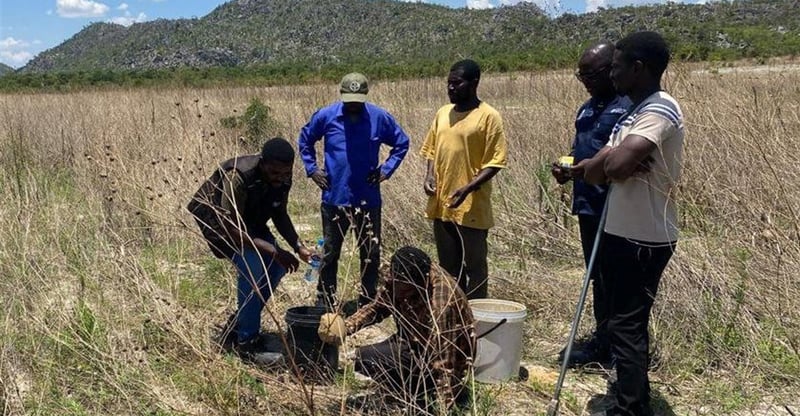
Source: Supplied | FAO/ZARI
In Zambia's Southern Province, maize grown under the same climate conditions and farming practices performed very differently depending on the soil type. While one soil type proved unsuitable for maize, another was found to be highly suitable, despite no visible differences above ground.
The findings highlight a challenge faced by farmers around the world. Soil conditions can vary significantly across short distances, meaning neighbouring fields may receive the same rainfall and management while producing very different results.
Understanding these differences is becoming increasingly important as farmers look to improve productivity while making more efficient use of limited resources. Rising fertiliser prices and recent supply disruptions have also reinforced the need to make better-informed decisions about crop selection and input use.
While farming decisions have traditionally been guided by climate, seed varieties, management practices and fertiliser recommendations, advances in soil mapping and crop suitability analysis are making soil information more accessible. By combining soil, climate, terrain and crop data, researchers can identify which crops are most likely to perform well in specific locations and where production constraints may exist before resources are committed.
Source: Supplied | FAO/ZARI
Using soil data to support farming decisions
These insights are being generated through initiatives such as the Soil Mapping for Resilient Agrifood Systems (SoilFER) programme, led by the Food and Agriculture Organization of the United Nations (FAO) with financial support from the governments of the United States and Japan.
Drawing on soil information, environmental data and crop suitability modelling, the programme aims to improve understanding of soil fertility and land suitability to support agricultural management decisions across different landscapes.
One of the tools developed through the programme is the SoilFER CropSuit App, which allows users to assess how different crops are likely to perform under specific soil, climate and management conditions.
Using the app in Zambia's Southern Province, analysts assessed maize production under rainfed, low-input conditions across different soil types. Leptosols, which are generally shallow and stony soils, were classified as unsuitable for maize production, while Luvisols, which are typically more fertile, were rated as highly suitable and offered substantially higher attainable yields.
The assessment also identified cassava, cowpea and fonio as highly suitable alternatives under the Luvisol scenario, demonstrating opportunities for crop diversification and adaptation.
Source: Supplied | FAO/ZARI
Supporting more informed agricultural planning
The findings highlight the potential for soil intelligence to support agricultural planning, particularly in countries such as Zambia where improving productivity and strengthening climate resilience remain priorities.
"The CropSuit App offers accessible, science-based crop suitability information that will help farmers, extension officers, researchers and planners make smarter decisions – from choosing the right crops for local agroecological conditions to managing soil fertility and diversifying crop production," says Rodgers Kabiti of the Zambia Agriculture Research Institute (ZARI) and National Focal Point for the SoilFER Project.
"This tool has strong potential to support Zambia's agricultural transformation by reducing crop failure risks and promoting more sustainable land use."
"By integrating soil, climate, terrain and crop information into a single platform, we created a system that helps users understand local constraints and identify suitable crops for specific locations" says Rutendo Mukaratirwa, FAO Agro-Ecological Zoning Specialist and one of the developers of the CropSuit App.
The application has also been designed to be adapted to country-specific priorities and agricultural conditions as it is adopted and refined over time.
The Zambia assessment highlights an important consideration for farmers and policymakers alike: before decisions are made about fertiliser, irrigation or seed varieties, understanding whether a crop is suited to the soil may be one of the most important factors in improving agricultural outcomes.
Get new press articles by email
We submit and automate press releases distribution for a range of clients. Our platform brings in automation to 5 social media platforms with engaging hashtags. Our new platform The Pulse, allows premium PR Agencies to have access to our newsletter subscribers.
Latest from
- DA Hires Consulum Three Months After Ryan Coetzee Negotiated Entry Into GNU
- JSE Adopts Multiple Reference Points Model After Pilot for Deliverable Soybean Futures
- Avatar Agency Confirms Leadership Team to Continue Amid Interim Appointment of Phil Ireland as Chief Creative Officer
- Reserve Bank Surprises With Rate Hold At 7%
- Venezuela Energy Week Hosts Houston Industry Showcase To Engage US Upstream Stakeholders Ahead Of October Summit
- Food Inflation Slows To 15.5 Year Low Driven By Bumper Harvests And Global Supply
- Skills Gap and Compliance Hurdles Block Young Food Entrepreneurs From Scaling in South Africa
- Cape Town Gives Go Ahead for 38 Battery Electric MyCiTi Buses After Volvo BZRLE Prototype Passes Tests
- Chery Q Compact Electric Hatchback Priced From R350,000 To R400,000 Ahead Of South Africa Launch
- Government Raises Small Claims Court Limit To R30,000 To Improve Access To Justice
- Allegations of Access Trading at Resolve Communications Raise Questions About Trust in Human Judgement
- Land Reform Must Restore Dignity And Unlock Productive Economic Transformation
- South African Annual Inflation Rises To 5.0% In June Driven By Fuel And Transport Costs
- Content Creator Awards Reveal 55 Judges for In-Person and Virtual Panels Supporting Emerging and Established Creators
- SME South Africa Launches The Founder’s Circle To Build Community Support For Small Businesses
The Pulse Latest Articles
- Antonio Citterio: The Art Of Timeless Design (August 26, 2026)
- From Water To Digital Twins: Steinmüller Africa Puts Plant Reliability On Display At Electra Mining (August 26, 2026)
- Women Shaping Ai Global Creative Work From South Africa (August 25, 2026)
- Women’s Month Ends In August. Accountability Shouldn’t. (August 25, 2026)
- Ai In Job Profiling: When Efficiency Becomes A Risk (August 24, 2026)