
FirstRand Foundation Discusses Designing Employee Volunteer Programmes For Lasting Value
The volunteering landscape is shifting. According to Statistics South Africa’s Volunteer Activities Survey (2024), an estimated 3.1 million South Africans aged 15 and older participated in volunteer work in 2024, up from 2.7 million in 2018 – a 42% increase. That translates into a national volunteer rate of 6.9%, with volunteer contributions valued at approximately R17.5bn, when time and resources are taken into account.
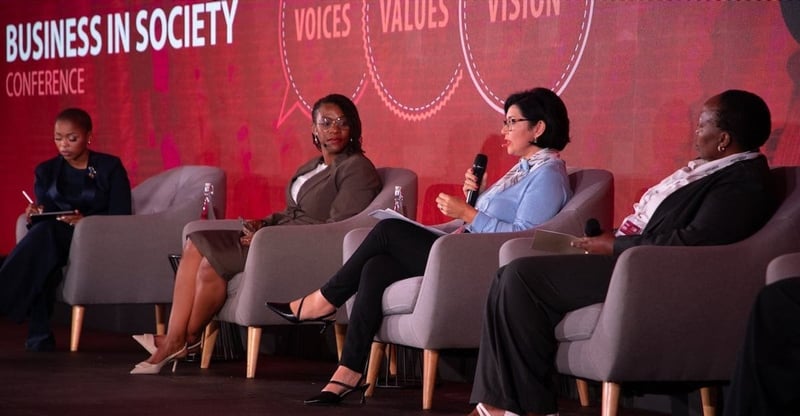
In a session presented by the FirstRand Foundation at the Trialogue Business in Society Conference, panellists discussed how to create lasting value when designing employee volunteer programmes that leverage employee participation.
Accelerating volunteerism
Opening the session, Kone Gugushe, head of social investing at the FirstRand Group, framed employee volunteerism as a route to shared prosperity for clients, employees and communities.
She pointed out that the FirstRand Volunteering’s CEO Volunteer Accelerator programme enables business unit and segment CEOs within FirstRand to work closely with nonprofit organisations to take their work to the next level of impact.
Rather than directing non-profits, the accelerator places business unit and segment CEOs alongside them, contributing skills, mentorship and strategic support while keeping ownership firmly with the community. Gugushe urged delegates to view volunteering as a calling: “Not programmes, not frameworks – just people choosing people.”
She closed her introduction by reminding delegates that the most meaningful measures of success are often intangible. “Shared prosperity is not a destination that we arrive at – it is a promise that we renew every single day, through every hand we extend, and through every life that we choose not to walk past.”
In this space, she added, it may be the only KPI where 'smiles per hour' really matter.
Kone Gugushe, head of social investing at the FirstRand Group
Volunteering shapes leaders
The panel discussion brought together voices from business, civil society, government and systems practice to unpack what real partnership looks like once organisations step into communities – and what often goes wrong when they do not.
Dr Elmarie Pereira, CEO and co-founder of Memeza Shout, spoke from personal experience. She lost her sister to gender-based violence, and volunteering shifted her from caring about a social problem to taking responsibility.
Through the CEO Volunteering Accelerator programme, Memeza Shout has worked with the FirstRand Empowerment Foundation on gender-based violence, focusing on building safer communities and strengthening community-level response networks. “We work closely with government as a force multiplier in the national programmes we deploy,” Dr Pereira said.
To date, those programmes have reached more than 38,000 victims, supported 90 community-based GBV response network jobs, and contributed to reductions of up to 30% in GBV in areas where they operate.
The value, she added, lies not only in immediate impact, but in shaping leaders. “The programme is unique – it creates leaders who understand social impact. They will take what they learn back to their industries, and that will influence how solutions are designed in the future.”
Dr Elmarie Pereira, CEO and co-founder of Memeza Shout
Actively listening to communities
Zibu Nqala, CEO of Points of Presence at FNB, said engagement can never be a once-off, since building solutions can only come out of spending time with community leaders to “get to the core of the issues”.
Active listening is vital because “the loudest voices aren’t necessarily the ones who will give you what you need,” she said.
Dr Manthiba Phalane, the director responsible for Public-Private Partnerships at the Civilian Secretariat for Police Service (CSPS), said the first mistake companies make is “throwing money at solutions without listening to communities.” This, she suggested, is a fundamental misunderstanding of how partnerships work. “Communities always know how to solve their problems. What they need is assistance,” she noted.
Building trust infrastructure
From a government perspective, Dr Phalane also cautioned against partnerships that exist largely on paper. “We often struggle with implementation and impact,” she said. “We forget the main beneficiaries and holders of implementation – the voices of communities.”
She argued that structured partnerships matter because they shift implementation into the hands of communities themselves, particularly in areas such as crime prevention and violence prevention. “It’s not just about signing MOUs. Focused, structured programmes – supported by proper, long-term funding – protect vulnerable groups and allow communities to see beyond the crime affecting their daily lives.”
Colleen Magner, director of practice and innovation at Reos Partners, pushed the conversation further by challenging how organisations assess collaboration itself. “You’re not just measuring the effectiveness of working together – you’re measuring for changing together,” she said. True collaboration, especially across sectors, “requires stepping across difference” and building what she described as a “trust infrastructure” that lasts beyond the partnership itself.
Power, dependency and co-creation
Questions about community dependency arose, but the panel implied that power structures should be examined.
Drawing on experience from the accelerator programme, Nqala described work with an early childhood development organisation, where the emphasis was on enabling rather than doing. “Dependency comes when you do, and you don’t enable,” he said. “Communities must come up with the solutions – you guide and mentor.”
Magner pushed this further, naming an issue that is often left unspoken. “One of the biggest roadblocks is not naming the power asymmetries that exist in any situation,” she said. In contexts like GBV work, “there is trauma in the room. You can’t assume – you have to listen to balance power.”
For her, visible leadership matters, but it should not dictate. “Be vulnerable. Don’t have the answers. When you really listen, there is often conflict about what the problem actually is. You have to hold your framing lightly until you understand what the system is saying is happening.”
A snap poll conducted during the session revealed that most voting delegates felt that visible leadership commitment and follow-through were most important for getting stakeholders working toward a common purpose.
At the close of the session, the panellists were asked to distil their key message about what shift organisations would make when engaging stakeholders into a single ‘billboard’ insight.
- Dr Manthiba Phalane named “Voices, understanding and funding” as the foundation of any long-term community-based project. “Never underestimate the power of community awareness about problems and solutions,” she concluded.
- Zibu Nqala’s advice was to “shift from transactional engagement to relationship building and co-creation”.
- Dr Elmarie Pereira’s message was similar: “Move from consultation to co-creation.” She recommended bringing people into the process and allowing solutions to be shaped collectively.
- Colleen Magner’s billboard was succinct: “To design the system for tomorrow, you must first understand the system of today.”
The session reminded delegates that meaningful employee volunteering is not just about mobilisation. It is also about listening deeply, redistributing power, and trusting communities to know what change requires – and how to sustain it.
Dr Manthiba Phalane, Dr Elmarie Pereira, Zibu Nqala, Kone Gugushe and Colleen Magner
Watch the full video here: