
Kelpak expands Cape Town headquarters and exports Ecklonia maxima biostimulants to 100+ countries
Written by: Johannes Richter Save to Instapaper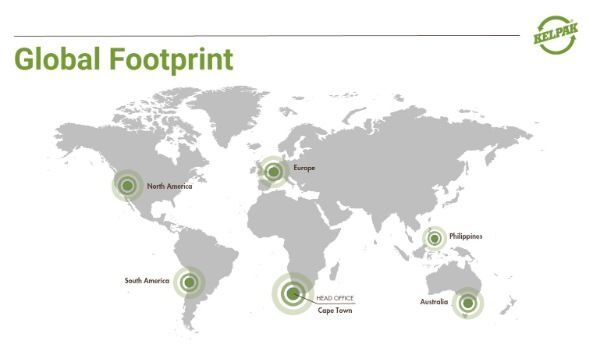
Kelpak is a global company specialising in seaweed-based biostimulants. Established in 1978, the company harvests indigenous Ecklonia maxima kelp from the Atlantic Ocean. Today, the organisation exports agricultural solutions worldwide from its Cape Town facility.
Ecklonia maxima is a fast-growing brown kelp native to the South African coast, and its beneficial effects on plant growth were identified in 1975. Techniques for extracting its active components were developed by early entrepreneurs, culminating in a patented cell burst extraction method in 1978. That year, Kelpak was founded.
The company began exporting its products to Australia and the Far East in the 80s, eventually earning organic and ISO accreditations and establishing offices around the world. In 2024, a new head office was established with a state-of-the-art production facility and research lab to meet increasing demand and quality standards. Today, Kelpak products are exported to over 100 countries on six continents.
Kelp forests
Kelpak harvests Ecklonia maximain two concession areas around Kommetjie and Cape Point, where the plants thrive in the nutrient-rich, cold Benguela current along the Atlantic coast. The award-winning My Octopus Teacher was filmed in the same kelp forests.
This harsh environment, with constant wave action and temperatures of around 14 °C, is believed to drive the plant to produce the high concentrations of protective compounds – polyamines and brassinosteroids – which are the key to the kelp extract’s effectiveness in agriculture. “The kelp produces these chemicals that help it deal with stress and help it grow fast, and that’s exactly what a farmer wants,” explains Paul Hills, Head of Research and Development.
The cold-pressure differential extraction method that helps preserve the active compounds in Ecklonia maxima was patented internationally as Cellburst in 1978. The technique uses an extreme pressure differential to burst cells and organelles, extracting biologically active compounds from fresh kelp without requiring destructive heat, acid, or alkali.
Biostimulants
Biostimulants enhance a plant’s nutrient use efficiency, improve its stress resilience, and improve crop quality traits. In other words, they can be used to augment the plant’s own natural resilience.
“The most widely accepted definition of a biostimulant is a substance (which can be a complex mix) or microorganisms which help the plant enhance its nutrient use efficiency, improve its stress resilience, and also improve crop quality traits, which include yield,” Paul says.
However, a positive effect on yields isn’t its primary aim. “The main thinking with biostimulants these days is that they should actually be applied proactively, because you’ll be enhancing stress resilience,” Paul says.
“If you have already applied Kelpak or other biostimulants, it means the crops are going to recover from stress much better, which protects the yield. It’s not necessarily focusing on making the yield bigger; it’s about protecting that yield in our current climate change environment.”
The Kelpak facility in Cape Town.
Climate-ready
As the weather becomes more unpredictable, issues such as flooding, drought, and desertification pose existential risks to agriculture. “Desertification often leads to higher salinity, as the water leeches through the soil and irrigation pulls the salt towards the surface and solidifies those soils,” Paul says.
Meanwhile, the chemical-input model that has sustained agriculture for decades carries mounting costs, including eutrophication and insect colony collapse. Biostimulants will play an important role in reducing these impacts while making crops more resilient and better able to meet market demands.
“We’re very interested in soil health and soil regeneration,” Paul adds. “Intensive farming has a negative impact on soils, particularly the chemicals. Soil isn’t just the matrix plants grow in; it’s also a living environment, so we’re trying to find out the benefits of Kelpak, particularly on soil microbes.”
While not a fertiliser, Kelpak assists with the uptake of Nitrogen, Phosphorus, and Potassium. Kelpak has also been shown to promote the populations of beneficial soil microbes, including Rhizobium, Trichoderma, and Bacillus species. These microbes further enhance root health and nutrient availability through symbiotic relationships.
Viticulture
Trials in several wine-producing countries have shown how Kelpak biostimulants enhance seed germination, fruit retention, and pollen tube growth even under harsh conditions such as drought or salinity. In vines, biostimulants are associated with improved root and shoot growth, berry set, bunch weight and higher resistance to abiotic stress.
These properties make biostimulants especially valuable for building resilience in newly planted vines while also keeping older vines healthy for longer. An added advantage for organic producers is that Kelpak has been certified for use in organic vineyards by Ecocert and the EU’s Fertilising Product Regulations (FPR).
“We know now that biostimulants work,” Paul says. “That’s no longer a question. There was a time when people thought biostimulants were a gimmick. The scientific community didn’t really accept them. That is changing. Research is now shifting to application and finding the most efficient and responsible ways in which we can use them – not to replace traditional chemicals, but to enhance their use so that we can potentially use less fertiliser, less pesticides, and guarantee the same crop at the end.”
Get new press articles by email
The Pulse Latest Articles
- The 1% Problem: Are We Misjudging Cryptocurrency? (September 7, 2026)
- N3yh Moves Beyond Sleepwear With Its First Leisurewear Collection (September 3, 2026)
- N3yh Moves Beyond Sleepwear With Its First Leisurewear Collection (September 2, 2026)
- Safari Travelers Are Asking What Happens Beyond The Game Drive (September 2, 2026)
- Kruger National Park Is Waking Up For Spring (September 2, 2026)