
Is Programmatic Digital OOH (pdooh) A Gimmick?
Written by: BizCommunity Editor Save to Instapaper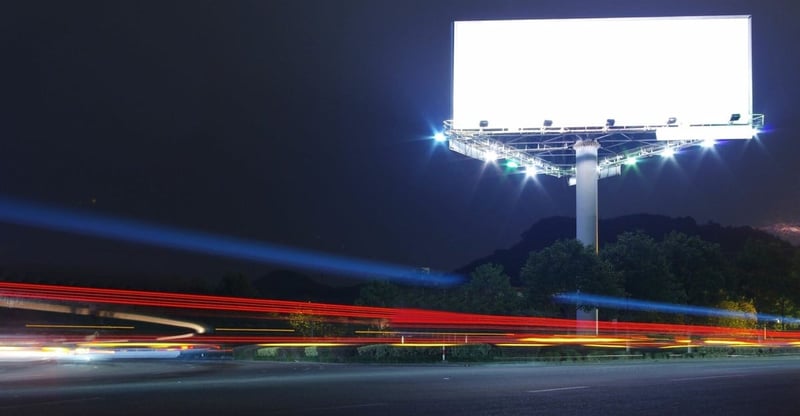
Richard Lord, freelance media specialist, questions whether programmatic digital OOH (pDOOH) is just a gimmick (Image source: © Dark Sky Dark Sky
Increasingly, the South African media industry is being told that the future of OOH (out of home) is digital.
More specifically, we are being told the future is programmatic.
We are promised “surgical precision”, “data-driven triggers”, and “audience-based buying” that supposedly brings the efficiency of the web to the physical world.
The case for the "old school" static board
I have always been in favour of static OOH over DOOH. Why? Because it offers advertisers better value, rand for rand.
When you buy a static board, you aren't paying off a media owner’s massive LED capex.
You are buying 100% share of voice (SOV). Your brand owns that space 24/7 – reaching every vehicle or pedestrian that passes. It is an uncluttered, permanent environment where your message isn’t rotating with 10 other brands every 3 minutes.
Yes, there is a production cost. But consider this: how many advertisers actually utilise the benefits of DOOH?
In my experience, very few. We see one execution flighted for the entire day across the entire month.
If you aren't using dayparting or creative rotation, you are essentially paying a premium to get 1/10th of the exposure you’d get on a static board.
The consistency paradox
The primary strategic strength of OOH is its ability to create an “always-on” presence. It acts as a constant mental trigger.
Because humans are creatures of habit - driving the same route from Sandton to Rosebank or Soweto to the CBD day in and day out - OOH allows a brand to speak to their identified audiences with consistency.
Consistency builds brands.
But pDOOH operates on the opposite logic. Because programmatic systems rely on “moving data” to show messages to “relevant people”, your ad often jumps from board to board across a city.
While the DSP (Demand Side Platform) might tell you that you’ve reached 50,000 unique people, you’ve sacrificed the one thing OOH does best: consistent exposure through habit.
By chasing a moving audience across different screens, you negate the platform’s inherent power as a constant, always-on reminder.
You’ve traded a permanent landmark for diluted, transient reach.
The "trigger" trap
One of the selling points of pDOOH is the “tactical” benefit. We are told we can trigger ads based on the weather, air quality, traffic density, movement patterns, device concentration, sports scores, social media trends, or economic indicators.
“It’s raining in Johannesburg, so let’s show the umbrella ad.”
It sounds revolutionary. But look at the boards next time you're stuck in traffic.
How many brands are actually doing this? Consistently? Almost none.
The industry is being sold a Ferrari of capabilities, but most brands are still driving it like a Citi Golf.
The reality is that most of this precision can be achieved (at a lower cost) through a direct buy with a little bit of effort and a good relationship with a media owner.
If you want to own the morning commute, you don't need a complex programmatic bidding system; you need a smart strategist and a direct deal.
The problem with the "pipe"
We also need to talk about inventory quality. For many media owners, pDOOH is still a way to monetise leftover or remnant inventory.Many premium, high-demand boards are still held back for direct, long-term buys.
If you’re buying programmatically, you are often bidding for the "unsellable" sites that didn't make the cut for the big campaigns.
And then there is the cost. Programmatic is expensive.
By the time you’ve paid the DSP fee, the SSP (Supply Side Platform) fee, and the data tech fee, a significant portion of your “working media” budget has vanished before a single pixel has lit up.
I know for a fact that by approaching a media owner directly, I can secure better inventory at a significantly lower effective CPM.
Is it convenience or strategy?
So, why is the industry pivoting toward pDOOH? Is it actually about the data? Or is it simply convenience?
It is certainly easier to tick a box on a single platform than it is to cherry-pick the best billboards from multiple media owners. But convenience for the agency shouldn't come at the expense of the client’s ROI.
The current push toward “audience-based selling” - moving from selling a site to selling a person - is a clever way for certain media owners to boost their revenues, but I’ve yet to see meaningful data that proves this approach builds more brand equity than a well-planned static campaign on premium boards, offering a brand 100% share of voice!
A call for a reality check
I am certainly not saying DOOH has no place in our campaigns. It is perfect for quick turnarounds, short-term tactical bursts, or if you need to be in a specific location where a static option is sold out or doesn’t exist. But we need to stop treating programmatic as the better way of buying OOH.
Until the dynamic triggers and audience precision metrics actually result in better brand performance than a high-impact static campaign, I’m sticking to my guns: pDOOH is currently more about the “wow” of the tech than the “win” for the brand.
Get new press articles by email
We submit and automate press releases distribution for a range of clients. Our platform brings in automation to 5 social media platforms with engaging hashtags. Our new platform The Pulse, allows premium PR Agencies to have access to our newsletter subscribers.
Latest from
- Pattern's James Townsend- 2026 Is Fashion's Exponential, ‘sentient' Turning Point
- Africa’s Green Economy Summit 2026 Aims TO Unlock Global Capital
- Applications Open For The 2026 SME Import Navigator Programme In Partnership With FNB
- Principal Wesley Neumann's Return TO Heathfield High Delayed
- Cape Town's Pride Month 2026- Celebrating Ubuntu And Lgbtqia+ Unity
- The Hidden Cost OF Blocked Funds In Global Aviation
- Multichoice Group Hands Over Multipurpose Playing Field TO Credence Primary School In Bloemfontein
- Vukile's €279m Spanish Deal Opens New Horizons
- Ogilvy Leads South Africa At The Tiktok Metap Awards 2025
- SA SME Funding Platform Lula Secures R340m
- African Power & Energy Elites 2025/2026- Celebrating Visionary Leadership And Transformative Projects
- APO Group Strengthens Advisory Leadership With The Promotion OF JOãO Marques TO Executive Director, Strategic Advisory
- Insight Terra's Alastair Bovim - The Clean Energy Transition Runs ON Minerals, And Africa Must Lead
- Strengthening Public Health Security At South Africa’s Borders- First Frontline Fetp Cohort Graduates
- Turning Plans Into Protection - Improving Capacity For Better Leprosy Case Management And Mass Drug Administration In Limpopo Province OF South Africa
The Pulse Latest Articles
- Game On, Gloot Girls! Get Ready For The Strongest, Sassiest 10s Series Yet. (February 3, 2026)
- Opinion Piece: Workplace Trends For 2026 And Beyond (February 3, 2026)
- Bite Sized Wellness, Big Time Benefits (January 28, 2026)
- Opinion Piece: The Power Of Engagement Surveys (January 26, 2026)
- Meet Gloot Energy: Power Made For Women (January 22, 2026)